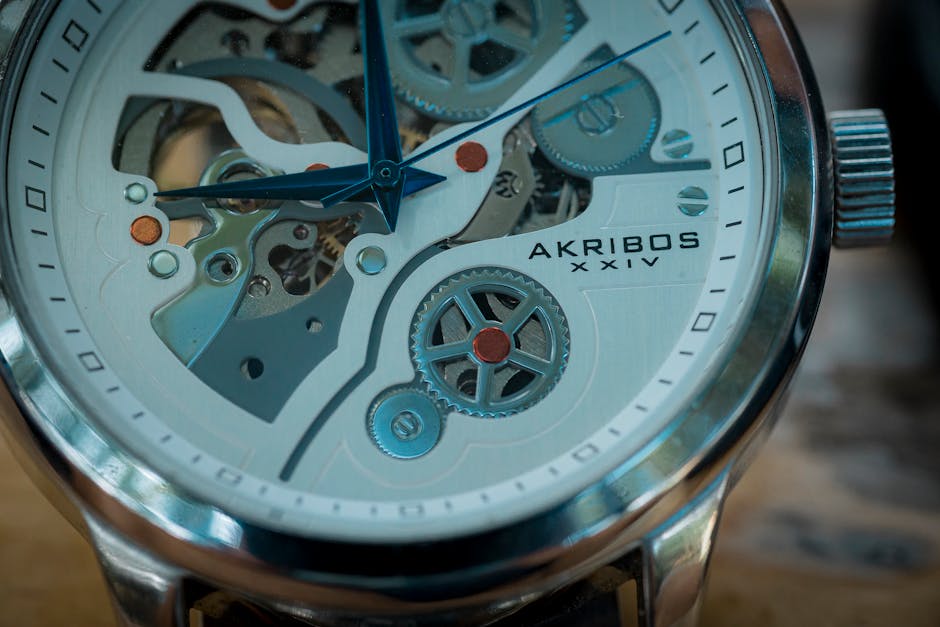
When you pay $11,000 for a Rolex Datejust, you're not paying $11,000 for the Oystersteel case and the three-link Oyster bracelet. Those components total maybe $2,500 in actual manufacturing and finishing value. You're paying a substantial portion of that $11,000 for the calibre 3235 movement — a specific piece of Swiss engineering that costs Rolex somewhere around $2,800-$3,500 to produce per unit in their own factory. Understanding why the 3235 commands that production cost explains why Rolex references hold value the way they do, and why Swiss movement-based alternatives at one-third the price deliver measurably different ownership experiences.
I've compared the calibre 3235 to the ETA 2892-A2 (the standard Swiss chronometer-certified movement in sub-$3,000 dress watches), the ETA 2824-2 (the mid-range Swiss workhorse), the Sellita SW300 (ETA clone with incremental refinements), and the Omega 8800 (Omega's current Master Chronometer base calibre). Each comparison reveals specific engineering advantages in the 3235 that explain the pricing. These aren't marketing distinctions — they're genuine mechanical improvements that translate to real-world performance differences in daily ownership.
The Chronergy Escapement
Rolex's Chronergy escapement, introduced with the 3235 calibre generation in 2015, is a modified Swiss lever escapement with specific geometric changes to the escape wheel teeth, pallet fork geometry, and overall escapement layout. The modifications produce approximately 15% improvement in energy transfer efficiency compared to a standard Swiss lever escapement.
This efficiency improvement translates to practical benefits. The 3235 maintains its power reserve at 70 hours from a barrel size that would produce 55-60 hours on a standard Swiss lever escapement. That 10-15 hour reserve advantage is why Rolex owners can take a watch off for the weekend and find it still running Monday morning — a specific ownership comfort that shorter-reserve movements don't provide.
The mechanical modifications are substantial: the escape wheel teeth have modified profile geometry to reduce friction during the impulse phase, the pallet fork horns are reshaped to improve angular positioning tolerance, and the whole escapement assembly is optimized for reduced rubbing contact over the oscillation cycle. This isn't a minor refinement — it's a substantive engineering effort that Rolex invested years developing. ETA and Sellita haven't implemented equivalent modifications in their comparable calibres.
- Chronergy escapement: 15% efficiency improvement vs standard Swiss lever
- Power reserve: 70 hours (vs 38-48 hours typical ETA/Sellita)
- Paraflex shock absorbers: superior to Incabloc in multiple tests
- Blue Parachrom hairspring: anti-magnetic and anti-shock
The Paraflex shock absorber system replaced Incabloc on Rolex movements in 2005 and has been refined through multiple revisions since. Paraflex uses a specific spring geometry and bearing material combination that produces measurably better shock resistance than Incabloc — Rolex's internal testing shows 50-60% better shock absorption in specific impact tests. Whether this matters for daily wear depends on how you wear the watch; for active ownership with occasional accidental impacts, it's a genuine durability advantage.
The Blue Parachrom Hairspring
Parachrom is Rolex's proprietary alloy hairspring material, made from a specific niobium-zirconium-oxygen blend. It's non-magnetic (unlike traditional steel hairsprings, which accumulate magnetic charge from environmental exposure), more shock-resistant than traditional Nivarox hairsprings, and maintains its elastic properties across wider temperature ranges.
The blue oxide coating that gives Parachrom its distinctive color is not decorative — it's the result of the oxidation process that creates the material's final mechanical properties. Each Parachrom hairspring goes through a specific high-temperature oxidation treatment that develops the oxide layer which stabilizes the alloy's crystal structure. This manufacturing process requires specialized equipment and extensive quality control that explains part of the 3235's production cost.
Anti-magnetic performance: the 3235 with Parachrom hairspring handles magnetic field exposure up to approximately 1,000 gauss without permanent magnetization or significant timing effects. Traditional steel hairsprings start showing performance degradation at 60-80 gauss. This matters because modern life exposes watches to magnetic fields constantly — smartphones, laptops, tablets, speakers, medical equipment, car infotainment systems. A watch that runs accurately through this exposure has meaningfully different ownership characteristics than one that requires periodic demagnetization services.
For truly high anti-magnetic performance, Omega's Master Chronometer movements with silicon hairsprings offer 15,000 gauss resistance, substantially exceeding Rolex's 1,000 gauss spec. This is where Omega has a specific technical advantage over Rolex in current movements. For most ownership scenarios, 1,000 gauss is sufficient — but for users who work in high-magnetic-field environments (medical imaging facilities, industrial equipment operators), Omega's spec provides genuine additional value.
Manufacturing and Quality Control
The calibre 3235 is manufactured at Rolex's Chevenez facility, which is vertically integrated from raw material input to finished movement output. Rolex produces its own escapement components, its own hairsprings, its own mainsprings, and its own gears. ETA, Sellita, and most other movement manufacturers source components from specialized suppliers rather than producing everything internally.
Vertical integration matters for consistency. Every calibre 3235 produced at Chevenez comes through the same production line using the same processes with the same materials and tolerances. ETA movements produced for different brands may use different quality tier specifications (Top, Elaboré, Chronometer grades), resulting in performance variation across seemingly identical-spec movements.
Rolex's Superlative Chronometer certification — internal testing to -2/+2 seconds per day after casing — is more stringent than COSC chronometer certification (which tests uncased movements to -4/+6 seconds per day). The Superlative certification requires tighter manufacturing tolerances throughout the movement's component production, which contributes to manufacturing cost and explains part of the premium Rolex charges.
In practice, this tighter tolerance produces measurably more consistent timekeeping. A properly regulated 3235 typically runs at 0 to +3 seconds per day in daily wear — inside Rolex's specification and noticeably better than typical ETA or Sellita performance. Over 30 days of continuous wear, the accumulated timing error is typically under 1 minute, which is negligible for any practical timekeeping purpose.
Service and Longevity
The calibre 3235 has specific service characteristics that affect long-term ownership economics. Rolex specifies 10-year service intervals on 3235 calibres, compared to 4-7 year intervals typical for ETA and Sellita movements. The longer interval reflects the more robust construction and better component tolerances that reduce wear between services.
Rolex Service Center service for a 3235 costs $800-$1,200 depending on specific work required. Compared to typical ETA-based movement servicing at $400-$700, the Rolex service costs more per session. However, over a 20-year ownership window: the 3235 requires approximately 2 services at $800-$1,200 each = $1,600-$2,400 total. An ETA-based movement requires 3-4 services at $400-$700 each = $1,200-$2,800 total. The Rolex service economics are comparable or slightly better over multi-decade ownership.
Service quality at Rolex Service Centers is consistently professional. The specific components replaced during service (rotor axle, gasket set, specific wear components) use factory-specification parts. The movement is regulated to factory Superlative tolerances after service. The watch returns with 2-year service warranty covering both parts and labor.
Independent watchmaker servicing on 3235 calibres is possible through Rolex-trained specialists. Costs are typically lower ($500-$900) but parts availability varies — genuine Rolex parts are controlled through authorized service channels, and independent watchmakers may use aftermarket components. For long-term ownership of valuable Rolex pieces, Rolex Service Center service is generally preferred despite the higher cost.
Comparing to ETA-Based Alternatives
For concrete comparison: a Longines HydroConquest at $1,700 retail uses an ETA A31.L01 movement (Longines-branded ETA 2892 variant with Silicon hairspring and 72-hour reserve). This is a very good movement — among the best ETA-based automatics currently produced. But it's a different engineering product than the Rolex 3235.
Specific differences: the HydroConquest's movement doesn't have Chronergy escapement geometry, doesn't use Parachrom-equivalent hairspring material, doesn't have Paraflex shock absorbers, and doesn't undergo Superlative Chronometer-grade testing. It's certified to COSC, which requires -4/+6 seconds per day — a tolerance roughly 2-3x wider than Rolex's internal standard.
In daily wear, these engineering differences produce observable outcomes. The HydroConquest typically runs at -3 to +5 seconds per day. A properly regulated 3235 runs at 0 to +3 seconds per day. Over 30 days of continuous wear, the HydroConquest accumulates 2-4 minutes of timing drift; the 3235 accumulates under a minute.
Is this difference worth $6,000-$8,000 in premium pricing? That depends on what you value. For a watch you'll wear once a month at formal events, probably not — either movement performs adequately for that use case. For a watch you'll wear daily for decades with expectation of precise timekeeping and minimum service intervention, the 3235's engineering premium delivers meaningful ownership experience differences over multi-decade timeframes.
The specific answer: Rolex's calibre 3235 is worth the engineering premium for buyers who value movement performance consistency, extended service intervals, and magnetic resistance. It's not worth the premium for buyers who value primarily case aesthetics or brand prestige and don't engage with movement engineering as ownership experience. Knowing which buyer you are before purchasing determines whether the Rolex premium is rational or wasted spending for your specific use case.