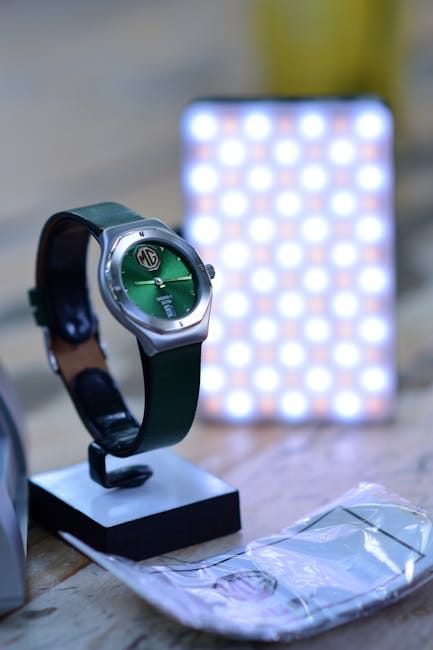
The Rolex Milgauss reference 116400 was officially discontinued in 2023. At discontinuation, the retail price was $9,150 and grey market pricing ran $7,800-$9,500 for clean examples. In the 18 months since discontinuation, secondary market pricing has climbed to $11,500-$13,500 for the green sapphire variant and $8,500-$10,000 for the standard variant. That's 28% appreciation for the green sapphire reference — meaningful, though not dramatic by Rolex discontinuation standards. What makes this specific market movement interesting is that the Milgauss wasn't particularly hot before discontinuation, and the post-discontinuation appreciation reflects collector recognition rather than speculative positioning.
I've owned a Milgauss 116400GV (the green sapphire variant) since 2020. It was, and remains, one of the most distinctive Rolex references available to acquire without multi-year dealer relationship-building. At $9,150 retail when it was in production, you could walk into a Rolex boutique and often buy one within 3-6 months — a specific accessibility advantage that contemporary sports Rolex references completely lack. The discontinuation removed this accessibility, and the collector community is processing what the reference actually represented now that new production isn't available.
What the Milgauss Was
Rolex introduced the Milgauss in 1956 specifically for scientific and technical professionals working around magnetic fields. The reference's defining feature: magnetic shielding that protected the movement against field exposure up to 1,000 gauss (the "Milgauss" name comes from "mille" meaning thousand, and "gauss" the magnetic field measurement unit). The original 1956 Milgauss (reference 6541) was targeted at CERN scientists and physicists working with equipment that would destroy standard mechanical watches through magnetic exposure.
The modern reintroduced Milgauss (reference 116400, launched 2007) maintained the anti-magnetic positioning while updating the watch for contemporary use. The case is 40mm × 13mm stainless steel with standard Oyster case construction. The movement is the Rolex calibre 3131 — a modified calibre 3130 with a Faraday cage shield surrounding the movement, and specific amagnetic components including the signature Rolex Paramagnetic hairspring.
The calibre 3131's magnetic resistance (1,000 gauss) is specifically substantial but not class-leading in 2026. Omega's Master Chronometer movements (silicon hairspring with integrated anti-magnetic engineering) achieve 15,000 gauss resistance. The Milgauss 1,000 gauss figure was impressive when the modern Milgauss launched in 2007; it's merely adequate by current standards. For the typical ownership environment (office work, consumer electronics), both 1,000 gauss and 15,000 gauss specifications provide sufficient protection.
- Case 40mm × 13mm, stainless steel
- Calibre 3131 with Faraday cage magnetic shielding
- 1,000 gauss magnetic resistance
- Lightning bolt seconds hand (orange on standard variant)
Two dial variants existed in Rolex catalog: the standard Milgauss with white or black dial (reference 116400) and the "GV" variant (reference 116400GV) with green-tinted sapphire crystal — a specific innovation Rolex developed for this reference that uses proprietary sapphire glass coloration to create the distinctive green tone. The GV variant was substantially more common in production and in secondary market due to specific collector preference for the distinctive green crystal.
The Green Sapphire Crystal
The 116400GV's green sapphire crystal is the defining visual characteristic. Rolex developed specific manufacturing process for this crystal — unlike colored glass or tinted coatings, the green coloration is integral to the sapphire crystal material itself. The result is a crystal that shifts perceived color based on viewing angle and lighting conditions. Under direct overhead light, the crystal reads nearly clear with subtle green tint. At oblique angles, the green becomes more pronounced. Under specific LED lighting, the crystal can appear significantly more green than in natural light.
This crystal coloration is unique to the Milgauss GV — no other current or recent Rolex reference uses this specific technique. The specific manufacturing capability isn't publicly documented by Rolex (they don't disclose their sapphire manufacturing process), but the result is a visual signature that makes the 116400GV instantly identifiable among Rolex references.
On the standard Milgauss 116400 (non-GV), the sapphire crystal is standard clear. Combined with the same case and movement as the GV version, the standard Milgauss reads as a more conventional Rolex sports watch. Collector preference strongly favors the GV — approximately 75% of secondary market Milgauss transactions are for GV variants. This preference creates pricing differentiation: green sapphire examples command 25-40% premiums over standard crystal examples in current market.
The orange lightning bolt seconds hand on the GV variant (and some standard variants) is another distinctive design element. The hand shape references the original 1950s Milgauss designs and provides specific scientific/technical aesthetic. The orange color (Pantone-specific orange used in Rolex's palette for this specific reference) contrasts distinctively against the black dial.
Why the Discontinuation
Rolex doesn't publish specific discontinuation rationale for any reference, but industry observers and Rolex watchers have identified likely factors. The Milgauss's anti-magnetic positioning became less differentiated as Omega's Master Chronometer certification (15,000 gauss) and other Rolex references (calibre 3285 with Chronergy escapement and Paramagnetic hairspring providing reasonable magnetic resistance) made 1,000 gauss performance less distinctive.
Production volumes on the Milgauss were relatively low compared to Rolex's sport references. The watch wasn't driving revenue or collector demand at levels that justified ongoing production allocation in Rolex's factories. Discontinuing allowed Rolex to redirect manufacturing capacity toward higher-demand references (Submariner, GMT-Master II, Datejust) where production limits were affecting sales.
The Milgauss's collector base, while dedicated, was specific and smaller than Rolex's mainstream references. Without a hot reference cycle like the Pepsi GMT-Master II or the Paul Newman Daytona, the Milgauss operated in the "interesting sports Rolex" category without broader cultural recognition. Discontinuation created scarcity that generated new interest from collectors who recognized the specific reference was becoming unavailable.
This pattern is typical of Rolex discontinuation dynamics. References that weren't specifically hyped while in production often appreciate meaningfully after discontinuation because the collector community recognizes lost accessibility — you can't "just buy one" anymore. The same pattern played out with the 16610 Submariner discontinuation (2010), the 16700 GMT-Master discontinuation (2007), and various other Rolex references over the past 30+ years.
Current Market Dynamics
Secondary market pricing for Milgauss 116400GV (green sapphire variant) in April 2026: $11,500-$13,500 for clean examples with full kit. Earlier production (2008-2015) typically runs $10,500-$12,500. Late production (2019-2023) runs $12,500-$14,500 due to newer condition and shorter service intervals required. All pricing reflects 25-40% appreciation from discontinuation-era levels.
Standard Milgauss 116400 (non-GV variant): $8,500-$10,500 for clean examples. This variant has experienced less dramatic appreciation because the green sapphire crystal is the specific collector-preferred configuration. Some price differentiation is also appearing between specific dial variants — black dial examples typically trade slightly higher than white dial variants.
The Milgauss 116400 Z-Blue (reference 116400GV-0010) with specific electric blue dial and green crystal is a particular collector variant that commands premium pricing — $15,500-$18,000 range. Production volumes were specifically lower on this variant, making it genuinely scarcer than the black or white dial GV variants. Collector interest in Z-Blue has been consistent and pricing has held steady above other Milgauss variants.
Market trajectory: continued appreciation through 2026-2028 is plausible as the Milgauss settles into "vintage-adjacent" positioning. 8-15% annual appreciation is reasonable projection for clean examples through this period. After 2028, appreciation may moderate as the reference reaches collector recognition equilibrium. Speculative further appreciation beyond 2028 depends on broader collector community dynamics that can't be predicted reliably.
Authentication Considerations
Milgauss authentication is straightforward for modern production references. Standard Rolex serial number verification, reference number confirmation, and movement inspection provide adequate authentication for most legitimate transactions. The Milgauss hasn't been a significant target for counterfeiting historically because the specific anti-magnetic movement architecture and the green sapphire crystal are technically difficult to replicate convincingly.
Specific authentication points for 116400: verify the green sapphire crystal authenticity (genuine green sapphire shows specific color behavior under different lighting; fake green crystals typically have uniform green appearance regardless of light angle), verify the orange lightning bolt seconds hand authenticity (genuine hands have specific orange color and geometric precision; aftermarket replacement hands show color variation and less precise geometry), and verify the calibre 3131 movement presence through inspection of the Faraday cage visible through the case back on appropriate service inspection.
Service history matters for Milgauss purchases. The calibre 3131 service intervals are 8-10 years for current Rolex standards. A Milgauss from 2016 would benefit from service within the next 2-4 years. A Milgauss from 2020 wouldn't need service for 4-8 more years. Service cost at Rolex is $850-$1,100, which should factor into total acquisition cost evaluation.
Box, papers, and warranty card presence affects value 8-15% on Milgauss references. Full kit examples command premium over no-papers examples. Original purchase documentation (receipt showing authorized dealer purchase, original warranty card) provides authentication value beyond just completeness — it confirms the specific provenance chain.
Who Should Buy Now
The Milgauss 116400 is appropriate for specific buyer profiles. Buyers who value distinctive sports Rolex aesthetic without the cultural saturation of Submariner or GMT-Master II recognition. Buyers who appreciate the specific green sapphire crystal aesthetic as design element. Buyers who work in scientific, technical, or engineering environments where the anti-magnetic positioning has personal resonance. Buyers who are building diverse Rolex collections and want a specific reference that isn't duplicated in typical collections.
The Milgauss isn't appropriate for buyers who want maximum cultural recognition for their Rolex purchase (the Submariner and GMT-Master II dominate this). Buyers who need a dress-adjacent Rolex for formal contexts (the Datejust serves this role better). Buyers who prioritize investment appreciation potential (while the Milgauss has appreciated since discontinuation, the appreciation trajectory is more modest than other discontinued Rolex references).
For existing Rolex collectors adding a Milgauss: the GV variant is typically the correct choice because of its distinctive character and stronger collector preference. The orange lightning bolt seconds hand, green crystal, and specific dial configuration create a watch that doesn't visually duplicate other Rolex references you may already own. This distinctiveness is the specific value the Milgauss provides within a broader Rolex collection.
For first-time Rolex buyers considering the Milgauss: the reference is acceptable but probably not optimal. The Datejust 41 offers more versatility. The Submariner offers more cultural recognition. The Explorer II offers similar retail availability (when it was in production) at lower cost. The Milgauss is specifically a "second or third Rolex" purchase for most buyers rather than an entry Rolex acquisition.
Long-Term Holding Considerations
For buyers acquiring a Milgauss for long-term holding (10+ years), the investment characteristics look reasonable. The discontinuation has created scarcity dynamics that should support continued price stability or modest appreciation over multi-decade timeframes. The calibre 3131 movement is serviceable through Rolex Service Centers indefinitely (Rolex has publicly committed to supporting discontinued movements for 30+ years after production ends).
Service infrastructure is solid. Rolex Service Centers throughout the US and internationally continue to service Milgauss references at full quality standard. Parts availability is strong for the next 20+ years based on Rolex's historical pattern with discontinued references. Independent watchmaker service is also available through specialists familiar with calibre 3131 architecture.
Insurance and protection: standard Rolex coverage from specialist insurers (Jewelers Mutual, Chubb, Hodinkee Insurance) covers Milgauss references at current market value. Annual premium on a $12K Milgauss runs approximately $150-220 through specialist coverage. Appraisals every 3-5 years maintain accurate coverage values as secondary market pricing evolves.
The Rolex Milgauss 116400 represents specifically what "quiet collector opportunity" looks like in the current luxury watch market. Discontinued at its peak retail availability. Specific collector-preferred variant (the GV with green sapphire) is distinctive and visually compelling. Market appreciation is reasonable but not speculative. Authentication is straightforward. Service infrastructure is solid. For the right buyer who appreciates the specific attributes, the Milgauss is among the smartest Rolex acquisitions currently available in the secondary market. For buyers whose preferences don't align with what the Milgauss specifically offers, other Rolex references (or non-Rolex alternatives) make better sense. Being honest about that alignment determines whether this reference deserves a place in your collection planning.