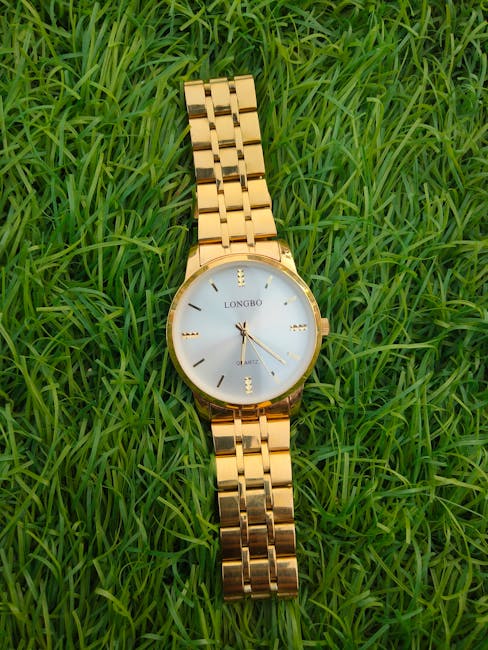
A Monday morning in a Geneva boutique, mid-January 2026. The sales associate slides out a 228238 yellow gold Day-Date, then without comment places a 228235 Everose right next to it. Same reference architecture, same calibre 3255 beating inside, same fluted bezel catching the overhead lights. But the choice between them has become strangely loaded in 2026, and not for the reasons most buyers expect.
Yellow gold used to be the default. Everose was the flashy newcomer launched in 2005 when Rolex wanted a proprietary rose gold alloy that wouldn't fade to yellow over decades. Two decades later, the conversation has inverted. Yellow gold is the contrarian pick, Everose is the crowd-pleaser, and retail lists at most authorized dealers tell you which one is actually easier to find.
The Reference Numbers That Matter
228238 is the yellow gold 40mm President. 228235 is Everose. Both launched in 2015 as part of the Day-Date 40 rollout, replacing the 41mm fluted-bezel variants that never quite caught on. Both house the calibre 3255, a movement that took Rolex years to perfect and earned its Superlative Chronometer certification at +2/-2 seconds per day — tighter than COSC spec.
The chronofiable bridge design in the 3255 is not just marketing. The Chronergy escapement uses a nickel-phosphorus alloy for the escape wheel that's genuinely more efficient than the traditional lever escapement, which is why the 70-hour power reserve feels honest rather than theoretical. Leave it on Friday evening and it's still running Monday morning without a winder.
The Case, the Clasp, the Details
The 40mm case wears flat on the wrist. Lug-to-lug is around 47.5mm, which is manageable for wrists in the 6.75-7.5 inch range. The President bracelet uses three-link semi-circular construction, polished center links, satin outer links. The Crownclasp is hidden in the polished center link of the bracelet — press the crown, the clasp opens, and nobody at the dinner table knows you just took your watch off.
On the yellow gold, the dial options that actually matter in 2026 are champagne with Roman numerals, green with diamond hour markers, and the olive green released in 2019 for the 228238. Everose offers chocolate dial with diamond markers, silver, and the aventurine blue that's been aggressively hyped on Instagram since 2023.
Crown Guards on the Day-Date are subtle — the Triplock crown system sits under a twin-guard design that's more substantial than the Datejust's Twinlock but less visible. Water resistance is 100 meters, which is overkill for a dress watch but consistent with Rolex's house standard.
Price Reality in 2026
Retail on the 228238 yellow gold sits at roughly $46,500 for the standard champagne Roman configuration. The Everose 228235 in chocolate diamond runs closer to $49,000. Aventurine dial variants and anything with diamond-set bezels push both past $55,000 easily.
Secondary market pricing tells a different story. Yellow gold Day-Date 40s with desk-diver-condition papers are trading around $39,000-$42,000 on established platforms like Chrono24 and Bob's Watches. Everose variants hold retail better, typically $45,000-$48,000 for clean examples with box and papers from 2022 onward.
The gap widens on dated references. A 228238 from 2018 with honest wear can be sourced for $36,000 if you're patient. Try finding a 2018 Everose for under $42,000 and you'll be waiting through a lot of WhatsApp conversations with dealers who know exactly what they're holding.
Gray market dealers like Govberg and Watchbox have different pricing still. Authorized dealer retail is for buyers who want warranty continuity and are willing to pay the full tariff. Secondary market is for buyers who want the right reference without waiting for allocation. Both paths are legitimate. The difference in practice is roughly 10-15% on new examples and 20-30% on 3-5 year old pieces.
Why the Premium on Everose?
Two reasons, and neither involves rational value analysis.
First, Everose photographs better on social media. The warmer tone reads rose gold on camera without tipping into the overtly yellow tones that read as dated on feeds full of steel sports models. Yellow gold photographs honestly as yellow gold, which is either a feature or a problem depending on your posting habits.
Second, Everose doesn't fade. This was the original Rolex marketing pitch in 2005 — the platinum addition to the alloy prevents the copper from oxidizing over decades. Whether this actually matters for a watch you wear for thirty years is debatable; most rose gold pieces from the 1970s still look like rose gold, just with more character. But the marketing worked.
A third factor gets less discussion: Everose was new in 2005, which means Everose pieces are all younger than comparable yellow gold references. The supply of 20-year-old Everose Day-Dates simply doesn't exist yet. Yellow gold Day-Dates from the 1990s show honest age and patina — character for some buyers, condition problems for others. This won't be true of Everose for another decade or two, by which point the conversation will have evolved again.
The Wearing Test
Yellow gold is louder on the wrist. There's no pretending otherwise. In a suit, it looks like a president should look. In a polo and chinos at a Saturday lunch, it can feel like overdoing it. Everose splits the difference — it still reads as serious precious metal but has enough pink warmth to feel softer against dark shirts and casual jackets.
For a first Rolex President, the question is really about your wardrobe and your setting. A banker in London wears a yellow gold Day-Date and nobody blinks. The same banker in Austin, Texas, wearing the same yellow gold in 2026 looks slightly out of time.
Wrist metallurgy matters too. Olive or warm skin tones work with both metals. Pale skin with cool undertones tends to flatter Everose more, since the rose warmth adds contrast where yellow gold can wash out.
Weight is roughly identical. A Day-Date 40 in either metal weighs around 200 grams with the full bracelet, which is substantial on the wrist but not fatiguing over a full day. The President bracelet distributes weight well because the three-link construction has more articulation points than oyster bracelets.
The Fluted Bezel Question
Both references ship with the fluted gold bezel. Smooth bezel options exist but are less common on the secondary market and often feel like a compromise — if you wanted quiet, the Datejust 41 exists for half the money. The President is supposed to be slightly loud.
Diamond bezels are a separate conversation. They raise the price significantly (add $15,000-$20,000 on top of the base reference) and transform the character of the watch. Some collectors consider diamond-set Day-Dates the definitive statement of the reference. Others consider them the moment the watch stops being a watch and starts being jewelry. Both opinions are defensible.
The factory-set diamond bezels on Day-Dates use Rolex's own stone sourcing and setting, which is technically superb but aesthetically divisive. Aftermarket diamond bezels (including excellent work from places like MAD Paris) are another route entirely and void the warranty, which matters for buyers who care about factory certification.
What Yellow Gold Gets Right
The yellow gold 228238 is the original. It's what Eisenhower wore (reference 6611 in 1956, but the DNA is unchanged). It's what Lyndon Johnson gave to aides. It's what every serious collector recognizes as the canonical Day-Date.
In 2026, yellow gold has become the quieter choice in the Rolex lineup precisely because everyone else is chasing Everose and the steel sports references that are still impossible to buy at retail. There's no waitlist drama on yellow gold Day-Dates at most authorized dealers. You walk in, you try it on, you discuss the dial, you make the decision.
That alone is worth something in the current retail environment.
There's also a generational signal worth mentioning. Collectors in their 30s and 40s are increasingly drawn to yellow gold because it's their fathers' and grandfathers' watch. The aesthetic reads as pre-irony luxury — the watch from before marketing made rose gold a thing. This reversal feels durable, but markets change.
What Everose Gets Right
Durability of color. Proven. Twenty years of Everose watches in circulation now and they still look identical to the day they left Bienne. Whether that's a practical consideration or a psychological comfort, it's real.
Wardrobe flexibility is the other genuine advantage. Everose pairs with a wider range of casual outfits than yellow gold. For someone wearing the watch 7 days a week across business and weekend contexts, Everose works in more situations without looking jarring.
The aventurine dial specifically has become the dial of choice for collectors who want both the Everose case and a dial that reads as contemporary rather than traditional. The deep blue glitter dial under Everose is one of the more photogenic watch combinations currently available, and it pairs well with both black and navy wardrobes.
The Actual Recommendation
If this is a first Rolex President and you're buying new at retail in 2026, yellow gold 228238 in champagne Roman is the better value play. You're paying $2,500 less, the watch has stronger historical anchor, and you'll find one without working a waitlist for six months.
If you're buying to hold value on the secondary market, Everose 228235 in chocolate diamond is the stronger position. Demand has been relentless, supply is tighter, and the resale floor is more defensible.
If you already own a Datejust in steel or two-tone and you want the Day-Date to be distinctively different from your daily wearer, yellow gold creates the clearest contrast. The two watches end up in different categorical buckets, which is useful when building a collection rather than accumulating similar pieces.
If you live primarily in casual contexts (California, Texas, most weekend environments), Everose is easier to wear. The yellow gold starts to feel like formal attire in casual settings, and the watch you actually wear is better than the watch you love but leave in the safe.
Neither is wrong. But the reflexive instinct in 2026 to reach for Everose because it photographs better on Instagram is worth questioning. The yellow gold President remains one of the most coherent design statements in luxury watchmaking — a reference that predates modern marketing by several decades and will outlast whatever comes next.
Bring cash or a wire transfer authorization, either way. Gold is gold, and the Day-Date 40 still costs what it costs.