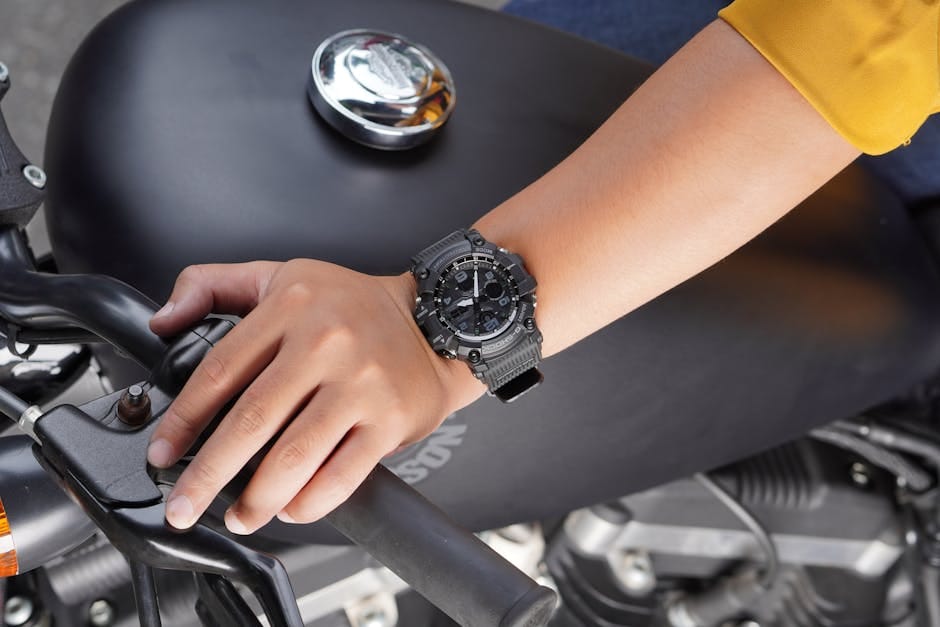
The Royal Oak Offshore launched in 1993 as Audemars Piguet's response to collector demand for larger, more aggressive sports watches. At 42mm, with rubber strap, and exposed screws emphasizing the Royal Oak's mechanical aesthetic, the Offshore defined the oversized luxury sports watch category that dominated 1990s-2000s collecting preferences. Thirty-three years later, the Offshore remains in production but the market context has shifted dramatically. The size preferences that made the Offshore revolutionary in 1993 have reversed, and collectors now prefer 38-40mm sports watches that the standard Royal Oak already occupies. The question for 2026 buyers: does the Offshore still make sense as a serious purchase?
The short answer is yes, but only for specific buyers with specific preferences. The Offshore has evolved from "the definitive oversized sports watch" to "one of several oversized sports watch options for buyers who specifically want the category." It's no longer the defining piece it was in 2001-2010, but it remains a legitimate and accomplished watch for the smaller cohort of collectors who still prefer larger cases. Understanding the evolution of the Offshore's market position helps 2026 buyers make informed decisions about whether it matches their specific collection preferences.
The Offshore Design Evolution
The original Offshore (reference 25721) at 42mm × 15mm launched in 1993 with a steel case, tapisserie dial, and chronograph complication via the calibre 2126 chronograph movement. At the time, 42mm was oversized by luxury watch standards (most references were 36-38mm), and 15mm thickness was substantial. The design choices were deliberate — AP wanted the Offshore to feel specifically different from the standard Royal Oak rather than simply larger.
Design iterations across decades have refined the Offshore concept. The 2006 Safari edition introduced subdials of different configurations. The 2013 reference 26470 reintroduced certain design elements while updating the movement architecture to the calibre 3126 chronograph. Current production (reference 26420 and 26420ST) uses the calibre 4404 in-house chronograph movement with 70-hour power reserve.
Current Offshore sizing: 42mm × 14.5mm. The case thickness has reduced slightly across iterations but remains substantial. On modern wrists (preferences shifted toward smaller cases), the Offshore reads as meaningfully oversized compared to 39-40mm sports watches that have become preferred in the last 5-10 years.
Dial treatment varies substantially across Offshore references. Mega-tapisserie dials are visually larger than standard tapisserie patterns, emphasizing the oversized case aesthetic. Subdial configurations include 3-subdial chronograph layouts (standard) and simpler time-only dial arrangements on non-chronograph Offshore variants. The dial complexity distinguishes Offshore references more than any other visual element.
- Case 42mm × 14.5mm, stainless steel, rose gold, or ceramic variants
- Calibre 4404 in-house chronograph, 70-hour reserve
- Mega-tapisserie dial (larger pattern than standard Royal Oak)
- Rubber strap configuration with Royal Oak clasp architecture
When the Offshore Works
The Offshore works for buyers whose wrists and wardrobes specifically accommodate the oversized aesthetic. On 7.25+ inch wrists, the Offshore sits proportionally without overwhelming. On 7.5+ inch wrists, it's ideal sizing. The watch requires this wrist size to wear correctly — on smaller wrists, it reads visually awkward regardless of how prestigious the reference.
The Offshore also works for buyers whose aesthetic preferences align with the oversized sports luxury category. If you specifically want a watch that communicates masculine energy through scale, the Offshore delivers this communication better than 40mm Submariners or 40mm Royal Oaks. This aesthetic choice is legitimate, and some serious collectors specifically value it.
Professional contexts that work with Offshore wear: entertainment industry, specific finance roles, sports environments, and contexts where watch visibility and distinctiveness are positive signals. Professional contexts that don't work: traditional business formal, conservative corporate environments, and formal dress occasions. The Offshore is specifically not a dress watch despite the finishing quality.
For 2026 buyers considering the Offshore, honest self-assessment about wrist size, aesthetic preference, and professional context matters. If these factors align, the Offshore represents legitimate watchmaking investment. If they don't align, the standard Royal Oak (15500ST or 16202ST) offers AP quality in proportions that work better across most contemporary preferences.
Specific Offshore References
Current production focuses on several specific Offshore references. The 26420 Chronograph in stainless steel ($44,800 retail) is the foundation Offshore — chronograph complication, standard configuration, primary Offshore entry point. The 26420RO in rose gold ($72,900 retail) is the premium material variant. The 26420IO in titanium case with ceramic bezel ($52,500 retail) is the specific "Offshore Diver" variant with increased water resistance.
Limited editions and special references add substantial complexity. The Offshore Safari in various configurations (typically $65-85K retail), the Offshore Grande Tapisserie in various materials (typically $55-70K retail), and the Offshore Selfwinding Tourbillon Chronograph (significantly higher, typically $185-245K retail) all expand the Offshore range beyond the foundation chronograph reference.
Secondary market pricing for current Offshore references: steel 26420 typically trades $48-58K (slightly above retail, reflecting modest collector demand). Rose gold 26420RO typically trades $68-80K (at or slightly below retail for non-limited variants). Limited edition Offshores vary substantially based on specific edition and remaining production — some limited Safari variants trade 30-60% above retail.
Vintage Offshore references (1993-2005 production) represent a specific collector segment. The original 25721 references from 1993 trade $25-45K depending on condition and rarity. Specific limited editions from this era (Scuba, Montoya, specific special editions) can trade $55-125K+ depending on collector interest. This vintage Offshore market has specific collectors but remains smaller than modern AP collector base.
Comparing to Alternative Oversized Sports Watches
Direct competitors to the Offshore in the oversized sports watch category: Panerai Luminor references ($8K-$50K range), Hublot Big Bang references ($20-60K range), Richard Mille RM 011 and similar references ($175K+ range), and Rolex Yacht-Master II ($21K retail, a specific large sports chronograph).
Panerai Luminors are the natural alternative for oversized sports luxury. Retail pricing is substantially lower ($8-15K for most mainstream references), finishing is strong, and the oversized Italian-Swiss aesthetic is distinctive. For buyers attracted to oversized sports luxury specifically for the size category, Panerai offers similar experience at fraction of price.
Hublot Big Bangs occupy similar territory with specific emphasis on bold colors and material mixing. The aesthetic is more commercially driven than AP's watchmaking focus. For buyers who value statement-design over watchmaking heritage, Hublot can be appropriate. For serious watchmaking appreciation, AP's Offshore is meaningfully more refined.
Richard Mille RM 011 and similar references represent premium-tier oversized sport complications. Pricing is substantially higher ($175K+ retail, often $250K+ secondary market). The watchmaking is technically impressive but prices reflect brand positioning more than watchmaking value per dollar.
Rolex Yacht-Master II at 44mm is Rolex's entry in the oversized sports chronograph category. It uses the calibre 4161 regatta chronograph movement with 10-minute countdown complication. At $21K retail (though effectively unobtainable at retail), it's substantially less expensive than the Offshore. However, Yacht-Master II has been discontinued for new production, which affects its current market dynamic.
The 2026 Assessment
The Royal Oak Offshore in 2026 is a specific category watch that has outlived its defining-reference status but remains a legitimate purchase for buyers who specifically want it. The market for oversized sports luxury has contracted but hasn't disappeared — it's simply smaller and more specific than it was in 2005-2012 when the category dominated preferences.
For serious AP collectors building toward an eventual Royal Oak 15202ST or 16202ST, an Offshore can be the "first AP" that establishes the dealer relationship. Buying a 26420 chronograph at retail demonstrates commitment to AP and positions for eventual sport Royal Oak allocation. The Offshore's retail availability (waitlists of 6-18 months vs 24-36+ months for Royal Oak 16202ST) makes it a practical entry to AP ownership.
For collectors building a diverse collection with specific category representation: an Offshore provides the oversized sports luxury category alongside a dress watch (Calatrava or Lange Saxonia), a tool sports watch (Submariner), and a daily wearer (Datejust or similar). Each category serves different wearing contexts, and the Offshore fills specifically the oversized statement-piece role.
For collectors whose primary watch preference is 38-40mm classical proportions: the Offshore doesn't fit the preference and shouldn't be purchased to check a category box. The standard Royal Oak (15202ST, 15500ST, 16202ST) delivers AP quality and brand positioning in proportions that work better for your actual preferences. Forcing yourself into an Offshore that doesn't match your preferences is waste of $45K that would be better directed elsewhere.
Honest summary: the Offshore is a good watch that has outlived its moment as "the" oversized sports luxury watch. For the specific 20% of current luxury watch buyers who specifically want oversized sports luxury, it remains one of the best available options. For the 80% of buyers who prefer contemporary 38-40mm sizing, it's not the right choice despite its historical significance. Knowing which 20% or 80% you fall into is the first step in evaluating whether the Offshore deserves consideration in your specific collection planning.