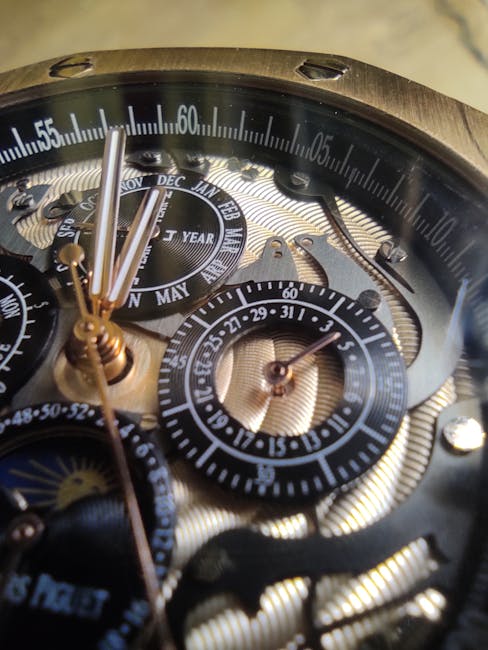
The Patek Philippe Perpetual Calendar 5320G retails for $98,000 in April 2026. At that price, you're buying one of watchmaking's most sophisticated mechanical achievements — a watch that automatically tracks day of the week, date, month, leap year status, and moon phase without manual adjustment until 2100 (when the Gregorian calendar's century rule requires intervention). This is genuine haute horlogerie complication in a wearable wristwatch, and it represents a specific category of Patek ownership that the Nautilus hype cycle has obscured in recent years.
I don't own a 5320G. I've spent extended time with one during multiple dealer visits, and I've talked at length with two owners about their experience. My conclusion: this is the watch Patek Philippe buyers who move beyond sport references eventually want, and it's one of the most honest purchases you can make at the $100K price point. The complication mechanism is genuinely remarkable, the finishing quality matches or exceeds competitor references, and the ownership experience is specifically rewarding in ways that simpler watches can't match. Understanding what you're actually buying requires looking past the retail price to the mechanical achievement.
What the Perpetual Calendar Actually Does
The perpetual calendar complication tracks the date accurately across months of varying length (28/29 days February, 30 days April/June/September/November, 31 days other months) without manual intervention. It also accounts for leap year cycles — every 4 years an extra day is added to February, except century years not divisible by 400 (2100 will not be a leap year, 2400 will be). The mechanism programs this logic into gear ratios that perform the calculation automatically.
Calibre 324 S Q is the current-production Patek movement in the 5320G — self-winding with perpetual calendar complication, 45-hour power reserve, 28,800 bph, Patek Philippe Seal certified. The movement uses a specific dual-cam mechanism where a 4-year cam (tracking leap year cycles) governs the calendar progression, with secondary cams tracking monthly length variations. This mechanical architecture has been refined by Patek across decades of perpetual calendar production.
The day-of-week, date, month, and moon phase displays all update automatically at midnight each day. On month-end transitions, the mechanism advances to the correct day and month simultaneously. On leap year year-ends, the mechanism accounts for February 29 vs 28. The moon phase display is accurate for approximately 122.5 years before drifting by one day — which means your 5320G's moon display will remain accurate until around 2146.
- Calibre 324 S Q automatic perpetual calendar
- Day, date, month, leap year, moon phase displays
- Case 40mm × 11.13mm, 18k white gold
- Patek Philippe Seal certification (exceeds COSC standards)
Power reserve at 45 hours creates specific ownership consideration: if the watch stops (run out of power while not on wrist), re-setting requires careful sequential adjustment of all calendar functions. This setting process takes 15-30 minutes and must be performed in specific order to prevent mechanical damage to the calendar mechanism. For this reason, 5320G owners typically use watch winders to prevent calendar re-setting — this is one of the specific ownership scenarios where winders provide genuine utility (as discussed in a separate article on watch winders).
The 5320G Design
The 5320G's design references vintage Patek perpetual calendars from the 1940s-1950s. The dial layout uses three subdials — day at 9 o'clock, date pointer at 3 o'clock (with the seconds subdial integrated), moon phase at 6 o'clock, and month aperture at 12 o'clock (with leap year indicator). The typography references 1940s dial conventions with specific Patek serif styling.
Case material is 18k white gold, with a polished dress watch profile at 40mm × 11.13mm. The relatively thin case is notable given the complication complexity — perpetual calendar movements typically add significant thickness, but the calibre 324 S Q is engineered to fit in a 5mm profile that allows dress-appropriate case dimensions. This engineering achievement is substantial.
Case finishing alternates polished and brushed surfaces across lugs, bezel, and case flanks. The lug geometry is specifically 1940s-inspired — slightly longer and thinner than modern Patek proportions, with specific curvature that echoes references 1518 and 1526 from the vintage era. On the wrist, the 5320G reads as a contemporary watch with distinctive vintage character rather than a modern design or a vintage reissue.
Dial is silver-opaline with applied white gold Breguet-style hour markers. The "Breguet" numerals — specific font style where numerals have classical typography — are a distinctive Patek choice that sets the 5320G apart from contemporary dial designs. Each numeral is individually applied rather than printed, which represents substantial manual work during dial production.
Complication Authenticity
Perpetual calendar complications vary substantially across manufactures. Lange's perpetual calendar (in references like the 1815 Perpetual Calendar) uses a specific architecture with unique date display. Vacheron's perpetual calendars (in Patrimony and Traditionnelle references) emphasize traditional arrangement. Audemars Piguet's perpetual calendars (specifically in the Royal Oak Perpetual Calendar 26574) use dial layouts that integrate with the Royal Oak sports aesthetic.
Patek Philippe's perpetual calendar approach emphasizes traditional dial layout and mechanical refinement derived from their specific historical perpetual calendar production. Patek produced the first wristwatch perpetual calendar (reference 97975) in 1925, creating a technical heritage that predates most competitors. Current Patek perpetual calendars like the 5320G continue this tradition with specific design choices that reference their historical perpetual calendar work.
Within the Patek perpetual calendar collection, references range from the 5320G (time-and-calendar) at $98K to more complicated references like the 5270 perpetual calendar chronograph ($195K) and the 5327 perpetual calendar ultra-thin ($155K). Each reference offers specific aesthetic and complication combinations. The 5320G is specifically the "foundation" perpetual calendar — pure perpetual calendar complication without chronograph or other additional mechanisms.
Ownership Experience
Wearing a 5320G creates specific ownership experiences that simpler watches don't provide. The daily check of the date display becomes a specific ritual — knowing the watch tracks the calendar automatically, that it's calibrated correctly for the year, that the moon phase accurately reflects lunar cycle, provides a specific connection with the mechanical achievement on your wrist. This isn't fanciful thinking; it's a genuine aspect of complicated watch ownership that straightforward time-and-date watches can't match.
The conversation about the 5320G tends to be different from conversations about sport Patek references. When sophisticated observers recognize what the watch is, the discussion shifts to specific complication appreciation rather than status positioning. This is the category of watch ownership that serious watchmaking enthusiasts specifically value.
Service consideration for the 5320G: Patek Philippe recommends 3-5 year service intervals. Service cost through Patek Geneva or US authorized service centers runs $2,200-$4,500 depending on specific work required. Perpetual calendar mechanisms require specialist attention during service — not every watchmaker has the training to service these complications properly, which means authorized service is typically essential rather than optional.
Service turnaround through Patek Geneva is 6-14 months typically. Through US authorized centers (New York, Beverly Hills, Miami), 4-8 months. The longer service cycles are specific to complicated Patek references and should factor into ownership expectations. During service periods, you'll need alternative watches for daily wear.
The Acquisition Reality
The 5320G is available at Patek Philippe authorized dealers with waitlists typically 12-24 months. This is substantially shorter than Nautilus waitlists (36+ months), reflecting that perpetual calendar demand doesn't carry the cultural hype cycle that drives sport Patek demand. For serious Patek customers willing to buy complicated references rather than sport references, the 5320G is genuinely acquirable.
The relationship path to 5320G acquisition: build initial Patek relationship through Calatrava or Aquanaut purchases ($30K-$50K investment), demonstrate serious complication interest through conversations with dealer staff, and request 5320G allocation after establishing customer profile. Most serious Patek ADs will offer allocation within 12-18 months of this sequence beginning.
Secondary market pricing for the 5320G: typical secondary market transactions run $95K-$125K (retail to slight premium). Unlike the Nautilus market, perpetual calendar Pateks don't trade at substantial grey market premiums. This makes secondary market acquisition a legitimate alternative to AD waiting if time horizon doesn't accommodate dealer relationship-building.
Reliable secondary market sources for 5320G: Sotheby's and Phillips auctions (typically 2-4 examples per major sale), WatchBox, Crown & Caliber, and specialist dealers. Authentication is straightforward — modern Patek complicated references are well-documented, and authentication specialists can verify authenticity through standard procedures.
The Investment Consideration
Patek Philippe perpetual calendars historically appreciate over long ownership periods. References from the 1990s and 2000s have appreciated 150-300% over 20+ year holding periods. Recent references (2010+) have appreciated 30-80% over 10-15 year holdings. These patterns suggest that 5320G acquisitions at current pricing have reasonable long-term appreciation potential.
However: investment focus is the wrong frame for perpetual calendar purchases. The 5320G is appropriate primarily for buyers who specifically want to own and wear a perpetual calendar complication — the appreciation pattern is secondary benefit rather than primary rationale. Buyers whose primary motivation is appreciation should focus on different asset categories (modern Patek sports references that have corrected from peak pricing, neo-vintage Patek perpetual calendars that trade below current production pricing).
For buyers who want haute horlogerie complication ownership as part of building a serious watch collection, the 5320G is genuinely one of the best current options. Lange Datograph Perpetual ($170K) offers comparable German perpetual calendar at higher price. Vacheron Traditionnelle Perpetual Calendar Ultra Thin ($125K) offers comparable complication at slightly lower price with different design approach. Audemars Piguet Royal Oak Perpetual Calendar 26574 ($145K but effectively unobtainable at retail) offers the same complication in sports watch aesthetic.
Among these options, the 5320G has specific advantages: actually available at retail within 12-24 months, Patek Philippe heritage in perpetual calendar production, and price point that makes it accessible rather than requiring additional relationship-building to access. These factors make the 5320G the probable correct answer for most serious collectors seeking perpetual calendar complication ownership.
The broader point: at the $100K price tier, complicated watches offer more compelling ownership than sport luxury watches. A 5320G provides genuine haute horlogerie complication; a similar-priced Nautilus provides brand positioning and sport watch functionality. For buyers focused on mechanical achievement rather than status signaling, the complicated Patek makes more sense. This preference pattern is specifically what distinguishes serious watch collectors from mainstream luxury buyers — and the 5320G is a specific reference that rewards the collector-focused approach to watchmaking.