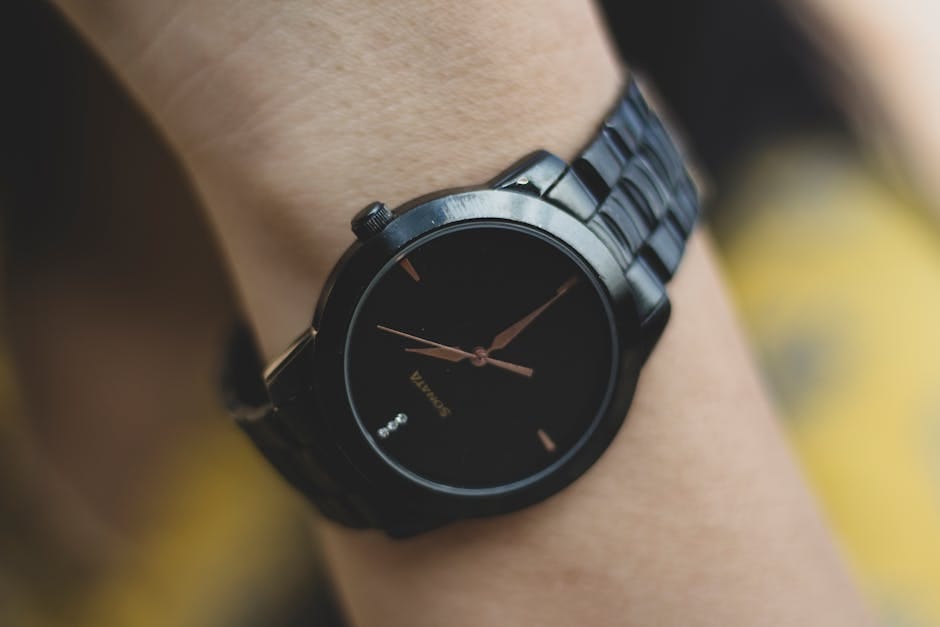
The watch collecting world has developed specific dogma about quartz versus mechanical movements. Mechanical superiority is assumed. Quartz movements are treated as lesser options deployed only for price reasons or for specific non-collector audiences. This consensus is wrong for a specific cohort of buyers — the person who will only own one serious watch for the next 20 years and wants it to reliably serve them across all contexts during that ownership period.
For this single-watch buyer, the quartz versus mechanical decision involves real tradeoffs that watchmaking community dogma tends to obscure. Quartz movements have genuine advantages in daily reliability, service economics, and wearing convenience. Mechanical movements have genuine advantages in haute horlogerie craftsmanship, potential resale value, and the specific aesthetic of mechanical engineering. Honestly evaluating these tradeoffs for your specific ownership context is the correct path — not defaulting to either extreme based on forum consensus or marketing positioning.
Accuracy Reality
A high-end quartz movement (like the Grand Seiko 9F series or the Longines VHP calibre) runs at ±10 seconds per year. That's not a typo — per year, not per day. Over 365 days of continuous wear, the watch accumulates approximately 10 seconds of timing error. Over 20 years of ownership, you might accumulate 200 seconds (about 3 minutes) of total error, assuming no battery replacement intervention.
A high-end mechanical movement — Rolex's calibre 3235, Omega's Master Chronometer 8800, or similar current-production Swiss calibres — runs at ±2 to ±5 seconds per day. Over 365 days, that's 730-1,825 seconds of accumulated error (12-30 minutes). Over 20 years, potentially 4-10 hours of cumulative drift, assuming you reset it periodically against reference time.
For a single-watch owner who wants the watch to show accurate time reliably, quartz wins this comparison decisively. The practical experience is that a high-end quartz watch tells you the correct time whenever you look at it. A mechanical watch requires occasional resetting to maintain accuracy, and even well-regulated mechanicals gradually drift from true time.
- High-end quartz accuracy: ±10 seconds per year
- Standard quartz accuracy: ±15-30 seconds per month
- High-end mechanical accuracy: ±2 to ±5 seconds per day
- Standard mechanical accuracy: ±5 to ±15 seconds per day
This accuracy gap widens if you look at mid-tier watches. A $3,000 mechanical watch typically runs at ±8-15 seconds per day. A $400 quartz watch runs at ±15-30 seconds per month (accurate within a minute monthly). The price-to-accuracy ratio strongly favors quartz for most buyers.
Daily Ownership Convenience
Mechanical watches require daily winding if they're manual-wind, or daily wrist movement if they're automatic. If you skip a day or two of wear, the watch stops and you have to wind it, set the time, and potentially set the date. If it's been more than a week of non-wear, the automatic winding may not adequately restart the movement, requiring hand-wind assistance.
Quartz watches require essentially zero intervention. Strap it on, look at accurate time, strap it off. Battery changes (on non-solar quartz) happen every 3-5 years for $15-25 at most watchmaker services. That's the total maintenance interaction for the first 20+ years of ownership.
For single-watch ownership where the watch serves as the primary timekeeping device across all life contexts — professional, casual, formal — the reliability convenience of quartz matters. Picking up a watch, trusting it to show accurate time, and moving forward with your day is a specific ownership experience that mechanical watches can't match for the weekly rotation or occasional-wear context.
Service Economics Over 20 Years
Mechanical watch service costs over 20 years of ownership: approximately $1,500-$3,000 in service fees across 2-4 service cycles. Additional costs for potential crown or crystal replacement, strap replacement (every 3-5 years on leather), and occasional regulator adjustment. Total ownership service cost typically $2,500-$4,500 over 20 years.
Quartz watch service costs over 20 years: approximately $100-$200 in battery replacements across 4-7 battery cycles. Potential crown or crystal replacement if needed. Strap replacement as with mechanical. Total ownership service cost typically $400-$800 over 20 years.
The service cost difference is substantial over multi-decade ownership — roughly $2,000-$3,500 additional for mechanical. Whether this difference matters depends on specific ownership expectations. For a single-watch owner who expects to hand the piece down to children after 20-30 years, the lower service burden on quartz reduces the heir's maintenance responsibility. For a collector who will trade the watch within 5-10 years, the difference is smaller.
Aesthetic Considerations
This is where the mechanical-quartz decision becomes genuinely subjective. Mechanical movements offer a specific aesthetic quality — the visible mechanics through sapphire case backs, the subtle sound of escapement operation, the heartbeat of a ticking seconds hand. For collectors who engage with watches as mechanical objects, these characteristics are essential and cannot be replicated by quartz.
Quartz movements offer different aesthetic qualities — the precise glide motion of the seconds hand on high-end quartz (comparable to mechanical glide motion), the specific authenticity of digital accuracy, and in some references (Grand Seiko Spring Drive, for example) a hybrid design that combines mechanical power delivery with quartz-regulated accuracy.
For a single-watch buyer who engages primarily with design, case finishing, and overall watch aesthetic rather than with mechanical details, quartz options at the same price point as mechanical offer equivalent or superior finishing at lower price. A $3,000 Grand Seiko quartz has identical case finishing to a $3,000 Grand Seiko mechanical, but runs 300x more accurately over time. For buyers whose connection to the watch is primarily visual and tactile rather than mechanical, this tradeoff favors quartz.
For buyers who specifically value mechanical engineering appreciation — the sense of owning a functioning mechanical machine, the ritual of morning winding, the subtle connection to centuries of Swiss watchmaking tradition — mechanical is irreplaceable. This isn't about accuracy or economics; it's about what kind of relationship you want with the object on your wrist.
Longevity Realistic Assessment
Mechanical watches properly maintained can function for 50-100+ years. Rolex Submariners from the 1960s still run accurately today. Patek Philippe perpetual calendars from the 1930s function perfectly after proper restoration. This longevity is genuine and represents one of the core value propositions of mechanical watchmaking.
Quartz watches have specific longevity concerns. The quartz oscillator itself doesn't wear out meaningfully over decades. The electronic components (stepper motors, integrated circuits, capacitors) have projected lifespans of 40-60 years under normal use. Battery replacement is required every 3-5 years. After 40-60 years, the electronic components may need replacement or the watch may become non-serviceable if replacement parts aren't available.
In practice, high-end quartz movements from the 1980s and 1990s are still being serviced successfully in 2026. The Breitling Aerospace from 1985 with its original SuperQuartz movement still functions accurately after occasional battery replacement. Early Grand Seiko 9F quartz calibres from 1993 still operate within factory specifications. The 40-60 year longevity projection appears conservative based on actual performance of early high-end quartz references.
For a 20-year single-watch ownership window, both mechanical and quartz options can be expected to function reliably throughout the period. Quartz doesn't have longevity concerns for this timeframe. The "mechanical lasts forever" narrative is primarily relevant for 50-100 year ownership scenarios, which few single-watch buyers actually plan for.
Resale Value Patterns
Mechanical watches from reputable manufactures (Rolex, Patek, Audemars Piguet, specific mid-tier Swiss brands) typically retain 60-80% of retail value after 5-10 years of ownership. Hot references can appreciate above retail. Resale liquidity is generally good.
Quartz watches typically retain 30-50% of retail value after the same period. Collector demand for quartz is smaller than for mechanical, and resale liquidity is more limited. High-end quartz references (Grand Seiko 9F, Cartier Tank with quartz, specific Breitling references) hold value better than standard quartz but still underperform mechanical comparables in retention.
For a single-watch buyer who expects to own the watch indefinitely, resale value is less relevant. For a buyer who might trade after 5-10 years, the mechanical advantage is meaningful — potentially $3,000-$5,000 difference on a $10K initial purchase over a decade of ownership.
The Specific Recommendation
For a single-watch buyer whose primary consideration is reliable daily timekeeping with minimal maintenance burden, quartz is the correct choice. Specifically: Grand Seiko 9F series references ($2,500-$4,500), high-end Cartier quartz references ($3,000-$8,000), or Breitling SuperQuartz references (depends on specific model). These watches tell accurate time reliably, require minimal intervention, and provide appropriate finishing quality for the price.
For a single-watch buyer whose primary consideration is ownership of a specific mechanical object with potential long-term collection value, mechanical is the correct choice. Specifically: Rolex Datejust 41 ($10,750), Omega Speedmaster Professional ($7,400), or Tudor Black Bay 58 ($3,950). These watches provide mechanical engineering experience at quality levels appropriate for long-term ownership, with reasonable service requirements over extended ownership windows.
The wrong answer: buying a $10K mechanical watch to use as a primary daily wear if you don't specifically care about mechanical movements. You'll experience the accuracy frustration and service burden while not gaining the ownership satisfaction that mechanical engagement provides. Either embrace the mechanical commitment or buy quartz — trying to have both leads to buyer regret.
The quartz-is-always-wrong dogma from watch collecting circles is, bluntly, often incorrect for buyer-specific contexts. A Grand Seiko 9F quartz represents legitimate horological achievement and correct watchmaking at its price point. Buying one doesn't require apologizing to mechanical purists. The correct watch for you is the one that matches your actual use case and preferences, not the one that matches forum consensus about theoretical ideal ownership.