Rolex encodes production dates in case serial numbers using specific alphanumeric systems that have evolved across decades of manufacturing. Reading these serial numbers correctly tells you the production year, helps authenticate pieces against their claimed dates, and reveals specific production details that affect value. This is essential skill for any serious vintage Rolex buyer, and it's one area where online resources are sometimes incomplete or outdated compared to the reality serious collectors need.
I've examined serial numbers on approximately 60 vintage Rolex pieces over the past decade — my own purchases, friends' pieces, and specific pieces I've evaluated for others considering purchase. The key insight: serial number analysis isn't just production date verification. It's a specific authentication tool that reveals whether movement, case, and documented history actually align. When they don't align, the piece probably has been serviced with component swaps or has other integrity issues that affect value substantially. Here's the practical guide that most Rolex authentication resources don't fully articulate.
Rolex Serial Number Systems
Early serial numbers (1926-1953): three-digit through six-digit sequential numbers. These correspond to production year through Rolex's internal records but require specific reference tables to translate accurately. Early serial numbers range from approximately 21,000 (1926) to 935,000 (1953). Specific year identification requires reference to vintage Rolex serial number charts compiled by specialists.
Six-digit serial numbers (1954-1987): continuous numerical sequence, no letter prefix. Sequential range runs approximately 1,000,000 (1954) to 9,999,999 (1987). Year identification requires consulting charts that map serial number ranges to specific years. This system is what most vintage Rolex collectors encounter when examining pieces from the classic vintage era (1960s-1980s).
Seven-digit serial numbers (1988-2010): letter-prefix followed by seven-digit sequence. The letter prefix indicates the production year — R prefix = 1987-1988, L = 1989-1990, E = 1990-1991, and so on through the alphabet. Specific letter/year mappings: R (1987-88), L (1989-90), E (1990-91), X (1991-92), N (1991-92), C (1992-93), S (1993-94), W (1994-95), T (1996), U (1997-98), A (1998-99), P (2000), K (2001), Y (2002), F (2003-04), D (2005-06), Z (2006-07), M (2007-08), V (2008-09), G (2010-11).
Random serial numbers (2010-present): Rolex switched in 2010 to a randomized alphanumeric serial system specifically to prevent serial-based counterfeiting and timing arbitrage. Current serial numbers don't correspond to production dates through public mapping. For pieces after 2010, date verification requires certification documentation or Rolex internal records.
- Pre-1954: three-to-six digit sequential, requires reference charts
- 1954-1987: six-digit sequential, range-based year mapping
- 1988-2010: letter-prefix seven-digit, alphabet-based year mapping
- 2010-present: randomized alphanumeric, non-mappable without Rolex records
Learning these systems requires a specific reference — Serial Number Chronology from vintageportfolio.com or the Rolex Serial Number Date Chart from MeantToBeWorn are reliable online resources. Print physical copies and keep them accessible when examining vintage Rolex pieces. The mapping charts are detailed and useful for any collector working in this space.
Where to Find Serial Numbers
Case serial numbers on vintage Rolex are engraved on the case lug between the 6 o'clock lugs (visible when the bracelet is removed). This location is consistent across vintage references from the 1950s through current production, with specific evolution in engraving depth and font across decades. The engraving should be crisp and clearly readable without excessive polishing — deeply polished cases often have worn or partially-obliterated serial engravings.
Case reference numbers on vintage Rolex are engraved on the case lug between the 12 o'clock lugs (opposite side from serial number). Reference numbers identify the specific watch model — 5513 (Submariner), 6263 (Daytona), 1016 (Explorer), 1655 (Explorer II), etc. Reference numbers should match the watch's dial signature and movement configuration. Mismatches indicate case swaps during service history.
Movement serial numbers are engraved on the movement itself, visible through case back removal. Movement serials don't correspond to production year in the same way as case serials — Rolex produced movements in batches that sometimes preceded or followed corresponding case production by months or years. However, movement serial examination verifies that the movement is period-correct for the watch's claimed production date.
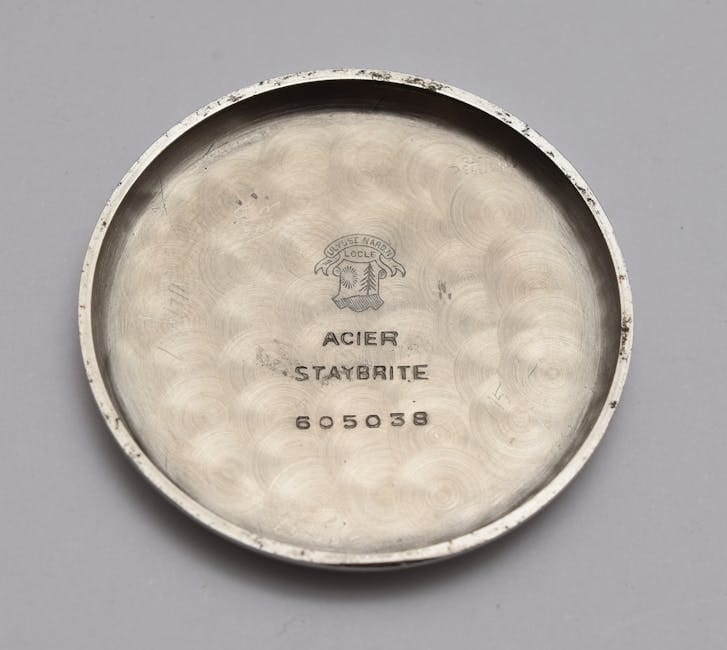
Inside case back engravings on specific vintage Rolex references include additional date information. Rolex engraved dates inside case backs during specific production periods, providing cross-verification with external serial numbers. These are revealed only through case back removal, which should be performed by specialist watchmaker rather than general inspection. For valuable vintage pieces, specialist inspection including internal case documentation is worth the cost.
Authentication Through Date Analysis
Specific authentication tests using serial number analysis. Test 1: does the case serial number correspond to the claimed production year? If a seller represents a piece as "1968 vintage" but the case serial number corresponds to 1972, the piece either has case swap history or is misrepresented. Neither scenario is positive for value.
Test 2: do the case serial and reference number combinations reflect authentic production patterns? Specific Rolex references were produced during specific years with specific serial ranges. A 6263 Daytona (produced 1971-1988) with a serial number from 1960 is definitively wrong — the reference didn't exist in 1960 production. Reference-specific production databases allow verification of correct serial/reference alignment.
Test 3: does the movement serial number correspond to period-correct production for the movement generation? The Rolex calibre 1520 (used in 5513 Submariners) was produced during specific years. A movement serial from the wrong era in a 5513 case indicates movement swap during service history. This doesn't necessarily compromise function, but it affects value meaningfully.
Test 4: do inside case back engravings (when present) align with other date evidence? Specific vintage pieces have inside case back engravings that should match external case serial number dating. Inconsistencies reveal service history or authentication problems that should be investigated thoroughly.
Common Authentication Failures
Service dial replacement during warranty periods: Rolex routinely replaced dials during service in the 1980s and 1990s, specifically for pieces that had radium lume concerns (radium was phased out during this period). These service-dialed pieces are authentic Rolex watches with authentic Rolex dials, but the dial isn't the original dial that left the factory with the piece. For vintage collectors, original dials command substantial premiums over service-dialed equivalents — sometimes 30-50% value difference.
Authentication: compare dial signature details (serif patterns on text, specific lume plot positioning, printing quality) to known-original examples from the same production era. Service dials often have slightly different printing characteristics or subtle typography variations from period-original dials. Specialist examination reveals these differences that aren't visible in general inspection.
Case polishing and serial number wear: aggressively polished cases can have serial numbers worn to near-illegibility. This is both an authentication challenge (hard to verify the serial) and a value impact (overpolished cases are worth substantially less than unpolished examples). Examine serial engraving depth under magnification — sharp engraved edges indicate minimal polishing; soft or worn edges indicate substantial polishing history.
Bezel insert replacement: vintage Rolex bezel inserts were relatively easy to replace during service, and different periods used different insert types (aluminum, hesalite, matte, glossy). Bezel insert replacement during service is common and doesn't necessarily compromise value, but ensuring the replacement insert is period-correct for the specific piece is important for collectors.
Movement parts replacement: chronograph movement components in references like the 6263 Daytona were sometimes replaced during service periods. Service replacement of specific components (pallet forks, escape wheels, balance springs) is standard maintenance, but wholesale movement part replacement affects specific components that collectors value. Internal movement inspection reveals replacement history that external inspection doesn't show.
Practical Inspection Workflow
For any serious vintage Rolex purchase, specific inspection sequence applies. Start with case exterior documentation: serial number, reference number, lug geometry, bezel condition, case finish, crystal type. Take macro photographs of all external details before any internal examination.
Next: verify serial number against claimed production date using reference charts. Document the discrepancy (if any) between claimed date and serial-indicated date. Any discrepancy becomes a specific question to discuss with the seller.
Next: photograph dial details from multiple angles under different lighting. Compare dial printing, lume plot configuration, and specific signature details to period-original examples from the same reference and year. Document any discrepancies for specialist consultation if needed.
For pieces above $15,000, commission formal authentication through specialists. Eric Ku, Matt Bain, or HQ Milton specialists can evaluate pieces through photographs or in-person inspection. Authentication typically costs $300-$800 per piece but provides specific verification that general inspection can't match.
For pieces with any authentication concerns or inconsistencies revealed during inspection, stop. Don't proceed with purchase until concerns are resolved. Authentic vintage Rolex pieces are available in sufficient quantity that settling for questionable pieces is unnecessary. The collector market has enough legitimate inventory that patient waiting produces better acquisitions than compromising on authentication standards.
Building Authentication Expertise
Authentication expertise develops through examination experience. Specific practices that accelerate expertise: attend Phillips and Christie's auction previews to examine authenticated pieces under specialist guidance, join collector community events where experienced collectors can share knowledge, and purchase specialist reference books (Vintage Rolex Passion, Ultimate Rolex series) that document specific piece details.
The Rolex Encyclopedia by Mondani Publishing provides comprehensive reference details for vintage Rolex authentication. Vintage Rolex Passion magazine (quarterly publication) includes detailed authentication articles written by specialists. Online resources including VintageRolexForum and the Vintage Rolex Tumblr archive provide community-generated authentication documentation.
For specific vintage Rolex references you're considering purchasing, spend 20+ hours studying available online images of authenticated examples before evaluating prospective purchases. Familiarity with how authentic pieces should look builds the specific pattern recognition that identifies problems in inauthentic pieces. This study time compounds — the 20 hours you invest studying before your first purchase accelerates evaluation on all subsequent purchases.
The broader principle: vintage Rolex authentication isn't mystical, but it is specialized. Serial numbers, dial details, movement components, and historical production patterns form a web of specific information that either aligns correctly or reveals authentication problems. Learning to read this information systematically separates serious collectors from speculators who rely on sellers' representations. The authentication investment pays off specifically in the pieces you choose not to buy — the financial downside from avoided bad purchases typically exceeds the upside from better-authenticated purchases you do complete. Both outcomes reward the authentication learning investment, and both paths lead to more successful vintage Rolex collecting over time.