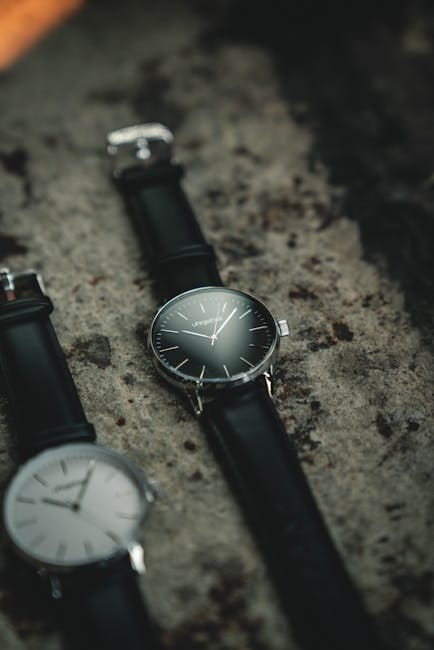
Laurent Ferrier produces approximately 150 watches annually across all his references, working from his small atelier in Plan-les-Ouates, Geneva. The Classic Micro-Rotor at $68,000 retail represents the entry point to Laurent Ferrier ownership — a technically sophisticated manual-wound dress watch with specific engineering refinements that place it in the top tier of current independent watchmaking. For collectors moving beyond mainstream Swiss manufactures toward serious independent haute horlogerie, the Classic Micro-Rotor is one of the specific pieces worth understanding deeply.
Laurent Ferrier himself is the former chief watchmaker at Patek Philippe, where he worked for 37 years before establishing his own independent workshop in 2009. His work embodies Patek-level finishing quality with specific Geneva watchmaking tradition and innovation in areas (escapement design, complication engineering) where the mainstream manufactures haven't pushed as hard. Owning a Laurent Ferrier means owning a watch produced by people who learned their craft at the highest level of Swiss watchmaking and now apply that expertise in a focused independent setting. Understanding what this produces requires looking beyond the retail price to the specific engineering and finishing work involved.
The Laurent Ferrier Story
Laurent Ferrier worked at Patek Philippe from 1972 to 2009, rising to chief watchmaker. During his Patek career, he was responsible for specific technical developments including contributions to the calibre 240 ultra-thin automatic movement, perpetual calendar mechanisms, and tourbillon implementations. When he established his independent workshop in 2009, he brought this accumulated expertise to a production scale measured in dozens of watches annually rather than thousands.
The Classic Micro-Rotor launched in 2010 as one of Ferrier's first reference — initially named "Galet Classic" and refined across multiple iterations since. Current production uses the calibre FBN 229 manual-wind movement with specific engineering refinements including natural escapement technology (a specific escapement type that Ferrier has championed as alternative to standard Swiss lever).
Production quantity: approximately 30-40 Classic Micro-Rotor examples per year. Total Laurent Ferrier production across all references is approximately 150 watches annually. This is substantially smaller than F.P. Journe (approximately 900 watches/year) and dramatically smaller than Patek Philippe (approximately 65,000 watches/year).
- Case 40mm × 10.1mm, 18k white gold or rose gold
- Calibre FBN 229 manual-wind, 72-hour reserve
- Natural escapement technology (Laurent Ferrier design)
- Sapphire case back showing hand-finished movement
The brand identity centers on specific design principles: minimalist dial aesthetic with refined typography, hand-finished movements at Geneva Seal standard, and technical innovation in specific areas (escapement, complication mechanisms). Laurent Ferrier has refined these principles across roughly 15 years of independent production, building a body of work that represents one of the most consistent independent watchmaking visions currently working.
The Natural Escapement Technology
Natural escapement is the specific technical innovation that distinguishes Laurent Ferrier movements from standard Swiss lever escapements. Developed originally by George Daniels (the English watchmaker who also developed co-axial escapement later adopted by Omega), natural escapement uses two escape wheels working in alternating sequence to deliver impulse to the balance wheel.
The functional advantage: natural escapement provides direct impulse to the balance wheel on both oscillation directions, whereas standard Swiss lever escapement delivers impulse only on one direction. This direct dual-direction impulse theoretically provides more energy-efficient balance wheel operation with less friction loss through the escapement mechanism.
Laurent Ferrier licensed natural escapement technology from the Daniels estate and implemented it specifically in his Classic Micro-Rotor and other references. The practical benefit: movements maintain accuracy and power reserve with less internal friction than standard lever escapement designs. In Ferrier's specific implementation, power reserves of 72 hours are achieved from barrels that would support approximately 55-60 hours on standard lever escapement architectures.
Whether this specific technical advantage justifies the $68K retail price is a genuine question. The natural escapement improvement is measurable but subtle — in daily wear, a standard Swiss lever movement running at COSC chronometer tolerance keeps time essentially as accurately as a natural escapement movement. The engineering difference is meaningful as watchmaking achievement, but it doesn't translate to dramatic functional advantage. The Classic Micro-Rotor justifies its price through the combination of natural escapement, extreme hand-finishing quality, and small-production independent watchmaker exclusivity rather than through pure performance advantage.
Case and Dial Design
The Classic Micro-Rotor case is 40mm × 10.1mm in 18k white gold or rose gold. The case profile is classically proportioned — round, with lugs flowing naturally into the case sides, no aggressive case edges or unusual geometric elements. On the wrist, the watch reads as a refined dress watch with specific proportions that work under dress shirts and in formal contexts.
Dial design emphasizes minimalism. The dial is matte or sunburst silver with applied baton hour markers and a small subsidiary seconds display at 6 o'clock. No date display. No day display. No complications visible on the dial. The watch shows hours, minutes, and seconds — that's it. This restraint is deliberate, matching the "quiet luxury" positioning that Laurent Ferrier maintains across his references.
Hand design uses specific Laurent Ferrier proportions — leaf-style hour and minute hands in 18k gold (matching case material), with a thin baton seconds hand at the 6 o'clock subdial. Hand finishing is hand-polished to mirror quality on the flat surfaces, with specific grain treatment on non-visible edges.
Typography on the dial uses Laurent Ferrier's signature serif font for brand signature and reference text. The specific serif proportions and spacing are distinctive — you can identify a Laurent Ferrier dial from other manufactures by typography alone once you've examined several. This typographic distinctiveness is part of the brand identity signaling.
Movement Finishing Excellence
The calibre FBN 229 is hand-finished throughout to Geneva Seal standards, with specific elements reaching beyond those standards. Visible through the sapphire case back: Geneva stripes on all bridges applied manually, perlage on main plate covering non-visible areas, hand-polished bevels on all bridge edges (including internal angles that most manufactures don't finish), blued screws in polished chatons, and specific signature "Galet" engraving on the main plate.
The micro-rotor (positioned at 12 o'clock when viewing through case back) is 18k gold with hand-applied decoration including perlage pattern and Laurent Ferrier signature engraving. The rotor itself is a specific refinement of Ferrier's design with particular attention to balance and wind efficiency.
Hand-finishing time per movement: approximately 80-120 hours of specialist finishing work. This compares to approximately 50-70 hours for Patek calibres and 40-60 hours for Vacheron calibres in similar tier. The Laurent Ferrier finishing time reflects the depth of hand-work required to achieve the specific finishing standards he maintains.
Natural escapement components require specific finishing considerations. The dual escape wheels are each hand-finished with specific attention to tooth profile accuracy. The escapement bridges and pallet systems are finished with particular attention to the dual-direction impulse geometry. These specific finishing requirements add complexity to movement production that standard escapement designs don't require.
Acquisition Reality
Laurent Ferrier distribution is through specific boutique partnerships and direct sales through the manufacture. The primary US distribution partner is The Hour Glass (New York boutique), with additional availability through specific independent watchmaking specialists globally. Allocation is limited — new collectors typically establish contact with distributors 6-18 months before receiving allocation.
Primary market acquisition: typical wait after establishing dealer relationship is 9-18 months for Classic Micro-Rotor allocation. The limited production means even serious collectors with established relationships may wait 2+ years for specific configuration preferences. White gold is more available than rose gold; both materials have similar waitlist timing.
Secondary market availability: approximately 15-30 Classic Micro-Rotors appear on secondary market annually through various channels. Auction houses (Phillips, Christie's, Sotheby's) are the primary secondary market venue. Specialist dealers (Analog:Shift, HQ Milton, specific European vintage specialists) occasionally have pieces. Chrono24 has limited Laurent Ferrier inventory but includes some reputable Trusted Checkout dealers with Ferrier pieces.
Secondary market pricing: typical auction and dealer pricing for Classic Micro-Rotor runs $65-85K (roughly at or slightly below retail for white gold, sometimes slight premium for rose gold). This stability reflects the specific collector base — primarily focused on ownership rather than speculation, with limited secondary market liquidity since Laurent Ferrier collectors tend to hold pieces long-term.
Comparing to Other Independent Watchmakers
Within current independent watchmaking, Laurent Ferrier competes with specific other manufactures that represent similar position and pricing tier. F.P. Journe (approximately 900 annual production, price tier $35K-$250K+, more established brand recognition). Akrivia Rexhep Rexhepi (approximately 50 annual production, price tier $100K+, younger emerging brand). Philippe Dufour (approximately 10 annual production, price tier $250K+, reference standard independent watchmaker).
Laurent Ferrier's position in this hierarchy: slightly higher production than Akrivia, lower production than F.P. Journe, comparable finishing quality to both, with specific technical innovation (natural escapement) that distinguishes Ferrier's engineering focus. For collectors wanting serious independent watchmaking below Dufour's stratospheric pricing, the choice between F.P. Journe, Laurent Ferrier, and Akrivia becomes a specific brand preference question.
F.P. Journe offers more diverse complications and broader collection. Akrivia offers contemporary Geneva haute horlogerie aesthetic. Laurent Ferrier offers refined traditional Swiss watchmaking with specific technical innovation. Each fills different collector preferences — not competing directly so much as offering alternative paths through independent watchmaking acquisition.
Among these options, the Classic Micro-Rotor is arguably the most accessible entry point to serious independent watchmaking — slightly less exclusive than Akrivia, less hyped than recent F.P. Journe, and more available than Dufour. For a collector's first independent watchmaker acquisition, Laurent Ferrier represents specifically the correct tier to enter without overpaying for brand premium or requiring multi-year relationship-building to access.
The Ownership Experience
Living with a Classic Micro-Rotor is different from living with mainstream luxury watches. The daily wind ritual (manual wind movement with 72-hour reserve) creates specific morning engagement with the watch. The restrained dial design rewards sustained looking in ways busy dial references don't. The recognition pattern from other people is specifically different — most viewers don't recognize Laurent Ferrier, so the watch becomes a conversation piece only for informed viewers, which matches the quiet-luxury positioning the brand intends.
Service considerations: Laurent Ferrier services pieces at the manufacture in Geneva. Turnaround runs 6-14 months for standard service. Cost is $3,500-$5,500 depending on specific work required. The service infrastructure is smaller than mainstream manufactures but adequate for the specific Laurent Ferrier ownership base. Plan on service intervals of 5-7 years for regular wear.
Insurance and protection: standard collector insurance (Jewelers Mutual, Hodinkee Insurance) covers Laurent Ferrier at appropriate scheduled values. Appraisal for insurance purposes requires specialist appraiser familiar with independent watchmaking valuation — generic jewelry appraisers may undervalue the pieces. Annual insurance premium on a $68K Classic Micro-Rotor runs approximately $500-$850 depending on coverage and deductible structure.
The Laurent Ferrier Classic Micro-Rotor represents specifically what "haute horlogerie from an independent watchmaker" should be: technical innovation, refined traditional design, hand-finishing excellence, limited production scale, and ownership experience that rewards serious engagement with the object. For collectors ready to move beyond mainstream luxury into serious independent watchmaking, the Classic Micro-Rotor is one of the specific right answers in 2026. The price is genuinely justified by the underlying watchmaking, the acquisition is possible through patient dealer relationship-building, and the ownership experience delivers specifically what the brand promises. This is the category of watch that defines serious collecting once you've moved past the status-driven acquisitions that dominate early collection development.