
The Watches and Wonders 2026 fair in Geneva closed in early April, but the secondary-market response to the new releases has been the more interesting story over the past six weeks. The pre-owned and grey-market pricing for the year's signature releases — the new Rolex Land-Dweller, the updated Patek Philippe Nautilus 5811/1G, and Audemars Piguet's Code 11.59 line refresh — has shifted in ways that say more about the actual collector market than the brand marketing did at the fair itself.
Here is the late-May luxury watch briefing for the working collector — what's worth following, what's hyped, and where the market is genuinely settling for someone buying with their own money rather than building an Instagram portfolio.
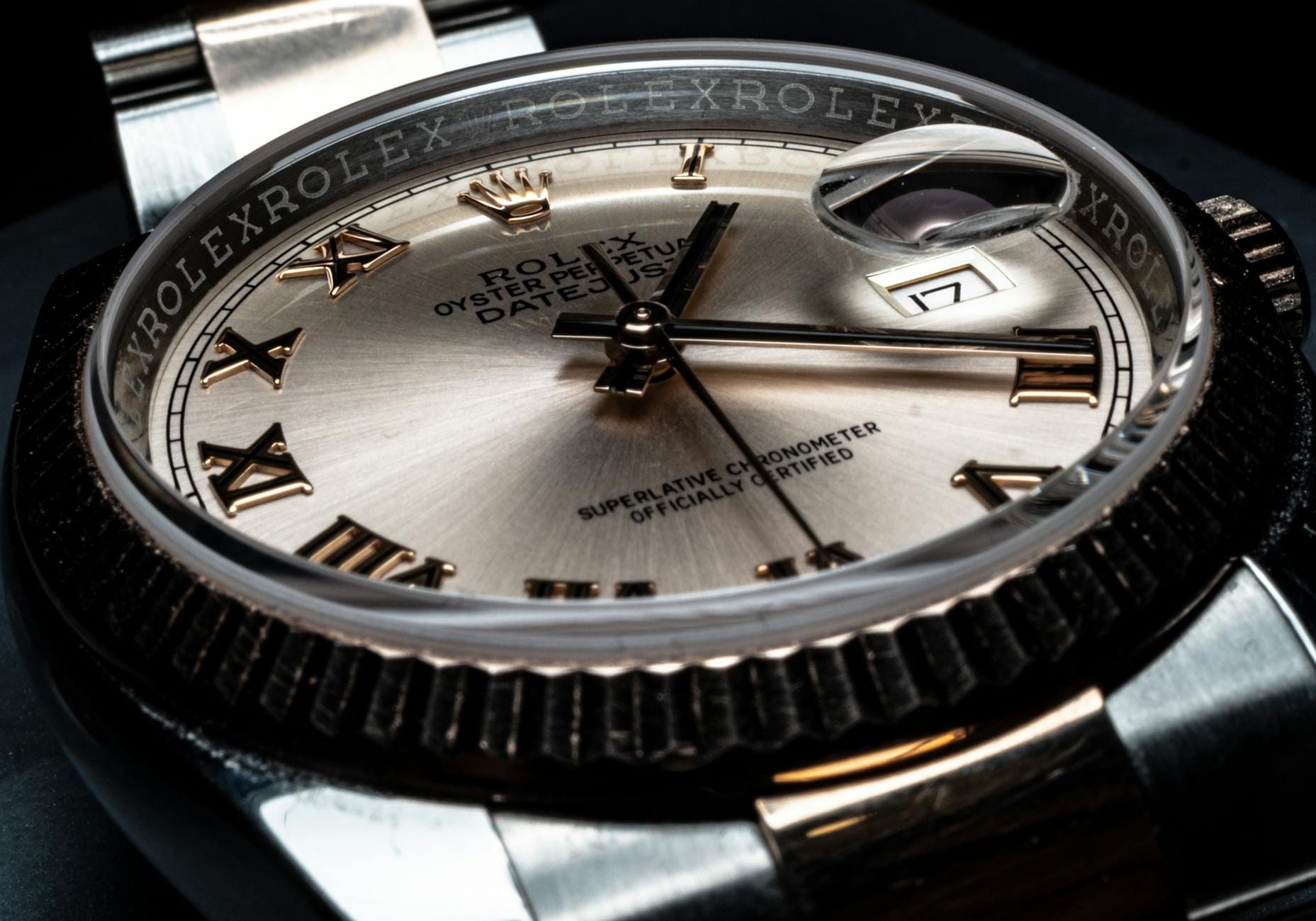
Rolex: the Land-Dweller settled at retail rather than premium
The Rolex Land-Dweller (the new sport-watch line launched in April with the Reference 127334 in steel) was expected by the secondary market to trade at 30-50 per cent premium given the Rolex pattern of the past decade. As of late May, the steel 36mm sits at retail in authorised dealer waiting lists in London at £11,400, and on Chrono24 from European authorised dealers at £11,800-12,400. This is approximately retail, not premium.
The implication is significant. Either the secondary market has finally rationalised on Rolex (after years of irrationally elevated premiums on every new release), or the Land-Dweller specifically isn't generating the collector heat that the GMT-Master II Pepsi or the Daytona ceramic generated at their launches. Both readings are interesting.
What this means for the entry-level Rolex buyer: the dealer waiting list approach is back to functional. The Submariner no-date 124060 in steel is now obtainable on a 4-6 month wait at major UK dealers (Watches of Switzerland, Tag Heuer authorised, Marsh & Lo). The decade of "Rolex is impossible to buy at retail" has shifted in 2025-2026.
Patek Philippe: Nautilus succession concerns
The Patek Philippe Nautilus 5811/1G in white gold (released January 2026, replacing the discontinued 5711) is genuinely beautiful and trading at a 15-20 per cent premium on the secondary market. Retail £55,500; secondary £64,000-67,500.
The interesting story is the Aquanaut 5168G in white gold, the larger 42mm version, which is now trading below retail on the secondary market for the first time in seven years. Retail £52,500; current secondary £46,000-49,800. This is meaningful — Patek pieces typically hold or appreciate. The reading from the dealers I've spoken to: collectors are concentrating preferences on the Nautilus core line and dispersing from the broader Aquanaut family.
For first-time Patek Philippe buyers (a category genuinely worth respecting): the Calatrava reference 6119R in rose gold remains the entry to the brand that has the most genuine watchmaking content per pound. Retail £29,800; secondary 5-10 per cent below retail.
Audemars Piguet: the Code 11.59 reconsideration
The 2020 Code 11.59 launch was a near-disaster for AP — the design was criticised, the demand for the established Royal Oak overshadowed it, and the secondary market traded the early references at significant discounts to retail through 2022.
The 2026 update — refined case proportions, redesigned lugs, new dial finishings — has begun to reverse this. The 41mm Code 11.59 Selfwinding in steel (reference 15210ST.OO.A002CR.01) is now trading at retail or marginal premium on the secondary market. The collector consensus has shifted, slowly. The reference is becoming genuinely collectible, six years after launch.
For the AP-curious buyer: the Royal Oak 15500ST remains the recommendation but the waiting lists are still 18-24 months at authorised dealers in 2026. The Code 11.59 at near-retail availability is the alternative that gives you the watchmaking content without the multi-year wait.
The independent watchmakers: Voutilainen, Akrivia, Vianney Halter
The independent watchmaker segment has continued to outperform the established brands as the dominant store-of-value story for serious collectors. Voutilainen's 28 series has appreciated approximately 18-22 per cent annually since 2019. Rexhep Rexhepi's Akrivia Chronometre Contemporain trades at multiples of the original retail (£100,000+ retail in 2025, secondary £180,000-240,000 in 2026). Vianney Halter's Antiqua continues to be the cult collector's piece at six-figure entry levels.
The honest market reading: the independent watchmaker pieces are the assets most likely to maintain or appreciate value over 5-10 year holding periods. They are also the pieces with the longest acquisition timelines (4-7 years for Voutilainen, 8-12 years for Rexhep Rexhepi). The compromise: the established secondary market dealers (Phillips, Christie's, Sotheby's London) provide access at premium but with reliable provenance.
The everyday-watch decisions for working professionals
For the working professional building a single-watch collection in 2026, the recommendations have shifted modestly:
£3,000-£5,000: Tudor Black Bay 58 (the 39mm proportion is genuinely better than the 41mm versions, RRP £3,250), Grand Seiko SBGA413 (the "snowflake" Spring Drive in 41mm, RRP £6,500 but available below retail in 2026), or the Omega Seamaster Aqua Terra 38mm at £5,200 retail.
£8,000-£15,000: the Rolex Explorer 124270 at £8,700 retail (genuinely available with a 4-6 week wait), the Omega Speedmaster Professional Moonwatch at £8,800 (the Hesalite 310.30 reference), or the IWC Mark XX at £5,500 (the spiritual successor to the Mark XII pilot's watch).

£15,000-£30,000: the Rolex Submariner Date 126610 (£12,800 retail, approximately 4-month wait), Lange & Söhne 1815 in white gold at £24,500, or the Vacheron Constantin Patrimony at £22,500.
The watches I would not buy in 2026
Hublot pieces above £15,000. The brand identity continues to be inseparable from the marketing partnerships (FIFA, F1, celebrities) and the watchmaking content per pound is weak. The secondary market reflects this — significant discounts on most references.
Most boutique-only Cartier limited editions. The brand is genuinely strong, but the limited-edition strategy has produced too many "limited" pieces that trade at discount on the secondary market within 18 months.
Any Swiss-made smartwatch hybrid. The category has not found a credible product in five years of trying. The pure mechanical watch at this price point or the dedicated Apple Watch / Garmin at smart-watch prices both deliver better outcomes than any hybrid.
The collector's discipline for late May 2026
Define the next purchase in writing — specific reference, specific budget, specific timeline. The Instagram-driven impulse purchase is the most expensive habit in luxury watch collecting.
Buy from authorised dealers wherever the waiting list is realistic. The provenance, the warranty, and the future resale all benefit from the AD purchase route. Grey market only when the model is genuinely unavailable through ADs and you've done the authentication work.
Consider the independent watchmaker tier seriously for any purchase above £20,000. The established brand premium at this level is substantial and the independent pieces hold value better. The trade-off is acquisition difficulty, which for a serious collector with patience is manageable.
The watch market in 2026 has rationalised in ways that benefit the disciplined buyer. The years of "any Rolex at any price" are behind us. The collector who plans carefully and buys patiently in the next 12-24 months will accumulate a meaningfully better collection than the Instagram-driven buyer of the 2020-2022 cycle.