A collector I know keeps a rotation of six watches and exactly one pair of sunglasses — a pair of Ray-Ban Wayfarers he bought at an airport in 2011 because his old ones broke. He can tell you the beat rate of his Speedmaster's caliber and the exact premium his Tudor Black Bay commands over retail, but he's never once thought about what's sitting on his face while he checks the time. That's changing fast across the same collector circles that pushed independent watchmaking into the mainstream over the past two years. The people who moved from Rolex to FP Journe and Voutilainen because they wanted something made by hand, in small batches, by someone with a name attached to the work, are starting to ask the same question about eyewear — and the answer they're finding is that almost nobody making sunglasses at scale is doing anything close to what a $150 movement kit from a Swiss atelier represents in watchmaking.
Why Eyewear Is Following the Independent-Watch Script
The pattern is almost identical to what happened with watches between 2022 and 2025. A handful of brands stopped competing on logo recognition and started competing on material sourcing, hand-finishing, and limited production runs, and a specific type of buyer — the one already spending five figures on a watch collection — noticed. Jacques Marie Mage, founded in 2014 by a designer who spent years in the film industry before turning to eyewear, builds frames in runs as small as 350 pairs worldwide and lists the acetate supplier, the hinge type, and the polishing method the way a watch brand lists its movement caliber. Cubitts, a UK operation that still cuts and polishes frames in its own workshop rather than outsourcing to the handful of factories that supply most of the eyewear industry, built its following on exactly that transparency. Matsuda, working out of Sabae, Japan — the same region that makes movement components for several Swiss watch brands — has been hand-finishing frames since the 1980s and only recently found an audience outside a small circle of design obsessives.
None of this is really about sunglasses in the way most people think about sunglasses. It's about the same appetite that drove collectors toward Akrivia and Moritz Grossmann: a preference for objects where you can trace exactly who touched the thing and why it costs what it costs, instead of paying a premium for a name stamped on a temple arm cut from the same sheet of plastic as everyone else's.
The Persol Problem
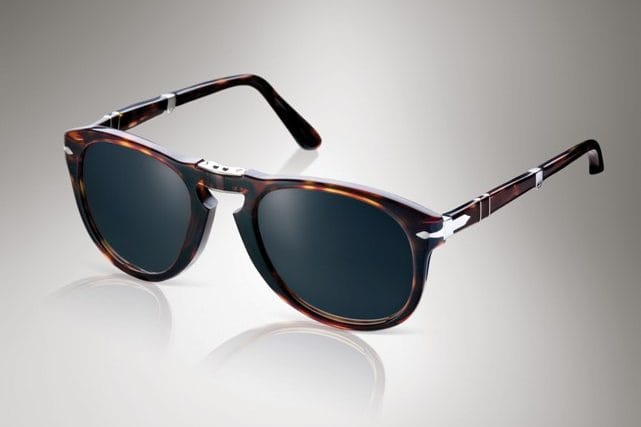
Persol is the obvious reference point here, and it deserves credit — the 649 and 714 are genuinely well-made, with the brand's signature arrow hinge still assembled by hand at its Italian factory. But Persol is also owned by EssilorLuxottica, the same conglomerate that owns Ray-Ban, Oakley, Oliver Peoples, and roughly 80% of the mid-to-premium eyewear market, and that scale shows up in small ways: molded rather than hand-cut acetate on most current models, standardized lens options across dozens of brands under one roof, and a design language that gets refreshed on a marketing calendar rather than when a maker decides a shape is actually finished. A $340 pair of Persol 649s is a genuinely good pair of sunglasses. It is not a collectible in the way a limited Jacques Marie Mage run is a collectible, and pretending otherwise is how people end up disappointed with both categories.
What Hand-Cut Acetate Actually Buys You
Most premium eyewear, including plenty of brands charging $400 and up, uses injection-molded acetate — heated, pressed into a mold, and trimmed. It's fast, consistent, and cheap to scale. Hand-cut acetate, the kind Jacques Marie Mage and Matsuda both use, starts as a solid block — often from Mazzucchelli, the Italian supplier that's been making acetate sheets since 1849 and supplies nearly every serious eyewear maker in the world — and gets milled, filed, and polished by hand over a process that can run five to seven days per frame. The difference isn't cosmetic. Molded acetate has a slightly softer edge and a visible seam where the mold closed; hand-cut acetate has a beveled edge with a depth and sharpness that only shows up under close inspection, and it holds that edge for years instead of rounding off after a summer of being tossed in a bag.
Nobody launches a numbered eyewear run and expects it to stay affordable.
This is where the nuance actually matters: hand-cut acetate is not automatically better for daily wear. It's heavier, in some cases by 15 to 20 grams versus a molded equivalent, and that weight sits on your nose for eight hours if you're wearing the frame all day rather than for the twenty minutes it takes to photograph a watch collection. A Jacques Marie Mage frame at 52 grams is a noticeably different experience on your face than a Ray-Ban Wayfarer at 31 grams, and nobody selling you the hand-cut version is going to volunteer that trade-off.
Jacques Marie Mage: The Anchor Brand
Jacques Marie Mage has become the reference point for this entire category the way FP Journe became the reference point for independent watchmaking — not the cheapest option, not the most obscure, but the one that proved the market existed. Frames typically run $700 to $950, production runs are numbered and capped, and the brand names most releases after real people — poets, artists, musicians — rather than model codes. The Dealan and Molino shapes have become the brand's most recognized silhouettes, both built on thick, aggressively rounded acetate with metal temple details that reference vintage motorcycle goggles more than anything in a typical eyewear catalog. Buy the Molino if you want the shape people will actually recognize on resale; the secondary market for discontinued JMM runs has held value noticeably better than comparable pieces from Oliver Peoples or Tom Ford, in part because the numbered runs create real scarcity instead of manufactured scarcity.
Cubitts: The Entry Point That Doesn't Feel Like One
Cubitts sits at a genuinely different price point — most frames run £195 to £295, so roughly $250 to $375 at current exchange rates — and that's exactly why it works as a starting point rather than a compromise. The brand cuts and assembles frames in its own workshop, offers a bespoke fitting service at its retail stores that measures your face the way a bespoke tailor measures shoulders, and doesn't chase the limited-run scarcity model at all. That's a real difference in philosophy from Jacques Marie Mage, not a lesser version of the same idea. Skip Cubitts if what you actually want is the collector's-item feeling of a numbered run — buy it if you want frames built with the same care but priced for someone who wants to wear sunglasses, not archive them.
Matsuda: The Collector's Brand Nobody Talks About
Matsuda is the deepest cut in this category, and most watch collectors haven't heard of it yet, which is precisely the appeal for the buyer who already owns an independent watch and wants the eyewear equivalent of that obscurity. The brand's metal frames use a technique called hand-engraving that traces back to traditional Japanese metalwork — filigree patterns cut directly into the temple arms by hand, no two pairs identical down to the smallest detail — and prices run from $700 for simpler acetate models up past $1,400 for the most elaborate metal-and-acetate combination pieces. Matsuda doesn't do drops, doesn't do influencer seeding, and barely advertises outside of a handful of specialty optical shops in a few major US cities and Tokyo. That's not an accident. It's the same distribution philosophy that keeps a brand like Akrivia small on purpose.
The honest caveat here is availability. Matsuda frames sell out of the handful of stockists that carry them and don't get restocked on any predictable schedule, so if you find a shape you like, buy it — waiting for a better moment usually means waiting for a discontinued run.
What to Actually Buy in 2026
Start with Cubitts if this is your first frame in this category and you want to understand what hand-finished acetate feels like before committing four figures to it — the Herbrand or the Barnsbury shapes are the safest entry points and both sit comfortably under $300. Move to Jacques Marie Mage once you know you like the weight and presence of a genuinely substantial frame; the Molino remains the single most-recognized piece in the brand's catalog and holds resale value better than nearly anything else in this price bracket. Save Matsuda for when you've already got two or three serious frames and want something almost nobody else in the room will recognize, because that's the entire point of buying it.
- Cubitts Herbrand or Barnsbury — £195–£245, the right first purchase
- Jacques Marie Mage Molino — around $895, the piece with the strongest resale record in the category
- Matsuda M3032 or similar hand-engraved metal frame — $700–$1,100, for collectors who already have the basics covered
- And if none of those fit your face shape, a fitting appointment at a specialty optical shop beats guessing from product photos every time
What you shouldn't do is buy a $900 frame because a recognizable name means something to people who already know what it is. Buy it because the acetate edge under your thumb feels different from the pair you're replacing, and because you'd rather explain to a friend why a block of Mazzucchelli acetate took a week to cut than explain why you paid triple for a name on a molded frame that came off the same production line as forty other brands' sunglasses.