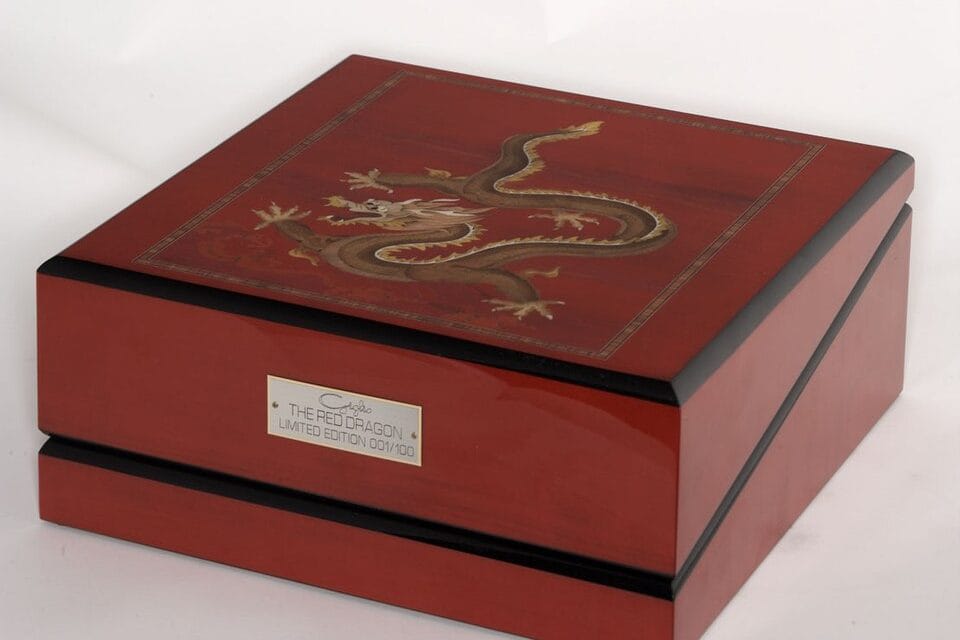
A friend of mine keeps four automatic watches in a walnut box lined with suede, hand-winds two of them every Sunday night, and has never once called his insurance company to ask whether the $9,000 Omega sitting in a bedroom dresser is actually covered. He isn't being careless. He's just never had a reason to find out, and that's exactly the problem — most collectors only discover the gap in their coverage after a break-in, a house fire, or a watch that slides off a hotel nightstand and disappears into a vacuum cleaner bag. A standard homeowner's or renter's policy typically caps jewelry and watch claims somewhere between $1,000 and $2,500 in total, and that ceiling hasn't moved much in a decade even as watch prices have climbed hard. A single Rolex Submariner at today's retail of roughly $10,100 would blow through that entire cap on its own and leave nothing for the rest of the box. Ask ten collectors whether they've scheduled their watches on a separate rider and most will admit they assumed the winder, the safe, or simply not mentioning the collection to anyone was protection enough. None of those things insure a single dollar. They reduce the odds of loss or damage — insurance is what actually pays out when the reduction fails anyway.
What a Winder Actually Buys You (and When It's Wasted Money)
A watch winder exists to solve one specific problem: keeping a mechanical watch's date, moon phase, or perpetual calendar running so you don't have to reset it every time you pick it up. For a simple three-hand automatic with a day-date window, that problem barely exists — setting the date back after a week in the safe takes ten seconds. For a Patek Philippe perpetual calendar or an IWC Portugieser with a moon-phase complication, the math changes completely, because a full reset after the watch stops can mean sending it to a dealer or waiting weeks for an appointment with someone qualified to touch the movement. Orbita's Sempre single winder runs about $400 to $600 and lets you dial in turns-per-day (TPD) to match the manufacturer spec — most Rolex and Omega calibers want somewhere between 650 and 950 TPD, and running a winder at the wrong setting for months can actually over-wind the mainspring's lubrication cycle faster than normal wear would. Wolf's Heritage single sits closer to $250, and Rapport's Est. 1978 winders start even lower, but the cheap motors in sub-$150 units run at a fixed, unlabeled TPD that rarely matches anything in your box.
A $2,000 winder cannot fix a watch that was never designed to sit still.
The Case for Winding by Hand Instead
Here's the part winder manufacturers don't put on the box: constant rotor motion for 23 hours a day, every day, puts more cumulative wear on the automatic mechanism than picking the watch up, winding the crown by hand, and wearing it for an afternoon once a week. Watchmakers at independent service centers will tell you the same thing off the record — a watch that runs occasionally and gets serviced on schedule outlasts one that spins in a box year-round and gets forgotten until something rattles. That doesn't mean winders are pointless. It means they're a convenience tool for complications you can't quick-set, not a mandatory accessory for every watch that happens to be automatic.
Safes: The Rating That Actually Matters
Most home safes sold at big-box hardware stores carry a UL rating called RSC — Residential Security Container — which means the door and body resisted a crowbar and hammer attack for about five minutes in a lab test. That's a locked box, not a safe, and any insurer writing a policy above roughly $25,000 in scheduled jewelry will ask what rating you actually have before agreeing to a lower premium. The rating that matters for a real collection is TL-15 or TL-30, which means a professional safecracker with power tools couldn't get through the door in 15 or 30 minutes respectively during UL-certified testing. Brown Safe in the US builds TL-30 units specifically marketed to watch collectors, typically running $3,000 to $8,000 depending on interior configuration, and Döttling out of Germany makes safes purpose-built with winding modules inside the vault itself, starting well north of $5,000. Fire rating is a separate certification from burglary rating — a safe can be excellent against tools and still fail in a house fire if it only carries a UL 350 rating for an hour, when most house fires burn well past that before firefighters arrive.
Buy TL-30 if the collection is worth more than roughly $25,000 at retail. Anything rated only RSC is a deterrent for a smash-and-grab, not protection against someone who knows what they're looking for and came prepared — and most insurers price the difference into your premium whether you've told them your safe's rating or not.
Insurance: Scheduling Watches the Right Way
Two paths exist once you've decided the homeowner's cap isn't enough: add a scheduled personal property rider to your existing policy, or take out a standalone policy through a specialist like Chubb, Jewelers Mutual, BriteCo, or Lavalier. The rider route is usually cheaper and simpler if your agent already handles your home and auto coverage, but it inherits your homeowner's policy's exclusions — some standard riders won't pay out for "mysterious disappearance," which is the technical term for a watch that vanishes with no evidence of theft, no broken window, no witness. Standalone watch and jewelry insurers write that scenario into the base policy as a matter of course, and most also cover the watch anywhere in the world, not just at your home address. Pricing across both paths lands in a similar range: expect to pay somewhere between 1% and 1.5% of the appraised value annually, so a collection appraised at $80,000 runs roughly $800 to $1,200 a year in premium. Take the standalone policy over the rider if any single watch in the box tops $15,000 — the mysterious-disappearance exclusion alone justifies the switch, and the worldwide coverage matters the moment you travel with the watch on your wrist instead of leaving it in the safe.
Appraisals: The Paperwork Collectors Skip
An insurer needs a current appraisal to write an "agreed value" policy — the kind that pays the appraised amount without an argument, rather than "actual cash value," which lets the insurer depreciate the watch and argue you down after a claim. A receipt from your original purchase is not an appraisal, even if it lists a price. You need a written appraisal from someone accredited through the American Watch and Clockmakers Institute or an equivalent body, and it needs refreshing roughly every three years, because the resale market moves faster than most collectors expect — a watch appraised in 2023 can be worth 20% more or 20% less by 2026 depending entirely on which reference it is and where sentiment on that reference has moved.
Vintage pieces complicate the appraisal further, because two watches with the same reference number can carry wildly different values depending on dial condition, box and papers, and whether the movement has been serviced with period-correct parts or modern replacements. An appraiser who only handles modern retail watches often isn't equipped to value a 1960s Heuer chronograph correctly, so ask specifically about vintage experience before booking one for a mixed collection.
The receipt from your original purchase is not an appraisal, and most insurers only point that out after you've filed a claim. Get the appraisal now, while the watch is still on your wrist and not sitting on a claims adjuster's desk.