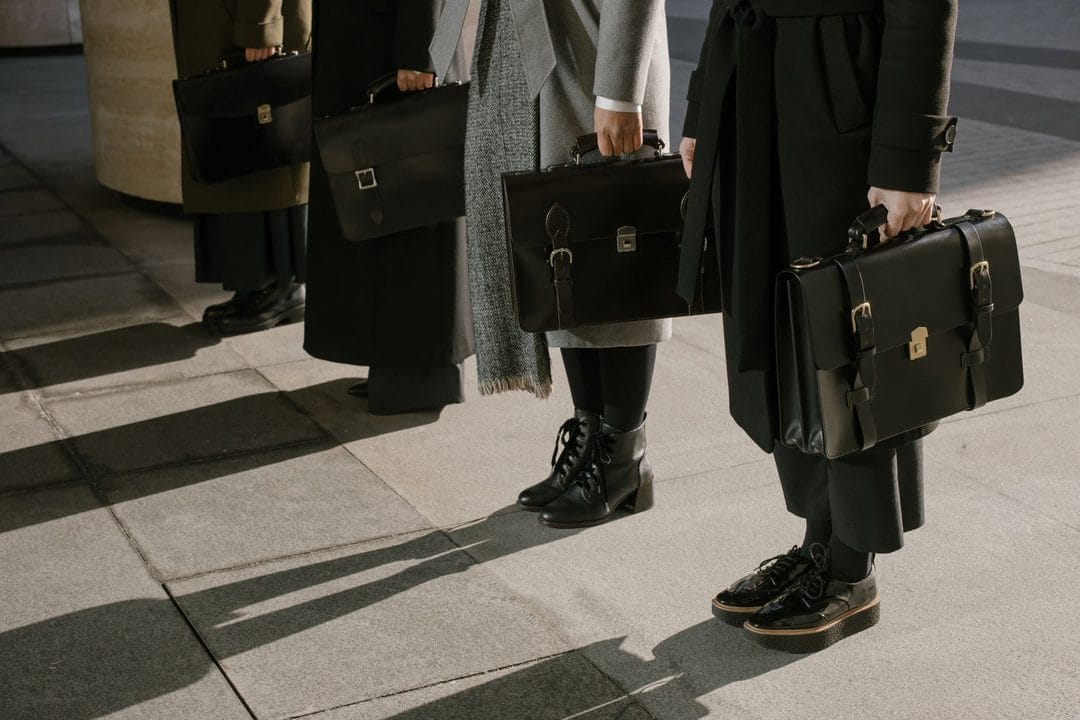
The Bag That's Supposed to Get Better With Age
A good leather briefcase is one of the few things a man buys that is designed to look worse before it looks better. The first six months are awkward -- stiff corners, a finish that hasn't broken in, a shoulder strap that still feels borrowed. Then something shifts. The leather starts taking on a patina that no amount of aging spray or factory distressing can fake, scuffs turn into character instead of damage, and the bag that looked slightly too formal on day one starts looking like it belongs to someone who's actually been somewhere. That transformation only happens with the right hide and the right tanning process. Buy the wrong one and you get a bag that looks tired at year three instead of interesting at year ten.
Full-Grain, Top-Grain, Genuine: The Label Isn't Lying, But It Isn't Helping
Full-grain leather uses the entire top layer of the hide, imperfections and all, which is exactly why it develops the deepest patina and holds up the longest -- the fiber structure closest to the animal's outer skin is the densest and most durable part of the hide. Top-grain leather has that outer layer sanded off to remove blemishes and then refinished with a coating, which makes it more uniform and slightly cheaper to produce, but it never develops the same rich patina because the surface you're touching isn't the original grain anymore. Genuine leather is the label that trips people up: it sounds like the honest, no-frills option, but it actually refers to the lowest usable grade, made from split layers bonded together and coated to look consistent. A genuine leather briefcase is real leather. It is also the one most likely to crack, delaminate, and look worn out inside two years.
Bonded leather is a step below even that -- leftover scraps and fibers glued into a sheet -- and no briefcase worth carrying to a client meeting should be built from it.
The Tanning Process Decides How It Ages
Vegetable-tanned leather uses tannins extracted from tree bark and takes weeks to process, which is part of why it costs more, but the payoff is a hide that ages into deep amber and cognac tones with handling and sunlight. Chrome-tanned leather uses chromium salts and takes a day instead of weeks, producing a softer, more consistently colored hide that's cheaper to make at scale -- fine for a wallet you'll replace in three years, less convincing for a briefcase you're hoping to hand down. Most of the briefcases that develop the deep, almost furniture-like color collectors chase are vegetable-tanned, full-grain hides that have simply been carried for a decade in the sun and rain.
Brands Actually Worth the Money
Frank Clegg builds full-grain vegetable-tanned briefcases by hand in Fall River, Massachusetts, and the waitlist on custom orders tells you something about how word of mouth still works in this category. Ghurka has been making military-inspired canvas-and-leather bags since the 1970s and its briefcases show up on secondhand markets a decade later still holding shape and still commanding real resale value. Tanner Goods out of Portland sits at a more accessible price point without cutting the tanning corners that ruin cheaper bags. Filson's leather-trimmed canvas briefcases trade some formality for a ruggedness that suits guys who actually travel with the thing rather than carrying it four blocks from a parking garage.
- Frank Clegg -- $600 to $1,400, handmade, vegetable-tanned, made to order on some models
- Ghurka -- $1,000 to $2,500, heritage canvas-and-leather construction
- Tanner Goods -- $400 to $800, solid entry point into genuinely full-grain construction
- Filson -- $500 to $1,000, and honestly the one to buy if the bag is going to see actual rain
Skip the briefcases sold under fashion-house logos at three times these prices unless the leather and construction genuinely match -- a recognizable name stamped on chrome-tanned split leather is not a better bag, it's a more expensive one.
How to Spot a Poorly Made One in Under a Minute
Press a thumb into the leather near a seam. Full-grain resists and springs back; cheap coated leather dents and stays dented, because the surface finish is doing the structural work the fiber underneath can't. Check the edges -- hand-burnished, painted edges that are slightly uneven read as quality; a perfectly uniform plastic-looking edge usually means machine-finished, lower-grade material. Smell it, unglamorous as that sounds: real vegetable-tanned leather has a warm, slightly sweet, almost woody scent, while heavily processed or bonded leather often smells faintly chemical, like a new car interior that never quite airs out.
Break-In and Care Nobody Mentions at the Register
Condition a new full-grain bag with a leather balm within the first month, not immediately -- give the factory finish a few weeks of handling first so the conditioner actually penetrates rather than sitting on a still-sealed surface. Avoid saddle soap on vegetable-tanned leather; it strips the natural oils that produce the patina everyone's actually paying for. Rain isn't the emergency people assume it is for full-grain leather -- let it dry naturally away from direct heat, then condition once it's fully dry, and the water marks usually blend into the patina rather than staining it permanently.
Hardware Matters More Than the Leather Sometimes Gets Credit For
A briefcase can have flawless full-grain hide and still fail at the zipper. YKK zippers have become the quiet industry benchmark for a reason -- they're the ones still gliding smoothly after five years of daily use, while cheaper zipper brands start snagging and skipping teeth within a year. Solid brass hardware develops its own patina alongside the leather, going from bright and yellow to a dull, warm bronze that actually looks intentional; plated hardware just flakes, revealing dull gray metal underneath at exactly the corners that get the most handling. Stitching is the other tell -- saddle stitching, done by hand with two needles working in opposite directions through the same holes, survives a single broken thread without unraveling the whole seam. Machine lockstitching looks identical on day one and unravels in a line the moment one thread gives out.
None of this shows up in a product photo. It shows up at year four, which is exactly when a cheaper bag starts falling apart and a well-built one is just getting started.
The Case for Treating It as an Investment, Not an Expense
A well-kept Ghurka or Frank Clegg bag from a decade ago routinely resells for sixty to seventy percent of its original price on the secondhand market, which is a return profile most fast-fashion leather goods can't touch at any age. That's not a coincidence -- full-grain leather is one of the few materials that genuinely appreciates in appearance with use, so a ten-year-old bag in honest condition is often more desirable than the same bag brand new, not less. Buying the four-hundred-dollar Tanner Goods bag and using it for fifteen years costs less per year than replacing a hundred-and-fifty-dollar bonded-leather bag every eighteen months, and that's before factoring in how much better the expensive one looks doing it.
The bag that survives a decade of client meetings, airport floors, and being tossed in the back seat is never the one that looked flawless on the shelf. It's the one built from a hide dense enough to earn its scars instead of hiding them.