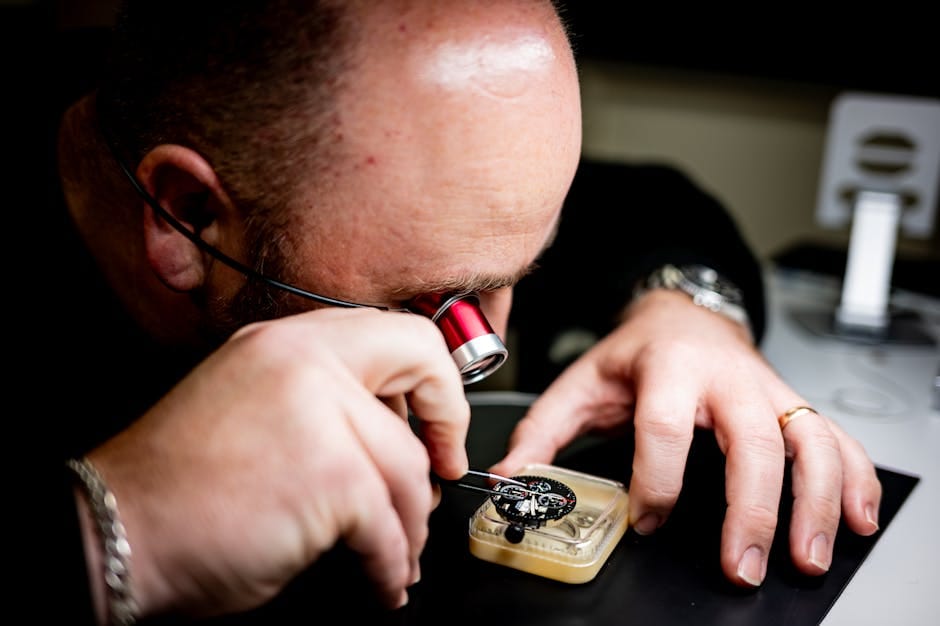
Watch manufacturers publish service interval recommendations that reflect specific marketing and liability considerations rather than purely mechanical ones. Rolex recommends service "approximately every 10 years" for current-production calibre 3235 movements. Patek Philippe recommends service "every 3 to 5 years" for most current-production calibres. Omega recommends "approximately every 5 to 8 years" for Master Chronometer movements. These recommendations are useful starting points but don't accurately reflect what actual watch mechanics tell you when you bring watches in for evaluation.
I've had four different watches serviced at multiple service centers over the past decade — Rolex at Rolex Service Center, Omega at Omega service, Patek at Patek Geneva service, and an IWC through independent watchmaker. Each service experience revealed specific information about what service intervals actually make sense for each brand's movements, and the honest reality differs meaningfully from published manufacturer recommendations. Understanding what actually happens during service — and what fails without service — helps you plan ownership costs more accurately and make better long-term decisions about watch maintenance.
Rolex Service Reality
Current-production Rolex calibres (3230, 3235, 3255, 3285) are engineered for 10-year service intervals under normal daily wear. The Chronergy escapement design, Paraflex shock absorbers, Parachrom hairspring, and specific lubrication formulations produce movements that retain performance over longer intervals than previous Rolex generations. This extended interval is genuine and reflects the engineering improvements of the 3200-series generation.
In practice, Rolex Service Center inspections at the 7-8 year mark often reveal movements that are still running within factory specifications but showing specific wear patterns. Rotor bearings may have accumulated micro-wear that's manageable but would benefit from replacement. Some jewels may show visible wear under inspection. Mainsprings maintain adequate tension but may have lost 3-5% of original power. None of these findings require immediate service intervention, but they reveal that 10-year intervals are at the longer end of what remains mechanically prudent.
My approach for Rolex ownership: service at year 7-8 for daily-wear pieces, year 10 for occasional-wear pieces. This provides adequate preventive maintenance without excessive service intervention, and keeps the watch running at factory specifications across extended ownership. Rolex Service Center pricing for calibre 3235 service runs $850-$1,250 depending on specific work required. Service turnaround is 8-14 weeks typically.
- Rolex calibre 3235: 10-year nominal, 7-8 year practical for daily wear
- Rolex service cost: $850-$1,250 depending on work required
- Rolex service turnaround: 8-14 weeks through authorized centers
- Rolex warranty: 2-year full warranty after service
Rolex Service Center service in 2026 is thorough but somewhat clinical. The watch returns polished, regulated, and with all wear components replaced. The case comes back looking factory-fresh, which some collectors love and some find disappointing (polishing removes authentic wear character from long-owned pieces). If you want to preserve specific wear character, communicate this explicitly when dropping off — Rolex service typically doesn't preserve vintage patina unless instructed specifically.
Patek Philippe Service Reality
Patek Philippe's 3-5 year service interval recommendation reflects their specific engineering philosophy and the complexity of their manufacture calibres. Patek's automatic calibres (324, 26-330, 240, 315) have more delicate component tolerances than Rolex's calibre 3235, specifically because Patek's higher finishing standards and traditional construction produce movements that benefit from more frequent professional attention.
In practice, Patek dealers and authorized service centers service well-maintained movements at 5-7 year intervals, which matches actual mechanical need. The 3-year recommendation represents conservative manufacturer liability positioning rather than mechanical necessity. A Patek Calatrava with current-production 240 calibre serviced at year 5 receives appropriate maintenance; the same watch serviced at year 3 receives unnecessary preventive work.
Patek Geneva service is the reference standard for Patek maintenance — the manufacture's own service center performs service to factory specifications using factory components and techniques. Turnaround through Geneva is 6-14 months typically. This is substantially longer than Rolex or Omega service timelines. Service cost through Patek Geneva runs $1,500-$4,500 depending on specific complication and work required.
Patek service in the US is available through authorized service centers in New York, Miami, Beverly Hills, and Dallas. Service quality at US authorized centers is high, and turnaround is typically 4-8 months — still substantially longer than Rolex but meaningfully shorter than Geneva. Cost through US authorized centers is similar to Geneva pricing.
My Patek approach: service at year 5-6 for pieces I wear regularly, year 7-8 for pieces I wear occasionally. Schedule service through the same authorized dealer that sold the watch (even if it's being shipped to manufacturer service) — this maintains the customer relationship that may matter for future allocation decisions.
Omega Service Reality
Omega's Master Chronometer movements (calibres 8800, 8900, 9900, 3861) represent the most aggressive anti-magnetic performance specifications in luxury Swiss watchmaking, with silicon hairsprings providing 15,000 gauss resistance. These technical specifications produce movements with specific service characteristics — they're more resistant to magnetic-field-induced timing disruption, which reduces some service triggers, but the silicon components have specific maintenance considerations.
Omega's 5-8 year service recommendation is genuinely flexible based on use patterns. For active daily wear (dive activities, sports, high-variation movement patterns), 5-year intervals make sense. For moderate professional daily wear, 7-year intervals are appropriate. For occasional weekend wear, 8-year intervals are adequate.
Omega Service Center pricing runs $550-$950 for standard movement service. This is lower than comparable Rolex or Patek service, reflecting Omega's positioning and service infrastructure economics. Service turnaround through Omega is 8-12 weeks typically, which is comparable to Rolex and faster than Patek.
Omega service quality is consistently professional. The watch returns with silicon hairspring components inspected and replaced if necessary, other movement components cleaned and lubricated with Master Chronometer-spec lubricants, and regulation to factory tolerances. Service warranty is 2 years covering parts and labor.
Independent watchmaker service for Omega is viable and sometimes preferable. Omega-certified independent watchmakers provide equivalent service quality at 20-30% lower cost. For Master Chronometer movements specifically, ensure the independent watchmaker has specific certification — silicon hairspring handling requires specialized tools and training that not all independent watchmakers have.
Service Timing Strategy
Specific tactical considerations for service timing. First: don't service by recommendation alone — inspect the watch's performance before scheduling service. If it's running within factory specifications (usually ±5 seconds per day or better) and showing no external wear issues, service can wait. If it's drifted meaningfully from specification, is showing calendar function irregularities, or has visible water intrusion evidence, service immediately regardless of time elapsed.
Second: schedule service during low-use periods. If you have multiple watches in rotation, sending one to service for 8-16 weeks is manageable. If you own a single daily-wear watch, you may want to borrow, rent, or purchase an inexpensive alternative during service periods. Plan this before dropping off the watch rather than discovering the inconvenience after the fact.
Third: use service as an opportunity for specific requests. Have the bracelet serviced (end link replacement, clasp refurbishment), request specific finishing treatment (selective case polishing vs full polishing), or have specific complications verified. Service is the primary opportunity for professional attention to the watch, and requests should be communicated explicitly during drop-off.
Fourth: factor pre-service inspection costs. Some owners have watches inspected by independent watchmakers before sending to authorized service. An independent inspection at $100-$200 provides detailed condition documentation that helps establish what specifically needs attention during authorized service. This can be useful for expensive pieces where service cost might vary significantly based on findings.
Independent Watchmaker Option
For specific situations, independent watchmakers provide better service than authorized centers. Vintage watch service (particularly references predating current factory support) is typically better handled by specialists familiar with period-correct techniques and parts. Custom finishing requests (case refinishing to specific specifications, dial restoration) that authorized centers don't offer are available through specialist independent watchmakers.
Cost advantages through independents are real: typically 20-40% less than authorized pricing for equivalent work. Quality varies substantially across independent watchmakers — the best independent specialists perform work at factory-equivalent standards, while less skilled watchmakers may damage valuable watches through insufficient expertise or incorrect techniques.
Reputable independent specialists for luxury Swiss watch service: Eric Ku's watchmakers (specific to vintage Rolex and Swiss chronographs), Archer Watch Services (full-service including specific complications), Crown & Caliber watchmaking (mainstream luxury brands including Rolex, Omega, Patek), and Cornelius Hollander (New York-based independent specialist in Patek and Rolex).
For current-production modern watches under factory warranty (first 5 years post-purchase), always use authorized service centers. Warranty work is only covered through authorized channels. For post-warranty watches, independent service becomes legitimately considerable — the cost savings can be meaningful without quality compromise, provided you choose specialists carefully.
Long-Term Ownership Economics
Over 20 years of ownership, expected service costs: Rolex approximately $2,500-$3,500 (2-3 service cycles). Omega approximately $1,800-$2,800 (3 service cycles). Patek Philippe approximately $4,500-$8,000 (4 service cycles, higher per-service cost). These are material ownership costs that should factor into initial purchase decisions.
The lesson: premium luxury watch ownership involves real ongoing costs beyond the purchase price. For a $15,000 Rolex, expect $3,000 in service costs over 20 years — 20% of purchase price. For a $50,000 Patek, expect $6,000-$8,000 in service costs — 12-16% of purchase price. These costs are not negotiable if you want to maintain the watch in proper operating condition, and budgeting for them prevents unexpected ownership expense.
For collectors rotating watches every 5-10 years, service timing becomes a selling consideration. Watches sold with recent service documentation command 5-10% higher prices than equivalent watches needing service. If you're planning to sell in the next 12 months, completing service before listing often results in net positive return on the service investment through improved sale pricing.
The broader principle: mechanical watch ownership is an active relationship with the object. Service isn't optional — it's part of ownership. Understanding the specific service requirements of your brand and movement generation lets you budget appropriately, schedule intelligently, and maintain the watch in the condition that justified the original purchase. Approaching service as ongoing ownership cost rather than unexpected expense produces better long-term ownership outcomes than deferring until problems emerge.