Rolex GMT-Master II Pepsi: Retail vs Grey Market Reality
The 126710BLRO retail is $11,100. Grey market is $18,500-$22,000. Here's the honest math on which path actually makes sense for the Pepsi in 2026.
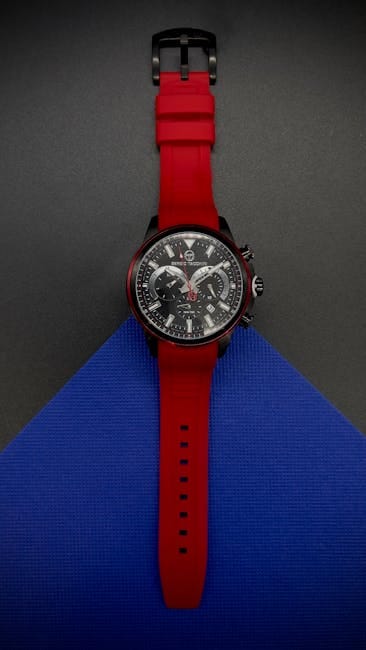
The Rolex GMT-Master II "Pepsi" reference 126710BLRO is the single most culturally iconic sports Rolex of the last decade. The red-and-blue ceramic bezel replaced the fragile aluminum bezel of previous generations in 2018, and the reference has been on Rolex's production list continuously since. It's also been on waitlists continuously since. In April 2026, you can walk into 100 authorized dealers across the US and you will not find a Pepsi on display. You might find one in a back case for a customer picking up, but you will not buy one.
That's the reality of the retail channel. The grey market channel has pricing. Currently $18,500-$22,000 for a new, unworn, full-kit example — so you're paying $7,400 to $10,900 above the $11,100 retail price for immediate acquisition. This 70-100% premium has softened from the 2022 peak of nearly 130% over retail, but it has not disappeared. Anyone telling you the "bubble burst" on sports Rolexes is oversimplifying — the premiums are lower than they were, but they're not gone, and the Pepsi specifically has remained durable at high premium levels because demand stayed strong through the broader market correction.
The Jubilee vs Oyster Decision
The 126710BLRO currently ships on the five-link Jubilee bracelet. Before 2021, it shipped on both Jubilee and three-link Oyster. Rolex consolidated to Jubilee-only because it's what most buyers preferred and because the Oyster variant (reference 126710BLNR-0002) sold slower. The net effect is that if you want the Pepsi on Oyster, you're buying either a pre-2021 example or you're swapping bracelets yourself — Rolex ships standalone Oyster bracelets for this reference at around $1,400 through service centers, but getting allocation on the bracelet itself is its own dealer-relationship game.
Which is correct? Depends on wrist and taste. The Jubilee wears softer and drapes better — the five-link geometry allows the bracelet to flow around the wrist rather than sitting in rigid sections. It looks slightly dressier. The Oyster is more traditional, tougher, and reads as more utilitarian. On a 7-inch wrist, I prefer Oyster. On a 7.5-inch wrist, Jubilee works better because the soft drape counters the larger case presence. For most buyers, the Jubilee is the right default — which is precisely why Rolex made it the default.
- Jubilee bracelet: softer drape, dressier appearance, current production
- Oyster bracelet: tougher feel, more utilitarian look, requires sourcing separately
- Case dimensions: 40mm × 11.9mm × 48mm lug-to-lug
- Movement: Calibre 3285 GMT automatic, 70-hour reserve
The ceramic bezel is the engineering achievement that defines this reference. Manufacturing a single-piece ceramic bezel with both red and blue halves is genuinely difficult — the material coloration requires two different chemical compositions that have to fire together at high temperature without shifting, warping, or bleeding between zones. Rolex spent nearly a decade developing the manufacturing process before releasing the ceramic Pepsi in 2014 (in white gold reference 116719BLRO) and 2018 (in the current steel reference). Competitors still can't produce a dual-tone ceramic bezel at this quality level.
The Authorized Dealer Path
If you're committed to retail, here's what you need to know. Rolex ADs in the US receive Pepsi allocations on an irregular schedule — sometimes one piece per month, sometimes zero for three months, sometimes two in the same week. Allocation decisions are made at the individual AD level by the watch director or manager, and the criteria are: (1) existing customer relationship, (2) purchase history with that specific AD, (3) frequency of visits, (4) whether the customer has committed to buying the watch at retail when offered.
The unspoken rule is that you typically need to have bought 2-3 other Rolexes at the same AD before being offered a Pepsi, and those prior purchases should total somewhere around $30,000-$50,000 at retail. This isn't a rule Rolex publishes. It's the emergent behavior of the allocation system, confirmed by dozens of buyers I've spoken with. The prior purchases don't have to be quick-turn pieces — buying a Datejust, an Explorer, and a Yacht-Master 42 over 24 months is a legitimate path, and the AD will see you as a serious customer worth allocating desirable references to.
Walking in cold as a new customer and asking to be put on the list for a Pepsi will typically get you politely placed on a "list" that doesn't functionally exist. ADs are honest about this if you ask directly — most will tell you they can't commit to any timeline because they don't know when their next Pepsi allocation is coming, how many they'll get, or how many customers with deeper relationships are ahead of you.
The Grey Market Calculus
If retail is effectively closed to you, grey is your path. Reputable grey market sources: WatchBox, Bob's Watches, Crown & Caliber, Hodinkee Shop, Chrono24 verified sellers with 100+ transactions and strong reviews, and local jewelers who specialize in pre-owned luxury watches. Avoid eBay (too much counterfeit risk), avoid private Instagram sellers unless you can meet in person with cash and the watch, and avoid any seller who can't produce serial number, box, papers, and original warranty card.
Price-wise, a 2024-2025 example with full kit runs $18,500-$22,000 currently. A 2022-2023 example with some wear runs $16,000-$19,500. A pre-2021 example (with the different bracelet configuration) runs $15,000-$18,000. The trade-off is that earlier examples have longer service horizons — a 2022 piece will need service around 2027-2029, a 2025 piece won't need service until 2030-2032. Factor that into your acquisition price: a service costs $800-$1,200, so the older examples aren't as cheap as they look after you factor in near-term service costs.
Grey market depreciation is the next consideration. If you buy at $20,000 today and prices soften further over the next 3 years, you might be holding a watch worth $16,000 by 2029. That's $4,000 of depreciation — comparable to buying a new Toyota and driving it for three years. If you're comfortable with that risk, grey is fine. If you need the watch to hold near-purchase value, wait for the AD path or reconsider whether you need this specific reference.
What the Pepsi Actually Offers on the Wrist
The GMT-Master II is functionally a travel watch. Second time zone via the 24-hour red triangle hand, reading against the rotating 24-hour bezel. Setting the GMT function is fiddly the first time and easy after that — the local hour hand jumps in one-hour increments via the crown at position 1, which lets you change time zones without stopping the seconds hand. For anyone who regularly travels across time zones, this is a meaningfully useful complication.
Wrist presence is strong. The ceramic bezel is visually more dominant than the aluminum bezel of older GMT-Masters — the colors are deeper, the reflectivity is higher, and the watch catches light in a way older Pepsis don't. Some collectors find this too much; I find it appropriate. The GMT-Master has always been a somewhat flamboyant sports Rolex compared to the Submariner, and the ceramic Pepsi leans into that character rather than fighting it.
The case wears 40mm × 12mm, which is a good modern sport-watch size. Compared to the Submariner, it sits similarly on the wrist but reads slightly more playful due to the bezel coloration. The case itself is thicker than the Submariner by almost a millimeter because of the GMT module, which adds mild top-heaviness on thin wrists. Try it before committing if you're under 6.5-inch wrist — it can feel oversized in a way the Submariner doesn't.
Final take: the Pepsi is worth the grey market premium if you genuinely travel 10+ times per year internationally, or if the aesthetic resonates strongly enough that you'll wear it as a primary piece. If you're buying it because it's the Rolex you recognize from movies and want something recognizable, that's an expensive way to get recognition — and the Submariner gets you the same cultural currency for $4,000 less on grey. Buy the Pepsi for the functionality or don't buy it.