Cartier Tank Must: The Dress Watch Every Collector Eventually Buys
The Tank Must at $3,250 retail is the most defensible dress watch purchase in the luxury space. Here's why the battery-powered version is actually correct.
Here's an uncomfortable truth about dress watch collecting in 2026. The most honest purchase in the category — the one that gives you the most correctly-proportioned, beautifully-designed, historically-significant watch for your money — is a Cartier Tank Must at $3,250 with a quartz movement. Not a mechanical Patek Calatrava at $28,500. Not a Lange Saxonia at $22,000. A solar-charged quartz Cartier that your grandfather's version of the same watch was available to buy in 1977 and looked nearly identical to the one you'll wear tonight.
I've owned three dress watches in my collecting life. A Jaeger-LeCoultre Reverso Duetto (loved it, sold it, regretted selling it), a Lange 1815 Up/Down (kept it, wear it rarely), and a Cartier Tank Louis in 18k gold (wear it the most). The Tank Must is a version of that Tank Louis aesthetic in stainless steel with quartz at a quarter of the Louis's price. If you're building a collection and want one dress watch that works in every black-tie and business-formal context, the Tank Must is the right answer — and the right specific answer is the quartz model, not the mechanical SolarBeat version.
Why Dress Watches Matter (and Why Mechanical Dress Watches Are Wrong)
A dress watch is worn maybe 15-30 times a year by a typical professional collector — occasional black-tie events, business dinners, weddings, formal meetings where a sports watch reads wrong. The mechanical dress watch industry has spent decades convincing collectors that these occasions require in-house movements, Geneva stripes, and meaningful horological complication. That's a marketing position, not an actual need.
Here's what you actually need from a dress watch: it needs to be flat (to fit under a cuff), it needs to be subtle (to not dominate the outfit), it needs to be elegant (to reward examination in close conversation), and it needs to work reliably after sitting unworn for three months. That last requirement is the one that kills the case for mechanical dress watches. A mechanical dress watch sitting in its box for 90 days is dead. When you need it Friday night for a formal event, you're setting the time, setting the date, and sometimes dealing with a seized mainspring if the watch has been idle for longer periods.
- Quartz dress watches: reach into the drawer, strap on, walk out
- Mechanical dress watches: wind, set time, set date, check power reserve, adjust
- Time cost differential: 3-8 minutes per wear
- Across 20 wears per year: 60-160 minutes of annual friction
The friction isn't technical — it's psychological. When getting dressed for a black-tie event, you don't want to troubleshoot a mechanical watch. You want to put it on and go. Quartz dress watches solve this completely. You pick them up, they show correct time, they keep accurate time for the next six months, they go back in the drawer. The user experience is flawless.
The Tank Must Specifics
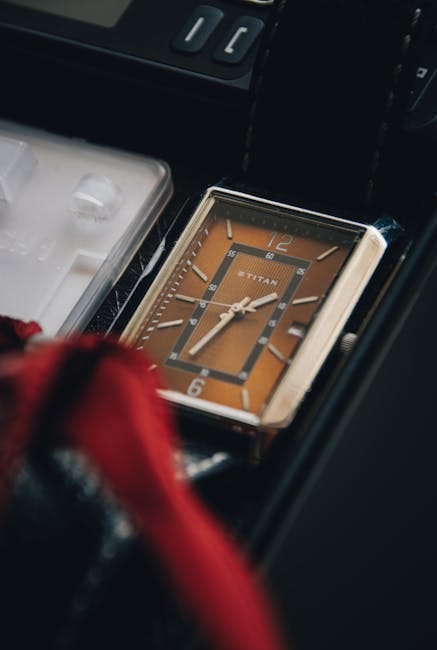
The current Tank Must reference WSTA0041 is 33.7mm × 25.5mm — a specific rectangular proportion that Louis Cartier established in 1917 when he designed the original Tank, inspired by the overhead view of a Renault FT-17 tank. The dimensions have been refined but fundamentally unchanged for over a century. They work because they're geometrically correct — the tank treads are the lugs, the turret is the crown, and the hull is the dial. This isn't design history as marketing. It's design logic that has survived 108 years of testing.
The case is brushed and polished stainless steel, 6.6mm thick. Dial is silver with Roman numerals in classic Cartier typography — specifically, the Cartier proprietary font that shortens certain numerals and has specific serif proportions. The signature blue spinel cabochon on the crown is glass on the Tank Must (on the Louis in gold, it's actual spinel). This is one of the few areas where the Must version reveals its price point — the cabochon is slightly less crisply set than on the Louis version.
Movement is the Cartier 157 quartz movement with solar charging — an 8-year battery-free lifecycle before the solar cell itself requires replacement. This is a Cartier-designed movement based on a Citizen Eco-Drive architecture, adapted to Cartier specifications. Accuracy is ±10 seconds per month (substantially better than a mechanical). The only maintenance is crystal cleaning and strap replacement every 3-5 years.
What You're Actually Buying
Strap is the Tank Must's defining weakness. The factory leather is adequate — calfskin, pin buckle with Cartier signature — but it's not particularly long-wearing. Plan on replacing it every 18-24 months if you wear the watch regularly. Cartier straps from the boutique cost $200-$300, which is excessive. Aftermarket straps from ABP Paris, Camille Fournet, or DeBeer Straps cost $80-$180 and are generally higher quality than the factory leather. This is a minor complaint but worth knowing.
Crystal is sapphire, which is correct for the price point. Case back is solid stainless steel with Cartier signature engraving. Water resistance is 30m — do not swim in this watch, but incidental water exposure (rain, hand-washing) is fine. The crown has a specific tactile feel that's heavier than you'd expect from a quartz watch, because Cartier engineered it to feel mechanical. This small detail matters — it makes the watch feel more expensive in use than its $3,250 price point.
Box and papers are presentation-grade — Cartier's boxes are small wooden presentation cases with interior leather. The paper documentation is standard but appropriately formal. If you care about resale, keep everything. The Tank Must holds value at roughly 60-70% of retail in the pre-owned market, which is strong for a quartz watch at this price point — specifically because Cartier's cultural position is strong enough to sustain a secondary market even for battery-powered references.
The Wearing Experience
On the wrist, the Tank Must disappears under a cuff. The 6.6mm case thickness is genuinely thin by modern standards — most sports watches are 12-14mm, mid-level dress watches run 8-10mm. The Tank Must is thinner than either, which is why it works under formal shirts without the bulk that kills the drape. This is the specific thing that mechanical dress watches with complications (even thin automatics) cannot match. The Tank Must at 6.6mm is the correct thickness for a dress watch.
The rectangular shape photographs and displays differently than round watches. Dress shirts and suit cuffs are geometrically rectangular, and the Tank's shape echoes that linearity. A round watch under a cuff looks like an intrusion. A rectangular Tank looks like it belongs there. Men who wear their Tanks for years often describe this — the watch "looks right" in formal contexts in a way other watches don't.
Conversations about the Tank Must in collector circles tend to go off in two unhelpful directions. Purists who dismiss it because it's quartz. Newcomers who feel they need to "upgrade" to the mechanical Tank Louis or the Tank Américaine as their collection matures. Both takes miss the point. The Tank is a specific design object — not primarily a watchmaking achievement. The Must version gets the design right and the function right at a price that makes it a no-regret purchase. Buying the Louis or Américaine later isn't an upgrade, it's a different purchase — you're buying gold or bigger proportions, not a fundamentally better watch.
If you own one luxury watch today and you want to add a dress watch for formal occasions, buy the Tank Must. Wear it for five years. If at the end of that time you've worn it 80+ times and still love it, then consider stepping up to the Louis in gold. If you've worn it 20 times and find you don't actually need a dress watch — which is honestly most collectors' experience — you've spent $3,250 instead of $28,500 to learn that. That's the right way to figure out whether formal watchmaking matters to you.