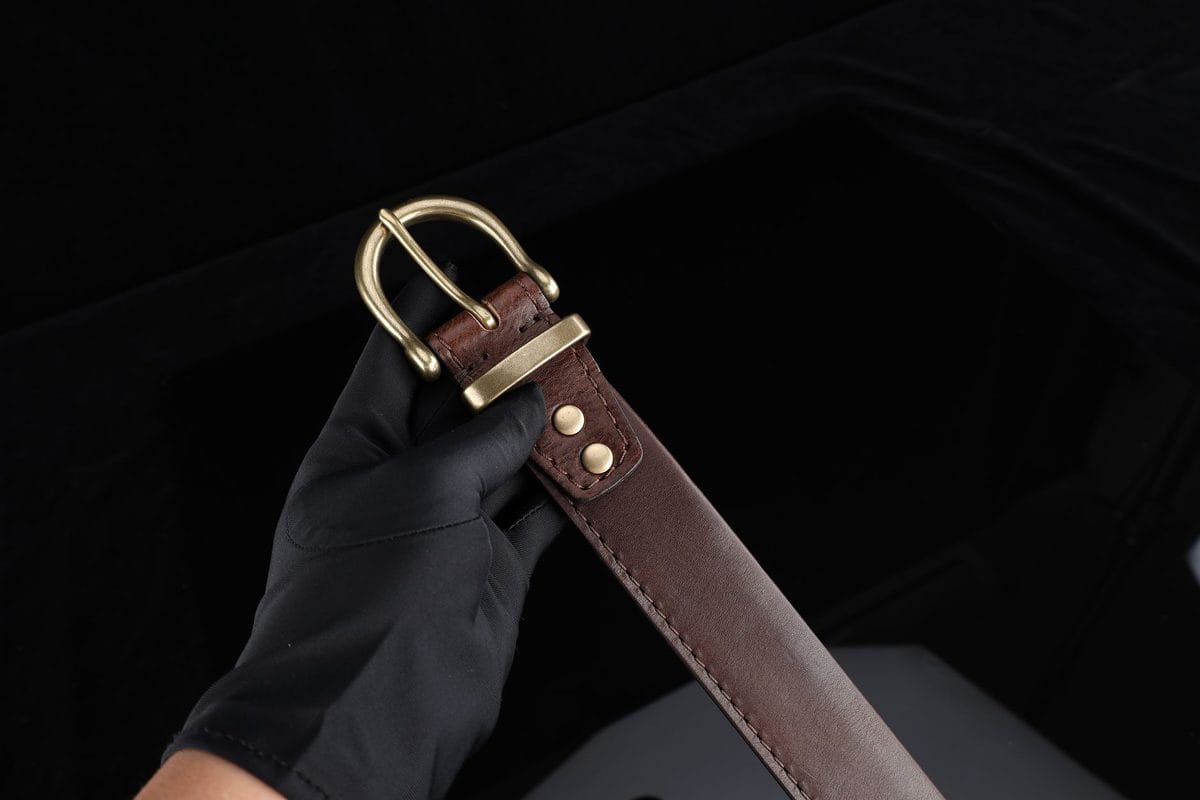
The belt is the one accessory that stays visible all day. It sits at the waistline in every meeting, every dinner and every photograph, and it moves into view whenever you sit down and your jacket falls open. Most men spend more time choosing a watch than a belt, which is a strange allocation for something that is rarely out of sight. A good leather belt is not a logo purchase. It is a question of proportion, buckle and leather, and all three are easy to judge once you know what to look for. Most of the mistakes in this category come from the first two.
Width sets the proportion
Belt width is the first thing a tailor notices, and it should match the trousers rather than the shoes. Dress belts are typically around 30 to 35 millimetres wide, slim enough to disappear under a waistcoat. Casual belts for denim are often a few millimetres wider, which suits the heavier fabric and the looser cut. A belt that is too wide under a tailored trouser looks like a workwear strap, and one that is too thin under jeans looks like it is about to snap. Choose the width for the trouser you wear most, and add a second belt only when you add a trouser style that really differs.
Colour is simpler. Black goes with black shoes and grey suits, and dark brown goes with brown shoes, navy and tweed. Mixing the two is acceptable on casual days but tends to look accidental in a formal setting. If you own one pair of dress shoes and one pair of brown boots, a dark brown belt covers most situations.
Buckle: the detail people judge first
The buckle is what people look at when the belt is in view. A plain, polished brass or steel buckle reads quietly and ages well. An enamelled or branded plate reads loud, and it dates quickly once the trend moves on. The Hermès reversible H belt is the classic example of a buckle doing the work of a signature, and Berluti and Loewe have built collections on the same idea. You do not need a logo to look expensive, though. A solid, well-finished buckle with clean edges says more than a large engraved one.
Brass and steel age differently. Brass darkens and softens at the edges, which many men like, while polished steel keeps its shine but shows scratches around the tongue holes. Choose the finish you will be happy to see after two years, because you will look at it every day.
Watch the prong. A good prong sits flat against the belt and does not wobble when you pull the belt tight. Test it in the shop by threading the belt through and tugging. Any movement in the buckle bar is a sign that the hardware will loosen over months of wear, and a loose buckle is the first thing a sharp-eyed colleague notices across a boardroom table.
Leather: full-grain, top-grain and the labels that hide the difference
Bonded leather is the one to avoid. It is made from shredded leather fibres held together with a binder, and it peels, cracks and loses its shape faster than solid leather. The labels often say "genuine leather", which is technically true and tells you almost nothing about quality. Ask the shop which grade they are selling, and look for full-grain or top-grain on the label or the product description.
Full-grain leather keeps the natural outer surface, including its grain and small marks, and it develops a patina as it ages. It is the right choice for a belt you will wear every day for years. Top-grain has been sanded and finished to a more even surface, which suits a slimmer dress belt and gives a smoother look. Here is the nuance: full-grain is not automatically better, because a thick full-grain strap can feel stiff in the wrong place. For a belt that has to slide through the loops of a tailored trouser, a supple calfskin in top-grain is often the more comfortable answer.
Fit and the hole question
Belt sizing is where most men buy the wrong size. Many makers size belts to the trouser waist, but the rule varies between brands, so check the chart rather than guessing from your jeans. Buy the length that gives you a usable hole in the middle of the adjustment range, not at the very end. A belt with every hole used up within the first month will need replacing sooner than you expect.
Check the hole spacing too. Wider spacing suits a waistline that shifts with the seasons, while closer holes give the fine adjustment a tailored trouser needs.
If the excess hangs down past the buckle, the belt is too long for the trousers, and a tailor or a leather specialist can shorten it cleanly. Ask them to keep the original hole pattern and finish the new end, so the belt does not look like a repair.
What to spend, and where to stop
Most men need fewer belts than they own, and better ones than they buy.
High-street menswear shops in the UK carry solid leather belts that cover most of what a working wardrobe needs, and they are a sensible place to start. Hermès, Berluti and Loewe sit at the other end, where you pay for the maker, the finishing and the buckle design as much as the leather itself. Between those two sit the independent leather makers, which often offer better workmanship than a chain store for a modest premium. Pre-owned is an option as well. Vestiaire Collective lists men's accessories from several luxury houses, and it is worth checking the stitching, the buckle wear and any signs of re-dyeing before you buy.
Look after the belt once you own it. Rotate two belts if you wear one most days, so that each one gets a rest between wears. Store it hanging loosely rather than coiled tight in a drawer, and let it rest a day between wears so the leather can recover its shape. A light leather conditioner every few months keeps full-grain supple, but too much makes the surface sticky and attracts dust. Keep it dry, because soaking a leather belt in the rain and letting it dry by a radiator is the fastest way to cup the leather.
Buy the belt once, buy it well, and wear it in for a month before judging the leather. The first week tells you about the fit. The second month tells you about the leather.