The first sign of trouble on a good pair of oxfords is rarely a crack. It is a dull, slightly chalky look across the toe cap after a wet week, followed by creases that will not steam out in the morning. Leather rarely fails suddenly. It loses condition over months, and much of that loss comes from habits that cost nothing to change.
Why Shoe Care Starts With Rest
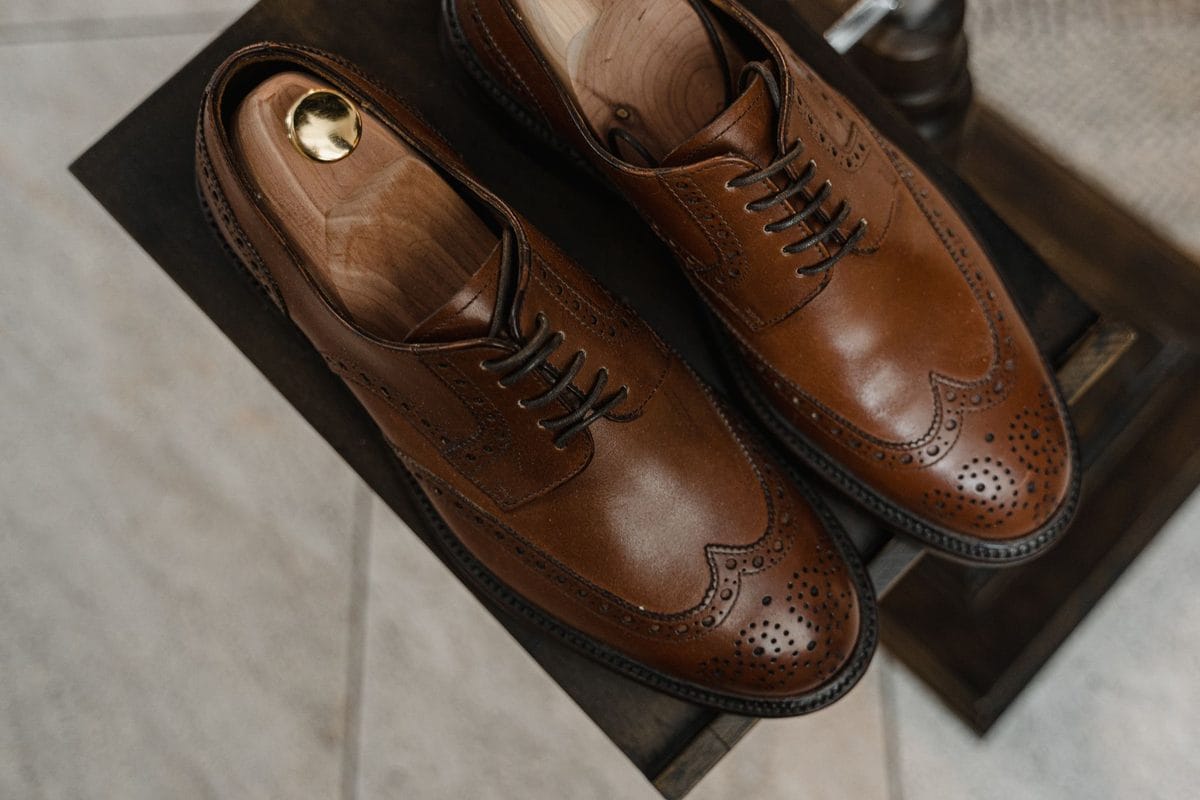
Leather takes up sweat and moisture through the day, and it shrinks as it dries. Cedar shoe trees draw out that moisture, hold the toe box in shape and absorb odour. Plastic trees keep the shape but trap moisture against the leather. Buy cedar, and put the trees in the same evening you take the shoes off, not the next morning, when the leather is still at its wettest. Trees work every night without any effort, which is why they matter more than most accessories on a menswear shelf.
Rotation matters as much as the trees. Two pairs worn on alternate days give each pair a full day to dry out, which protects the uppers and the welt. A single pair worn every day for weeks shows the wear sooner, in creasing across the vamp and in the heel counter losing its firmness. Store the shoes in their dust bags or boxes once they are dry, away from direct sunlight, so the colour does not fade unevenly along the front.
Where the shoes live matters as much as how they are dried. A cupboard against an outside wall in a cold, damp hall encourages mould on leather, so keep the pairs in a dry room with air moving around them, and off the floor of a cupboard where condensation collects.
Cleaning, Polish and the Colour Problem
Polish applied over grit grinds the grit into the leather, so clean first. Lift the dust from the welt and stitching with a soft horsehair brush, then wipe the upper with a neutral cream cleaner on a damp cloth. Saphir and Collonil, both established shoe-care brands, sell cleaners that are widely available through UK shoe-care shops and some department stores. Work in small circles, let the cleaner dry, and buff it off before polishing. Skip heavy saddle soap on fine calfskin, because a stripped finish is harder to correct than a dull one.
Cream polish conditions the leather and gives a soft shine that suits most calfskin. Wax polish produces a harder, deeper shine and adds some protection against rain, but it builds up if it goes on every week. Use cream for routine care and wax about once a month, depending on how often the shoes are worn. Colour matters more than most buyers expect. A black polish on brown leather leaves a grey cast in the creases, and a brown polish on black calf leaves a tan halo along the seams. Test a small patch on the inside of the tongue before polishing the visible surfaces, and judge the match only once it has dried.
Keep one brush for dust and a separate cloth for polish, so grit from the sole does not end up on the upper. Brushing every few wears does more for the leather than a deep clean once a season, because it stops the grit working into the creases in the first place.
Salt, Puddles and Radiators
Road salt does more damage to a calf toe cap than most owners expect in a British winter. It leaves a white bloom on the surface and can dry the leather out if it stays there. Wipe the shoes with a damp cloth when you come in, and dry them at room temperature, away from radiators, because direct heat cracks leather.
A water-repellent spray helps on wet days but does not replace care. Some cobblers advise against silicone-based sprays on shoes that may be resoled later, since they can interfere with the adhesive. Choose a product labelled for leather, and test it on the tongue first.
After a day of rain, let the shoes dry naturally at room temperature with paper stuffed inside to hold their shape. Conditioning a soaked upper straight away is a mistake, because the surface still holds water and the cream will seal it in.
Buying Used Without Regret
Second-hand is where the value case is strongest, and it is also where the traps sit. Start with the welt, the narrow strip of leather or stitching that joins the upper to the sole. A welt that has been resoled before is not a problem, but a welt that has been cut into, glued or badly re-stitched usually means the repair work was cheap and will cost more to correct. Look at the heel as well. An even wear pattern points to a shoe that has been walked in properly, while a heavy outer edge suggests a lopsided gait or a pair that spent years in the wrong weather. Check the stitching along the welt for even spacing, since uneven stitching often signals a rushed repair. Run a thumb along the sole edge as well, because a rough or crumbling edge shows how the shoe has been stored and cleaned.
Ask the seller for photographs of the sole edge and the inside of the heel before you commit. A seller who refuses those photographs is a warning sign, because the condition of the sole edge is the first thing a cobbler will judge. Ask whether the pair came with trees, a box or dust bags, since those items matter on resale. A complete set with a clear service history is worth paying a little more for, and a pair with no history should be priced as a repair project.
Resoling and Cost per Wear
A Goodyear-welted shoe can be resoled several times, which is the main reason to buy one. A resole from a good cobbler typically costs around £100 to £180 in the UK, depending on the maker and the sole material, and a heel replacement is usually a fraction of that. A £450 pair resoled for around £150 costs a third of what a new pair would, and the uppers often outlast the sole. Ask the cobbler for a written quote before sending the shoes, because the quote shows whether the welt is sound enough for the job and what the work will cost before it starts.
Heels wear faster than soles on most walking patterns, and a heel replacement is the cheaper repair that owners often leave too late. Replacing the heel once the lift is worn down protects the sole and the welt beneath it, which keeps the full resole affordable when it is needed.
Is a cheaper pair worth the trouble? On paper it can look cheaper per wear, but only if it lasts as long, and many cheaper shoes are cemented rather than welted, so they cannot be resoled in the same way. Divide the purchase price, plus any resoles, by the number of wears to get a cost per wear figure. A £450 pair worn 120 times with one £150 resole works out at around £5 a wear. Resole when the sole thins enough that the floor is felt through it, not when a hole appears, because by then the welt has often taken damage.
Care Is the Cheaper Half of Ownership
The purchase price of a good shoe is only the first cost. The rest is small and weekly: a cloth, a brush, the right trees and a second pair in rotation. Those habits cost a few pounds a month and decide how long a pair stays presentable.
A short service log helps as well. Note the date, the cobbler, the work done and the cost on a card kept with the shoes or in a notes file. That record turns a pair of shoes into a documented asset, and it makes the cost per wear figure easy to check at the end of the year.