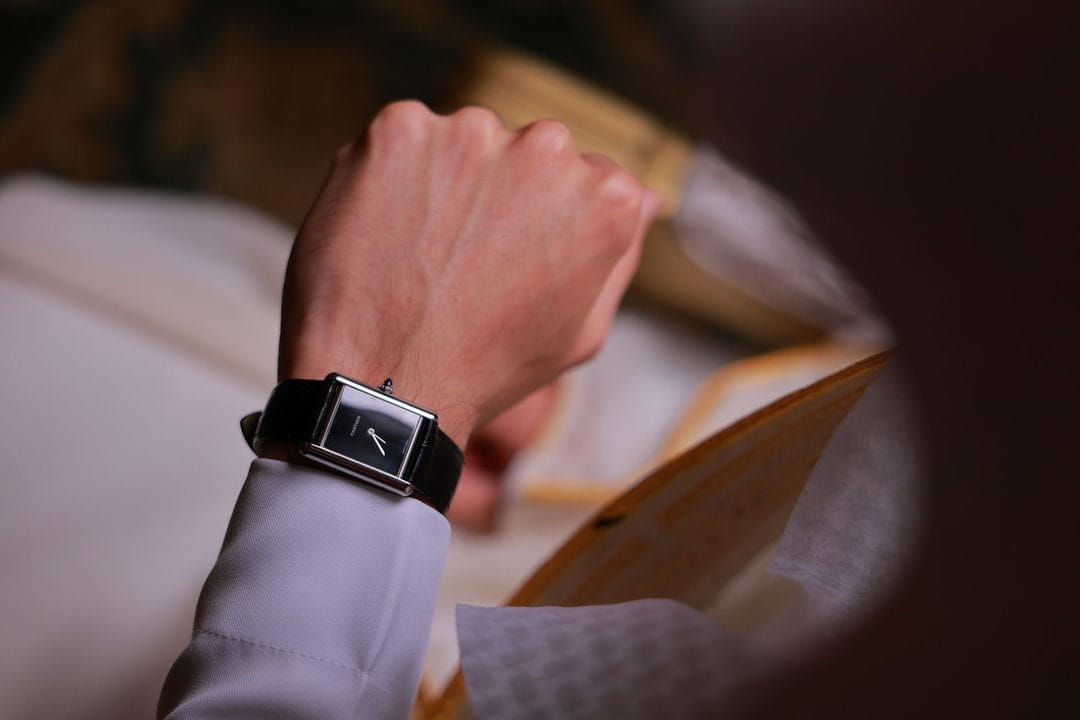
Most men who buy a first serious watch end up with a round steel sports model, and that is a sensible place to start. The Jaeger-LeCoultre Reverso takes a different route. It is a rectangular, Art Deco design with a case that flips over, and it was built around a problem that most of today's wearers will never face on a polo field. If you have been looking for a watch that feels deliberate rather than loud, the Reverso deserves a close look. It rewards the buyer who understands where it came from. That quieter character suits a buyer who cares more about finish and proportion than about how many functions the dial carries.
A watch born on the polo field
The Reverso dates to 1931, when British officers serving in India asked for a watch that could survive the game. Polo is rough on equipment. A mallet or a horse's hoof can strike the case, and a conventional round watch with an exposed crystal is easy to break. The solution was a case that slides on rails, so the watch can be turned face down and the glass and dial are protected by the back of the case. The design was developed with Jaeger-LeCoultre, the Swiss manufacture based in Le Sentier in the Vallée de Joux, and it has been in production in some form ever since. The idea was practical first and decorative second, which is why the reversing case still feels purposeful today.
That origin still shapes the watch. The reversible case is not a gimmick added for display. It is a working mechanism, and it gives the Reverso a silhouette that no mainstream sports watch copies easily. The rectangular case, the stepped lugs and the restrained dial all date from the Art Deco period, when architects and jewellers favoured clean geometry over ornament. A Reverso on the wrist reads as a designed object rather than a piece of equipment, and that is precisely why some collectors prefer it to watches that try harder to look technical.
Collectors who know the history also know the watch's limits. The Reverso is not a diver, and it is not built for heavy sport. The case is slim and flat, which suits a shirt cuff under a jacket and makes it a poor choice for a rugged daily beater. What it offers is a wearing experience that feels considered, with a dial that rewards close inspection under good light, and that is a trade-off many buyers accept on purpose. That candour about its limits is part of why the watch appeals to people who value function as much as design.
Which Reverso to look at first
The Reverso family has grown well beyond the original. The Classic models keep the traditional proportions and are the simplest entry point for a buyer who wants the core design. The Tribute line adds more modern cases and details, and it suits a wearer who wants the flip-case concept with a slightly larger or more contemporary profile. Some models add a second dial on the reverse side of the case, which can carry a seconds hand, a time zone or a plain engraved monogram. That reverse face is the feature most people remember after seeing one in the metal.
Movement matters as much as the face. Many Reverso models use manual-wind calibres from Jaeger-LeCoultre's own workshops, and a manual movement means you wind the watch daily and set it by hand. For a collector, that ritual is part of the appeal. For someone who wants a watch that simply runs, a self-winding model may be easier to live with, and it is worth checking the calibre and power reserve before you buy. Ask the retailer for the movement number and confirm the specification against the brand's current catalogue.
Check the strap and bracelet options as well. A Reverso on a leather strap looks formal and works with tailoring, while a steel bracelet gives the watch more presence and more weight. Many buyers keep a second strap in a different colour, which costs far less than a second watch and changes the character of the piece with the seasons. Use a strap that suits the case thickness, because a loose fit on a slim case looks careless even when the watch is otherwise well made.
Buying new, buying pre-owned and checking the paperwork
Buying a Reverso new means dealing with an authorised retailer, and the price is set by the brand. Check the current retail price on the Jaeger-LeCoultre website or with a boutique before you compare any offer, because prices change with each catalogue update and with currency movements. Ask whether the watch comes with its original box, papers and warranty. Those documents do more to protect resale value than most buyers expect, and a watch sold without them tends to attract a lower price.
The pre-owned market is where many buyers find better value, but it is also where mistakes happen. Buy from a dealer with a documented return policy and a record of authenticating watches, and ask for a clear description of the condition, including whether the case has been polished. Heavy polishing removes metal from the case and softens the edges, which changes the watch's look and its resale value. A good dealer will show you the case under light and tell you what has been done.
Look at the service history too. A mechanical movement needs servicing at intervals recommended by the manufacturer, and a service at an authorised workshop is worth more than a cheaper job at an unknown bench. Ask when the watch was last serviced and request the paperwork. If there is no record, budget for a service soon after purchase, and check the cost with the workshop before you commit.
How it compares with the Tank and the Santos
Anyone shortlisting a Reverso will also look at the Cartier Tank, which shares its rectangular language. The Tank dates to 1917 and was inspired by the tanks of the First World War, and it has the lean, straight-sided case that many men associate with understated luxury. The main difference is the reverse: the Reverso can flip, while the Tank stays face up. The Tank tends to carry more of a jewellery-house identity, whereas the Reverso reads more as an engineered object with a history on the polo field.
The Santos from Cartier is a different case altogether. Its square bezel with exposed screws is a sports-watch design from the early twentieth century, and it wears more boldly than either rectangular model. Buyers who want a visible, mechanical character often prefer the Santos. Buyers who want quiet geometry tend to choose the Reverso or the Tank, and the choice usually comes down to how much the watch should say before anyone reads the dial.
Price and availability also differ across the three. Each has its own waiting lists, its own resale patterns and its own range of variants, so compare the specific reference you intend to buy rather than the family name. A pre-owned Tank can sometimes cost less than a new Reverso of similar specification, and that comparison is worth making before you commit.
Daily care and a short buying checklist
A Reverso rewards simple care. Wipe the case and bracelet with a soft cloth after wearing it in humid weather, and keep it away from perfume, hairspray and harsh cleaners, which can dull the finish and affect the gaskets. Remove the watch before heavy manual work and before swimming unless the water resistance rating for your exact reference is confirmed in the papers. Store it in a box or a soft pouch, not loose in a drawer where the case can scratch against keys.
Before you buy, work through a short list:
- Confirm the exact reference number, the case material and the movement calibre against the brand's current catalogue.
- Ask for the original box, papers and warranty card, and check that the serial numbers match.
- Request the service history for a pre-owned piece, and budget for a service within the first year if none is recorded.
- Examine the case edges and lugs under good light, and reject a watch with obvious re-polishing unless the price reflects it.
- Try the watch on the wrist with the strap you plan to wear, because a Reverso on a slim strap can sit very differently from one on a thick bracelet.
Buyers who follow the list tend to avoid the two most common regrets: paying for a condition the watch does not have, and discovering a service bill after the first year. A Reverso is a long-term piece, and the paperwork and maintenance decide how well it ages as much as the design does.
Where the Reverso fits in a collection
A Reverso is rarely the only watch a serious collector owns, and it works best as a complement to a sports piece. A steel dive watch or a round field watch handles the rough days, while the Reverso covers dinners, meetings and occasions where a larger watch would look out of place. That split is common among collectors who want one watch for work and one for the weekend, and the Reverso is often the piece that gets worn when the wearer wants to look composed rather than sporty.
The watch also has a useful relationship with the rest of a wardrobe. Its clean dial and rectangular case pair well with a navy suit, a white shirt and a plain leather strap, and they work just as well with a charcoal knit when the cuff is pulled back. Avoid stacking it under a thick sleeve. The case is thin, and the watch is easiest to read when it sits on the wrist bone rather than sliding under a heavy shirt.
Finally, be clear about the reason you want it. A Reverso will not make you a better watch collector, and it will not hold its value like a steel sports model from a long-established line. It is a watch for a buyer who responds to the design and the story behind it. If that describes you, the Reverso will repay the attention you give it, and the flip case will still make people look twice in a meeting room. Buy the one you will wear, service it on schedule and let the mechanism do the rest. Owning a watch you genuinely respond to is a better test than owning one that mainly impresses other people.