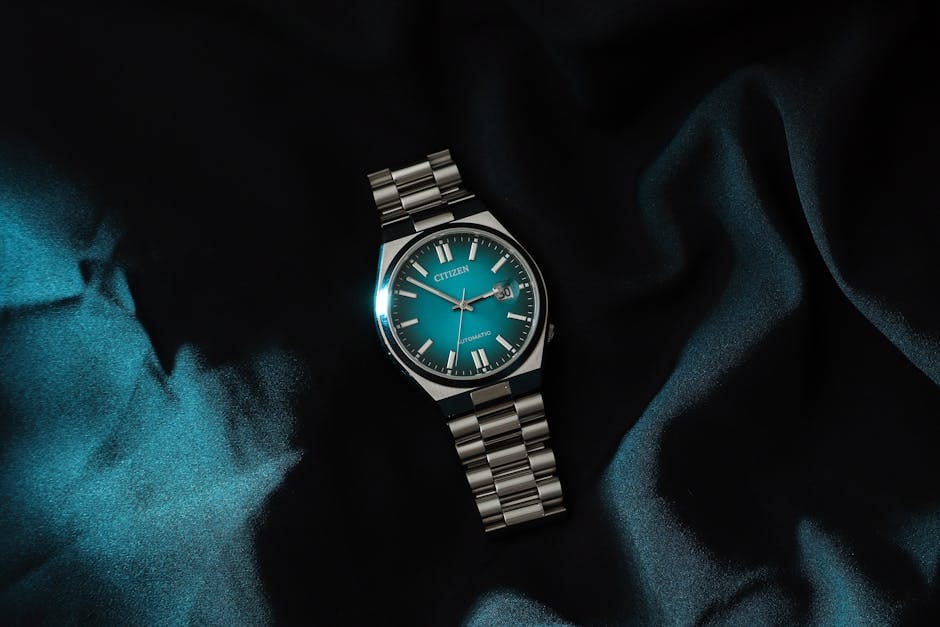
Grand Seiko SBGA211 Snowflake: Why It Outperforms Rolex at Half the Price
The SBGA211 offers hand-polished Zaratsu case finishing, Spring Drive movement, and textured titanium dial at $6,700 retail. Rolex can't touch it at the price.
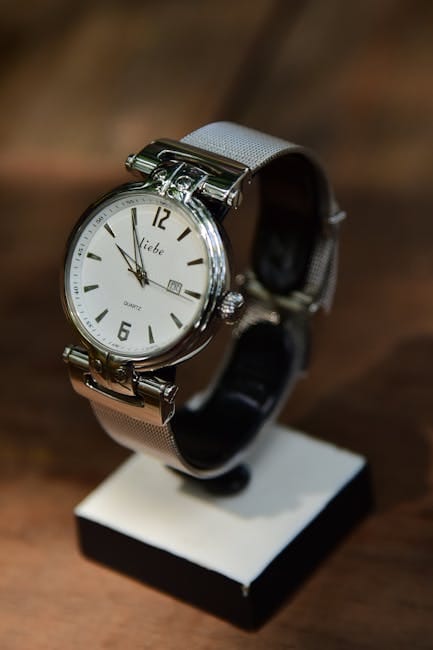
The Grand Seiko SBGA211 Snowflake costs $6,700 at retail. A Rolex Datejust 41 on a Jubilee bracelet with a sunburst dial costs $11,650. Side by side, under 10x magnification, in good light, the Grand Seiko is the better-finished watch. That isn't an opinion I'm arguing — it's something visible to any collector who's spent time comparing them. The case bevels are sharper, the dial texture is more complex, the hand polishing on the indices is more refined, and the overall level of detail is higher. The reason most collectors don't know this is that Grand Seiko occupies a specific cultural position in the watch market where its technical and craft superiority is discounted because the name isn't Rolex.
That pricing gap — $6,700 vs $11,650 for watches that perform equivalent functions — is roughly 40%, and it has held consistent for the last decade. Grand Seiko has raised prices less aggressively than Rolex during the 2019-2022 luxury inflation, which means the value gap has actually widened in real terms. If you're specifically evaluating what watch to buy in 2026 for under $8,000 and you care about craftsmanship per dollar, the SBGA211 Snowflake is genuinely hard to argue against.
The Spring Drive Movement
This is the defining technology. Spring Drive is a hybrid mechanism — mechanical mainspring power, mechanical gear train, but the regulation is done electronically via a quartz oscillator acting on a tri-synchro regulator. The net effect is a watch with 72-hour mechanical power reserve that runs at ±1 second per day accuracy (roughly 10x more accurate than COSC chronometer standard) and with a glide-motion seconds hand that sweeps continuously rather than ticking.
Purist mechanical collectors dislike Spring Drive because it uses electronics. That's a legitimate aesthetic objection. Purist quartz advocates dislike it because it requires winding and has mechanical complexity. What Spring Drive actually represents is a different category of watchmaking — not mechanical, not quartz, but a third thing that takes the best of both. The glide motion is the visible signature: hold any other automatic watch next to a Spring Drive and the ticking seconds hand on the mechanical suddenly looks primitive by comparison.
- Calibre 9R65 Spring Drive, ±1 second/day accuracy
- 72-hour power reserve
- Continuous glide-motion seconds hand
- Power reserve indicator on dial at 7 o'clock
The practical ownership difference from a standard mechanical: you set the watch once when you first get it, and then months or years later when you check it against atomic time, it's still within a few seconds of accurate. Compare that to a Rolex 3235 that runs at -2/+2 seconds per day — the Rolex is 10x less accurate in operation, and for a single-watch collector who wants to know the time, that's a real functional difference.
Zaratsu Polishing and Case Finishing
Zaratsu is the Japanese term for distortion-free mirror polishing, applied by hand on a rotating tin plate. It's the technique Grand Seiko uses on the flat surfaces of its cases — specifically the bezel top, lug tops, and case flanks. The distinguishing property of Zaratsu polish is that the surface shows zero distortion when you look at a straight line reflected in it. Most mirror polishing on luxury watches, including most Rolexes, shows slight waviness under light — tiny variations in the polished surface that distort reflected lines imperceptibly but measurably.
A properly Zaratsu-polished surface, viewed at a 20-degree angle under direct light, reflects your eye's iris crisp enough that you can count the structural details. I'm not exaggerating. This is part of why Grand Seiko cases photograph the way they do — the surfaces are approaching optical quality. The flat top of the Snowflake's bezel, the polished chamfers along the lug edges, and the Zaratsu-finished ridges between brushed and polished areas are all at a finishing standard that requires 20-60 hours of hand work per case by skilled polishers.
Compare this to a Rolex Datejust case. Rolex cases are finished by CNC to tight tolerances, with some hand polishing on final surfaces. The finishing is excellent — consistent, correct, uniform. But it's not hand-executed to the Grand Seiko standard. The difference is visible under light if you're looking for it. Most buyers don't compare them directly, so most buyers don't notice. But once you've seen a Snowflake bezel next to a Datejust bezel under a 40-watt desk lamp, you can't unsee it.
The Snowflake Dial
The dial on the SBGA211 is the reason this specific reference has become iconic. The base is solid sterling silver, textured to resemble fresh snow crystals on a mountain surface — specifically, the snow at Hotaka in Nagano Prefecture, which Grand Seiko's designers reference as the source inspiration. The texture is produced through a specialized process combining stamping and chemical etching that Grand Seiko has never publicly detailed in engineering terms.
Visually, the dial shifts dramatically through the day. Under direct light it reads bright white with texture highlights. Under ambient interior light it goes warm, almost cream. Under bluish cold light (LED office lighting, for example) it takes on a subtle blue cast. The texture rewards sustained looking in a way flat dials don't. I've owned this watch for three years and I still find myself studying the dial under different lighting conditions — something that never happened with the flat-dial Datejust I previously owned.
The indices are applied 18k white gold, hand-polished on their facets to a high mirror finish. The hour markers are faceted to catch light from multiple angles — a small detail that gives the dial more visual interest under any lighting condition. The hands are blued steel (on the power reserve indicator hand) and polished steel with sword tips on the main hours. Dial text is minimal: just "Grand Seiko" at 12, "GS" applied logo, and "9R Spring Drive" at 6. No superfluous wording.
Titanium and Wearing Experience
The SBGA211 case is high-intensity titanium, 41mm × 12.8mm, and the bracelet matches. Weight on the wrist is 90 grams — about half what a steel Datejust weighs on bracelet. For daily wear, this is transformative. You forget the watch is on your wrist within an hour. Leather strap alternatives from Grand Seiko or third parties work well if you want to reduce weight further, but the factory titanium bracelet is excellent and I'd recommend keeping it for primary wear.
Titanium's downside is scratch susceptibility. High-intensity titanium is harder than grade-2 titanium (what Omega and IWC typically use) but still softer than 904L steel. Expect to collect fine hairline scratches on the case over time, particularly on the polished Zaratsu surfaces. This is fine — it's the nature of the material. Professional refinishing is available through Grand Seiko service for $400-$600, and the finish comes back to factory-new. Plan on this every 5-7 years if you wear the watch daily.
Water resistance is 100m, which is sufficient for all normal daily exposure. Service intervals on the 9R65 Spring Drive movement are 3-5 years, service cost $500-$800 through Grand Seiko USA. The service situation is slightly less convenient than Rolex or Omega because there are fewer authorized Grand Seiko service centers, but turnaround is typically 4-8 weeks vs the 8-14 week wait common at Rolex service now.
If I could only own one sub-$8k watch, it would be this one. The craftsmanship density per dollar is higher than any competitor. The movement is genuinely superior in accuracy to anything from the Swiss mainstream. And the visual experience of the Snowflake dial is something I still find rewarding after years of ownership. The fact that Grand Seiko doesn't command Rolex-level cultural recognition is the reason this value exists. That's a strange thing to be grateful for, but as a collector, I am.