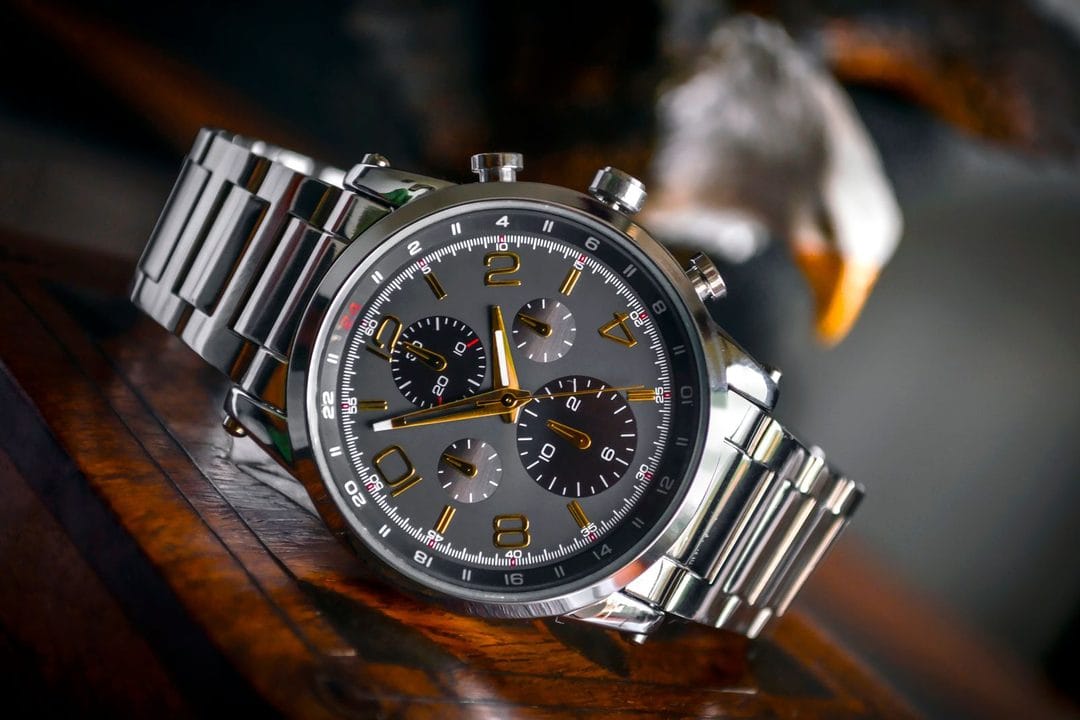
Ask a serious collector to name the ten most important calibres in watchmaking and the El Primero comes up almost every time. Ask a casual buyer what Zenith is and you'll often get a blank look, or a vague "isn't that the one with the star logo." That gap — between how much the trade respects the brand and how little the wider market has caught on — is exactly why 2026 is a good year to stop overlooking it.
The Calibre That Changed the Argument
In 1969 Zenith did something three other manufacturers were racing to do at the same moment: build the first automatic chronograph movement. The El Primero beat Heuer-Breitling-Hamilton's Calibre 11 to market by a matter of weeks, and it did it running at 36,000 vibrations per hour rather than the more common 28,800, which meant it could measure to a tenth of a second rather than an eighth — a genuinely useful advantage for anyone actually timing something, not just a spec-sheet number. Quartz nearly killed it in the following decade; Zenith reportedly kept a handful of El Primero tooling and technical drawings hidden rather than destroy them during the mid-1970s push to go all-quartz, which is the reason the calibre survived to be revived in 1984 and still powers the brand's core collection today, more than fifty years after it launched.
That survival story matters more than most brand histories because of what happened next. Rolex came to Zenith in the late 1980s needing a high-quality automatic chronograph base for the Daytona, and used a modified El Primero — detuned to 28,800 vph, with Rolex's own escapement — from 1988 until it finally moved to an in-house calibre in 2000. For over a decade, buying a Daytona meant buying a Zenith movement wearing a Rolex dial. Collectors who know this history treat the El Primero as the movement Rolex itself once trusted, which is a stronger endorsement than any marketing department could invent.
What's Actually Worth Buying in 2026
The Chronomaster Sport, launched in 2021 and still the volume leader in Zenith's current lineup, is the most straightforward entry point. It runs the El Primero 3600 at 36,000 vph, delivers a genuine 1/10th-second chronograph reading via the central seconds hand completing a full rotation every ten seconds, and retails around £8,300-£8,800 depending on the dial and bracelet configuration. The panda dial in particular — white face, black sub-dials — draws direct comparisons to a steel Daytona that costs four to five times as much on the grey market, and the comparison isn't unfair; it's genuinely the closest thing to that watch's proportions and legibility that doesn't require a five-figure waitlist game with an authorized dealer.
The Chronomaster Original sits a level up in horological seriousness — a tighter recreation of the 1969 case proportions at 38mm, with the tri-colour sub-dial layout that's become the calibre's visual signature, priced around £9,200-£9,600. It's the watch to buy if you want the El Primero story worn on your wrist as literally as possible, rather than a modernized reinterpretation of it.
Where the Real Value Sits
Pre-owned El Primero references from the 1990s and 2000s — particularly the "A384" reissue lineage and standard three-register chronographs from that period — trade in the £3,000-£5,500 range on the secondary market and offer the same 36,000 vph movement architecture at roughly half the price of a current-production piece. Buy through a specialist dealer who services in-house rather than a general marketplace listing; the El Primero's high beat rate means it needs more frequent servicing attention than a standard chronograph, and a watch that's sat unserviced for a decade is a real risk on this specific calibre, not a hypothetical one.
Zenith Against the Watches It Actually Competes With
Compare it honestly to where collector money is already going. Omega's Speedmaster Professional at £7,000-£7,600 has the Moon landing story and arguably stronger brand recognition outside watch circles, but it runs a manual-wind movement — no automatic winding, which is a real usability difference for daily wear. Breitling's Chronomat at a similar price point trades on aviation heritage and a more overtly sporty case, but doesn't carry anything close to the El Primero's direct lineage to the watch that started the automatic-chronograph race.
- Choose the Chronomaster Sport if you want Daytona proportions and a panda dial without the waitlist theatre.
- Choose a pre-owned 1990s-2000s reference if movement history matters more to you than having the newest case design.
- Skip Zenith entirely if brand recognition among non-collectors matters to you more than what's inside the case — the star logo still doesn't carry outside enthusiast circles the way a crown does.
That last point is the honest caveat serious buyers need to sit with. A Zenith won't get recognized at a dinner table the way a Rolex or even an Omega will, and if resale liquidity is your primary concern, the secondary market for Zenith — while improving — still moves slower and with wider price spreads than Rolex or Omega. This is a watch for the person buying because of what's inside the case, not what a stranger reads off the dial from across a room.
The Case Reference That Started It All
The original 1969 A386 — three sub-dials, tachymeter bezel, that unmistakable tri-colour layout — trades today at £15,000-£28,000 depending on condition and whether the case has been polished down over five decades of service, with unpolished examples commanding a real premium among purist collectors. Zenith's own re-edition programme has run several faithful reissues of that case over the years, most recently under the Chronomaster Original banner, specifically so buyers who want the 1969 design without hunting a fifty-year-old watch and its service history can get it new, with a warranty and a fresh movement rather than one that's been through three or four owners and an unknown number of watchmakers.
Worth knowing before you go hunting vintage: not every 1970s El Primero case is equal. Zenith ran several reference numbers through that decade with meaningfully different case sizes and dial layouts, and the values diverge sharply — a common four-figure reference and the rarer A386 or A384 can differ by tens of thousands of pounds despite sharing the same movement architecture underneath. Anyone buying vintage rather than a modern re-edition should work with a dealer who can confirm the exact reference number and original configuration before money changes hands, not after.
Buying and Verifying
Authorized dealers in the UK include Watches of Switzerland and a handful of independent boutiques carrying the full current collection; expect little to no discount on new pieces given current allocation levels, though the waitlist pressure is nowhere near what Rolex or Patek Philippe buyers face. For pre-owned pieces, verify movement service history directly with the seller before paying — ask specifically when the last full service was performed, since the El Primero's tighter tolerances and higher beat rate make deferred maintenance a real performance issue, not just a paperwork gap.
Zenith's own service centres handle El Primero work directly and are worth using over a generalist watchmaker for anything beyond a battery-less basic service, given how specific the calibre's tolerances are compared to a standard 28,800 vph movement most independent watchmakers see more often.