The Watch That Made Tudor Impossible to Dismiss
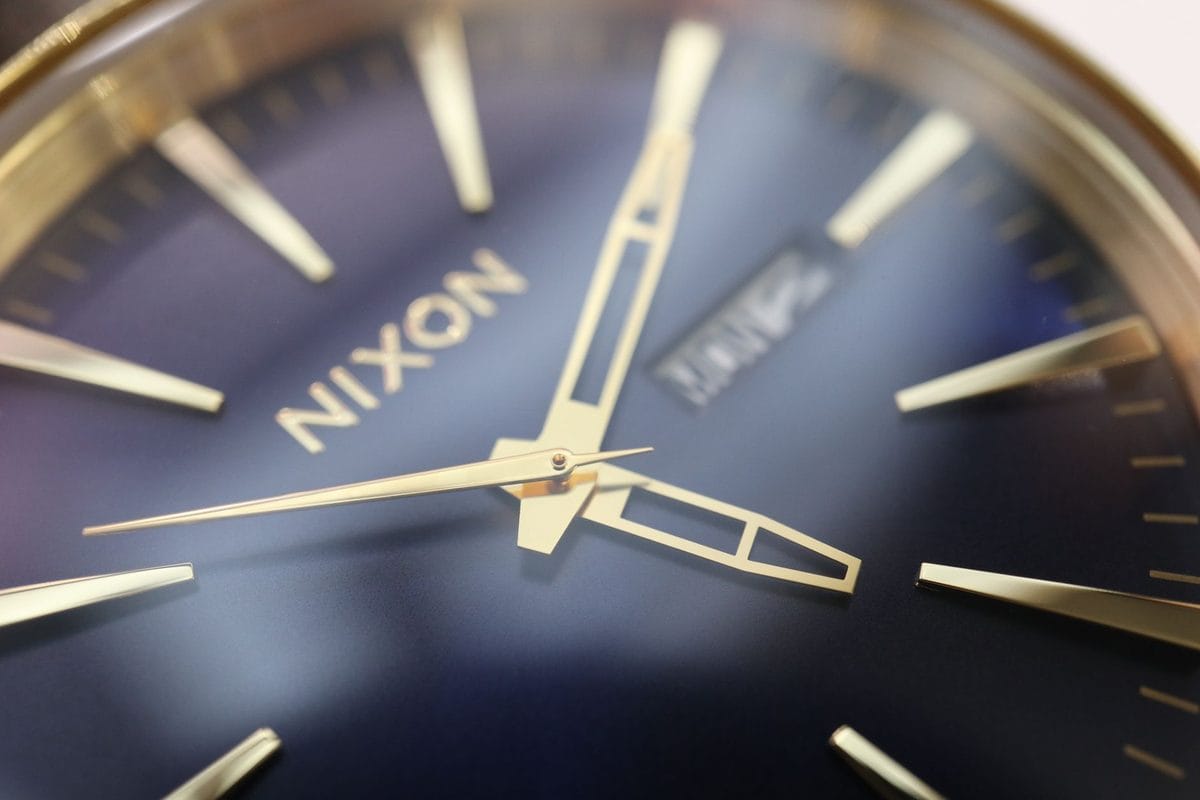
For most of its modern history, Tudor occupied an uncomfortable position — close enough to Rolex to invite comparisons, distant enough in price to attract the "why not just save up for the real thing" crowd. The original Black Bay 58, introduced in 2018 in black and then gold, started to reframe that conversation. But it was the Navy Blue version — the M79030B, released in 2021 and still in production at $4,075 on the leather strap — that completed the argument. The dial color alone does something that most watches at twice the price fail to do: it reads differently in every light condition, shifting from a deep midnight blue under artificial light to something closer to a rich slate in direct sun, and it does so with a surface texture and depth that genuinely takes time to appreciate rather than revealing everything in the first thirty seconds.
That sounds like watch-writing hyperbole. It isn't. Dial quality at the $4,000–$6,000 price point is where most brands cut corners that are only visible once the watch is on your wrist in the real world — slightly flat color, printed indices that look less sharp at an angle, a date wheel whose font doesn't quite match the dial's character. Tudor's Navy Blue avoids all of those failures.
The Case: Why 39mm Was the Right Call
The original Black Bay family launched at 41mm, which is fine but not exceptional — it wears big on smaller wrists and fills the gap between cuff and hand in a way that reads as watch-forward rather than watch-present. The BB58 is 39mm, 11.9mm thick, with a lug-to-lug of 47mm. Those numbers matter because they put the watch in conversation with the vintage dive references it's consciously evoking — the Rolex Submariner references from the late 1950s and early 1960s that ran 38–40mm and sat flush on the wrist rather than perching on it.
On a 7-inch wrist, the BB58 Navy fits the way a watch should: present without dominating, visible under a cuff without forcing the shirt button open. At 41mm the same wrist starts to feel like it's displaying the watch rather than wearing it. If you're between the BB58 and the standard Black Bay 41, try both on before you buy — the difference in wrist presence is larger than the 2mm gap suggests, and the 39mm wins for everyday wear unless you specifically prefer a larger statement piece.
The Movement: MT5402 and What In-House Actually Means Here
The MT5402 is Tudor's in-house automatic, running at 28,800 vph with a 70-hour power reserve. COSC certification means it's been independently tested to -4/+6 seconds per day, which is an honest accuracy spec rather than a marketing number — most well-regulated mechanical watches at this price hit -2/+4 in practice, and the MT5402 tracks to that. The 70-hour reserve is the practical advantage: you can take the watch off Friday evening and put it back on Monday morning without needing a winder. A Seiko SPB143 at $700 will give you similar specs on a Seiko 6R35 movement, but the finishing quality of the case and dial isn't in the same category.
What "in-house" means at Tudor specifically is worth understanding. Tudor developed the MT5402 with Rolex technical involvement — they share production infrastructure in Geneva — so the movement architecture and quality control reflect that lineage rather than a brand that simply badged a Sellita SW200 and declared independence. The rotor weight, the perlage finishing on the bridges, and the regulated timing all reflect that investment. You will not see this movement through a display caseback because the BB58 doesn't have one, which is a reasonable design decision given that the brushed caseback with Tudor's embossed rose completes the vintage aesthetic better than a sapphire window would.
The Honest Comparison: BB58 Navy vs. Rolex Submariner Date
The Submariner Date in steel (ref. 126610LN) has a list price of $10,100, trades at street for $12,000–$14,000 on the pre-owned market post-2023 correction, and requires either a waitlist relationship with an authorized dealer or a grey market premium. The BB58 Navy Blue is $4,075 at any Tudor AD, available without a waitlist, and shares DNA with the Sub in ways that are more than coincidental — Tudor and Rolex are both owned by the Hans Wilsdorf Foundation, and the movement and case manufacturing overlap is real.
At 2.5–3x the price, the Submariner buys you: a ceramic bezel insert (the BB58 uses an aluminum bezel, which will show scratches over years of use), a date function if you want it, the Rolex name and its secondary market resilience, and the oyster bracelet's legendary clasp and glide-lock extension system. Those are meaningful differences. But the BB58 Navy on the NATO strap that ships with it, or a $40 aftermarket leather from Barton Watch Bands, wears as a complete and considered object — not a consolation prize.
Who Should Buy This Watch in 2026
Buy the BB58 Navy Blue if you want a 39mm steel sports watch with an in-house movement, a dial color that doesn't look like anything else at the price, and no waitlist friction. Don't buy it expecting the resale trajectory of a Submariner — Tudor's pre-owned market is healthy but not speculative, and the BB58 will depreciate modestly in the first two years before stabilizing. That's a normal and reasonable outcome for a watch you're buying to wear, not to flip.
The aluminum bezel will earn a few marks over five years of daily wear. The fabric NATO strap it ships on is comfortable but not everyone's preference for a $4,000 watch — switching to Tudor's own leather strap ($135 from a Tudor AD) or a bracelet (Tudor sells the 5-link bracelet option for the BB58 at around $200 separately, when available) changes the register considerably. Either way, at $4,075 it remains one of the strongest cases for spending less than you budgeted on a watch and not feeling like you compromised.