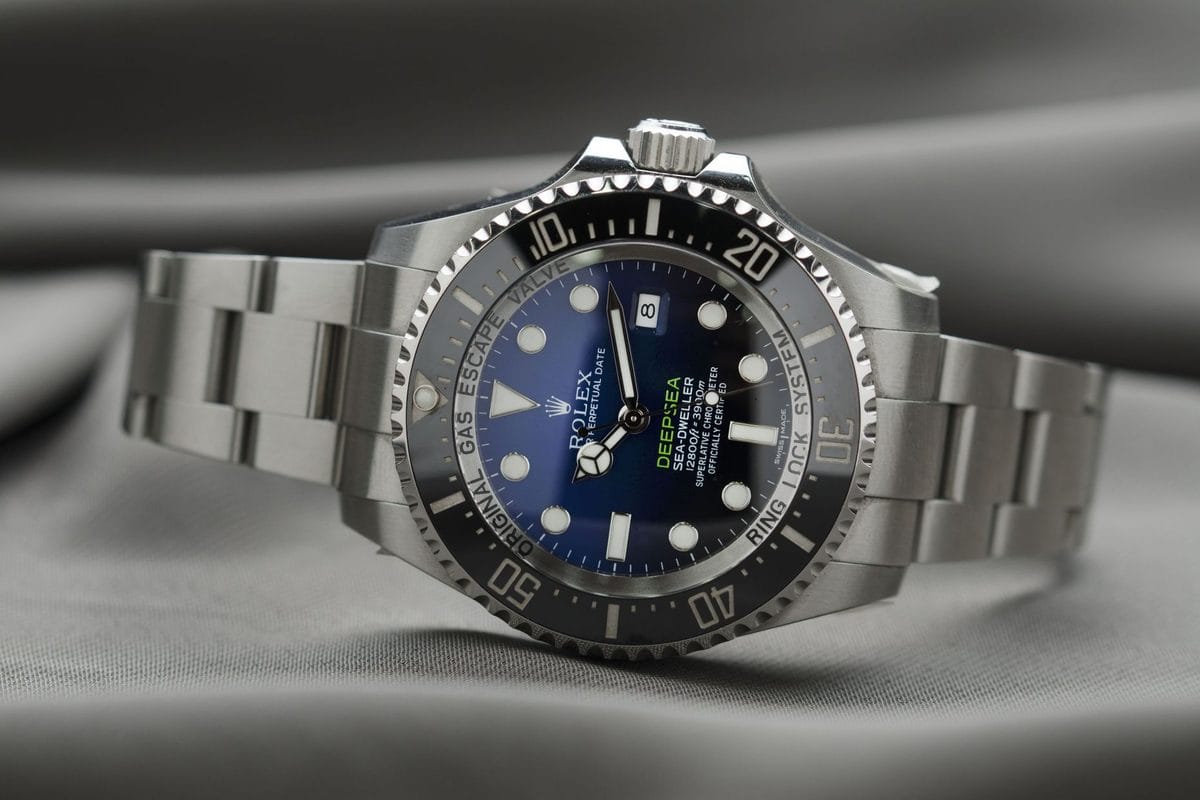
A Rolex Submariner 124060 costs $10,050 at an authorized dealer this month, assuming you can find one. A clean, unworn example from 2025 or 2026 trades for $12,500 to $14,500 on Chrono24 and through certified pre-owned dealers. That gap — a 25 to 40 percent premium over retail, for a watch that has been in continuous production since 2020 — used to be a footnote. In the second quarter of 2026 it's become the clearest evidence that the Swiss watch industry has split into two markets that behave nothing alike, and most buyers still shop as if only one of them exists.
What the Q2 2026 numbers actually say
Morgan Stanley and WatchCharts publish a quarterly index tracking secondary-market pricing across 35 watch brands, and the Q2 2026 edition landed with a headline that would have sounded absurd two years ago: the Overall Market Index rose 1.5 percent quarter-on-quarter, the fourth straight quarter of gains above 1 percent. Twenty-seven of the 35 brands tracked posted positive movement for the quarter, and 29 posted gains year-on-year. For the first time since early 2022, all four major Swiss watch groups showed positive year-on-year growth simultaneously — Rolex SA up 6.9 percent, Swatch Group up 5.4 percent, Richemont up 4.2 percent, LVMH up 4.1 percent. Patek Philippe led value retention among individual brands at plus 15.4 percent, and Rolex's certified pre-owned channel alone cleared $186 million in transaction volume for the quarter.
None of that means every watch is worth more than it was in March. It means the market has stopped correcting and started diverging by category, which is a very different story and a much more useful one if you're actually shopping. The pace of the recovery is also cooling on its own terms — 1.5 percent growth this quarter followed two consecutive quarters at 2.5 percent, so whatever momentum exists is decelerating even as it stays positive.
The retail price trap, inverted
Buy the wrong reference at retail this year and you'll be underwater within eighteen months.
For most of the last decade, the smart move with any in-demand Rolex was simple: get on the list, pay retail, sell above it if you ever wanted out. That logic still holds for steel sports models, but it has quietly reversed for anything in gold. Take the white gold Cosmograph Daytona 126509 — Rolex raised its retail price to $56,400 after the January 2026 increase, yet the reference now regularly changes hands around $51,000 on the secondary market. Buy one new from a boutique today and you're down roughly $5,000 the moment you walk out the door, something that was almost unthinkable for a Daytona as recently as 2023.
Steel tells the opposite story. The stainless Cosmograph Daytona 126500LN retails at $16,900, and standard black-dial examples trade $19,500 to $21,000 on the secondary market — a premium that holds because Rolex still can't get enough steel Daytonas into boutiques to meet demand. Panda-dial versions of the same reference push toward $32,000, which is less a reflection of the watch's actual scarcity and more a reflection of Instagram aesthetics; the movement, case, and bracelet are identical to the black-dial version selling for $11,000 less. Pay the panda premium if the dial genuinely matters to you. Don't pay it expecting it to hold — dial-color premiums are the first thing to compress whenever a market cools, because they were never backed by anything except preference.
Submariner 124060: the wait is still worth it
The no-date Submariner sits in the middle of this story and illustrates it well. At $10,050 retail against $11,500 to $14,500 on the secondary market, it's still trading meaningfully above MSRP — but that premium has compressed hard from the roughly $16,000 the same reference briefly touched during the 2022 speculative peak. Waiting for boutique allocation instead of buying pre-owned still makes financial sense here, and it's one of the few genuinely unqualified recommendations left in this market: if your dealer relationship can get you a 124060 at retail within a year, take it over paying secondary-market price today.
Where Richemont just proved the skeptics wrong
There was a real fear running through the industry a year ago that a recovering secondary market would cannibalize new sales — why pay full retail for a Cartier or a Vacheron when a barely-worn example is suddenly available for less on Chrono24? Richemont's Q2 2026 numbers say the opposite happened: the group grew primary watch sales by double digits in the same quarter its secondary-market recovery broadened across brands. The two channels appear to be feeding each other rather than competing, most likely because renewed confidence in resale value is exactly what makes a buyer comfortable paying full price at the boutique in the first place.
Patek Philippe is the case study for what happens when a brand controls scarcity well enough to avoid this split entirely. Its 15.4 percent value retention lead over every other brand in the Q2 2026 index isn't an accident of taste — Patek simply never let production catch up with demand the way Rolex has in gold references, so there's no glut of unworn precious-metal pieces sitting in dealer safes waiting for a buyer. A Nautilus or an Aquanaut in steel still requires the same waitlist patience a Daytona does, and a platinum Calatrava doesn't suffer the discount that a white gold Rolex now does, because Patek boutiques simply allocate fewer of them in the first place.
Where the actual value is right now
Four things are worth doing with this data instead of just reading it. First, if you're chasing a steel sports Rolex — Submariner, GMT-Master II, Daytona — stop treating secondary-market prices as a scam and start treating boutique allocation as the actual bargain; the spread is real, and it's not closing this year. Second, look hard at gold and platinum references from any of the majors, not just Rolex, because the same retail-versus-secondary inversion is showing up across Richemont brands as tariff-driven price hikes from 2025 work their way through boutique pricing while resale hasn't caught up. Third, don't pay a hype premium for a dial color, ceramic bezel variant, or limited colorway unless you plan to keep the watch regardless of what it's worth in three years — those premiums are the most volatile line item in this entire market and the first to evaporate.
Fourth, pay attention to the certified pre-owned channel itself. Rolex's official RCPO network grew to only 154 stores after Q1 2026, adding just six locations net despite ten stores joining the program, because four others dropped their CPO offering entirely. Watches of Switzerland, Bucherer, and The 1916 Company still control roughly half of all available RCPO inventory between them, which means pricing and selection in that channel are far more concentrated than the raw brand numbers suggest. A buyer in a smaller market may find the CPO premium worth paying simply for the warranty and authentication Rolex puts behind it; a buyer near one of the major hubs has more room to negotiate against private-seller listings instead.
What none of this changes is the basic math underneath a purchase like this: a watch is worth what someone else will actually pay for it on the day you decide to sell, not what a retail price tag or a market index says it should be worth. The Q2 2026 data is the clearest signal in four years that this is no longer one market moving together — it's several markets moving in different directions at once, and the reference number stamped on the caseback matters more than the brand name stamped on the dial.