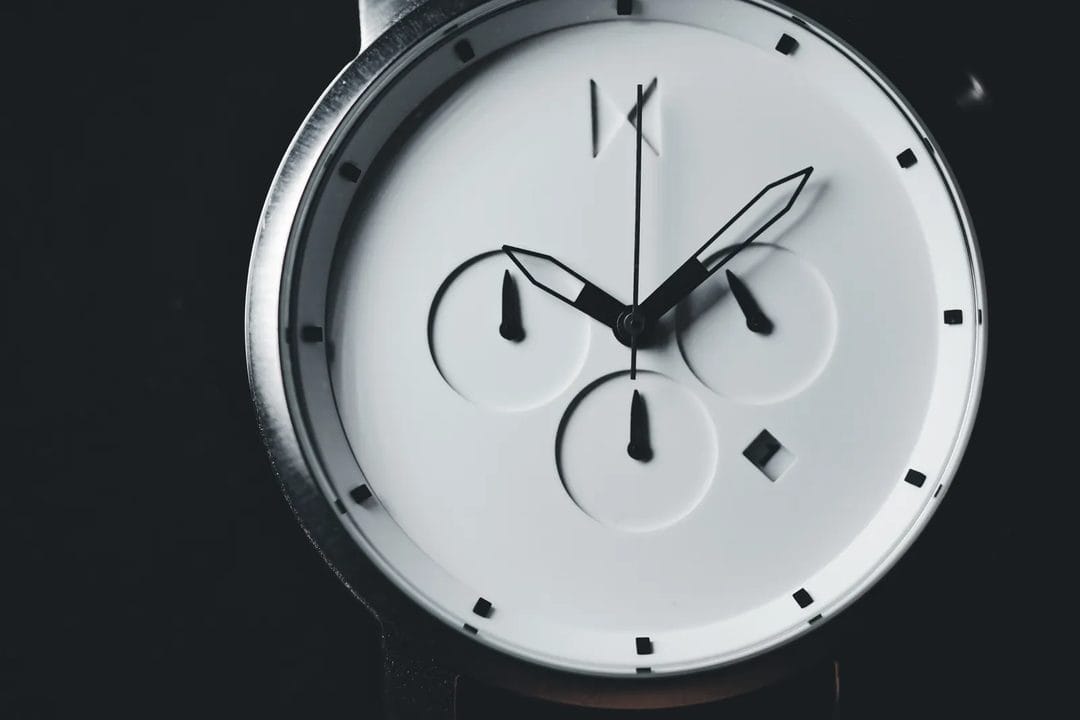
Walk into the Grand Seiko boutique on Madison Avenue on a Tuesday afternoon and you'll likely get a chair, a coffee, and twenty minutes of a sales associate's undivided attention. Walk two blocks south to the Rolex dealer and you'll get a waitlist form and a polite non-answer about timing. That gap — between a brand you can actually buy and a brand you can only apply for — is why a growing number of serious collectors are quietly redirecting five-figure sums away from Rolex and Omega and into Shizukuishi, Japan.
The Snowflake That Started the Conversation
Ask any Grand Seiko owner how they got into the brand and there's a good chance the answer involves the SBGA211, nicknamed the "Snowflake." Its titanium case houses the Spring Drive 9R65 movement, and its dial — textured to mimic snow drift patterns photographed near the Shizukuishi Watch Studio in Iwate Prefecture — is the single most Instagrammed Grand Seiko reference for a reason. Current US retail sits around $6,200, and unlike a steel Rolex Explorer at a comparable price, you can walk out of an authorized dealer wearing one the same day.
The Spring Drive movement inside it is the part most first-time buyers don't understand until they've seen the seconds hand in person. It isn't quartz and it isn't a conventional mechanical escapement — it's a mechanical movement regulated by a quartz oscillator and a Tri-synchro governor, which is why the second hand doesn't tick, it glides. Seiko has been refining this technology since 1999, and Grand Seiko has made it the centerpiece of its identity ever since the Spring Drive Snowflake first launched in 2010 as reference SBGA011, later updated to SBGA211 with the titanium case in 2017. That's sixteen years of iteration on a single design language, which is a very different story from a marketing team discovering a "heritage angle" last quarter.
Two Movements, One Philosophy
Spring Drive isn't the only path into Grand Seiko, and pretending it is does the brand a disservice. The Hi-Beat 36000 caliber — found in references like the SBGH271, a steel-cased model with a deep blue dial — runs at 36,000 vibrations per hour, well above the Swiss industry standard of 28,800, which translates into a smoother sweep and better shock resistance for the balance wheel. Retail on the SBGH271 lands around $6,500, roughly the same neighborhood as a Rolex Datejust 36 on a Jubilee bracelet, except you're not waiting eighteen months for it.
Then there's the manual-wind option most people skip past too quickly: the SBGW231, part of the 62GS reissue line honoring Grand Seiko's original 1967 self-winding caliber, now built around the hand-wound 9S64. No sweep-second glide, no automatic rotor — just a thin steel case, a dauphine-hand dial, and roughly $5,800 in retail pricing that undercuts the brand's own Spring Drive lineup by a meaningful margin. If you want the cleanest entry point into Grand Seiko's Zaratsu-polished case work without paying for the more complex movements, this is it — buy the 62GS reissue before you buy anything else in the catalog.
What "Zaratsu Polishing" Actually Buys You
Zaratsu polishing is the term Grand Seiko uses for a flat, distortion-free mirror finish applied by hand against a rotating tin disc, and it's the technical detail that separates Grand Seiko's case finishing from Rolex's more uniform brushed-and-polished approach. The name itself is a linguistic accident — it comes from "Sallaz," the German polishing machine brand Seiko originally imported, mispronounced through decades of factory-floor Japanese. What matters for a buyer is that the facets on a Grand Seiko case catch and bend light in a way that no amount of CNC machining reproduces; you have to see it tilt under a window to understand why collectors who've owned both an Omega Seamaster and a Grand Seiko SLGH stop talking about Omega's case work entirely.
None of this means Grand Seiko has cracked resale liquidity the way Rolex has — it hasn't, and pretending otherwise would be dishonest. A four-year-old Rolex Submariner still commands close to retail or above on the secondary market in most conditions. A four-year-old Grand Seiko SBGA211 typically trades on Chrono24 and WatchBox somewhere between $4,200 and $5,000, meaning you're looking at real depreciation even on the brand's most iconic reference. What you're buying with Grand Seiko isn't investment-grade liquidity. It's finishing, movement engineering, and daily wearability that a comparable Swiss price point simply doesn't offer right now.
Where the Money Actually Goes
Grand Seiko's US retail network runs through a mix of standalone boutiques — Manhattan, Costa Mesa, Honolulu — and authorized multi-brand dealers, with Tourneau remaining the most recognizable name carrying the line across its US locations. In Europe, authorized dealers are thinner on the ground outside London, Paris, and Munich, which pushes many EU buyers toward the brand's own boutique in London's Mayfair district or toward cross-border purchases inside the EU to manage VAT. None of these channels involve a waitlist, a "build relationship first" gatekeeping ritual, or a purchase history requirement — you walk in, you try references on, and if the piece is in stock, you buy it.
- Grand Seiko boutiques: full catalog access, best chance at limited "Special/Diamond Dial" pieces, no purchase history required
- Tourneau and other authorized multi-brand dealers: solid core-lineup availability, though rarer references get allocated to the boutiques first
- Grey market and pre-owned platforms like Chrono24: useful for discontinued references, but verify papers and service history before wiring money — Grand Seiko's after-sales network is smaller than Rolex's, and a watch serviced outside Japan or an authorized center can complicate future warranty claims
Prices have moved in one direction only since 2020, and buyers who've been sitting on the fence waiting for a discount are going to keep waiting. Grand Seiko raised US prices twice between 2022 and 2024, and dealers report the pattern continuing into 2026 as the yen's long weakness against the dollar has done little to soften US list prices — that adjustment has mostly benefited direct-from-Japan grey market buyers instead, at least until Grand Seiko's parent company revises its export pricing formula.
The Reference Numbers Worth Actually Learning
Grand Seiko's reference codes are notoriously unfriendly to newcomers, and most collectors give up trying to memorize the full system and instead learn the three or four references relevant to their budget. SBGA211 (Snowflake, Spring Drive, titanium, ~$6,200), SBGH271 (Hi-Beat 36000, steel, blue dial, ~$6,500), and SBGW231 (62GS reissue, manual wind, steel, ~$5,800) form a reasonable starter map across the brand's three core movement families — Spring Drive, Hi-Beat mechanical, and manual/automatic quartz-adjacent calibers. Beyond that trio sits the SLGH lineup with the newer 9SA5 Hi-Beat movement, priced meaningfully higher and worth a separate conversation entirely.
What nobody tells first-time buyers is that dial color variants matter more to long-term satisfaction than the movement choice itself. A Snowflake in the standard white-textured dial photographs beautifully but can look almost featureless under office lighting, while the blue-dial Hi-Beat references show more depth day to day on the wrist than in any product photo Grand Seiko has ever published.
The Comparison Nobody Wants to Make Out Loud
Grand Seiko is the connoisseur's watch precisely because almost nobody else recognizes it.
Here's the uncomfortable version collectors don't say in public Discord servers: Grand Seiko is, watch for watch, better finished than a same-priced Rolex, and worse understood by nearly everyone who isn't already in the hobby. Hand a stranger a Rolex Datejust and they'll place it within a category instantly. Hand them a Grand Seiko SBGH271 and you'll spend the next ninety seconds explaining what it is, where it's made, and why the dial has that particular texture. For some buyers that anonymity is exactly the appeal — a $6,500 watch that doesn't broadcast its price tag to anyone outside the hobby. For buyers chasing recognition or resale certainty, it's a genuine drawback, and no amount of enthusiast messaging changes that math.
Buy It for the Right Reason
If you're shopping Grand Seiko as a Rolex substitute purely because the waitlist frustrates you, you'll probably end up disappointed and selling within eighteen months. Buy it because the Zaratsu-polished case catches light in a way nothing else at the price does, because the Spring Drive glide genuinely changes how you experience checking the time, or because you want a watch nobody at the gym can price-tag on sight. Those are the reasons that hold up two years in, long after the novelty of walking into a boutique without an appointment has worn off.