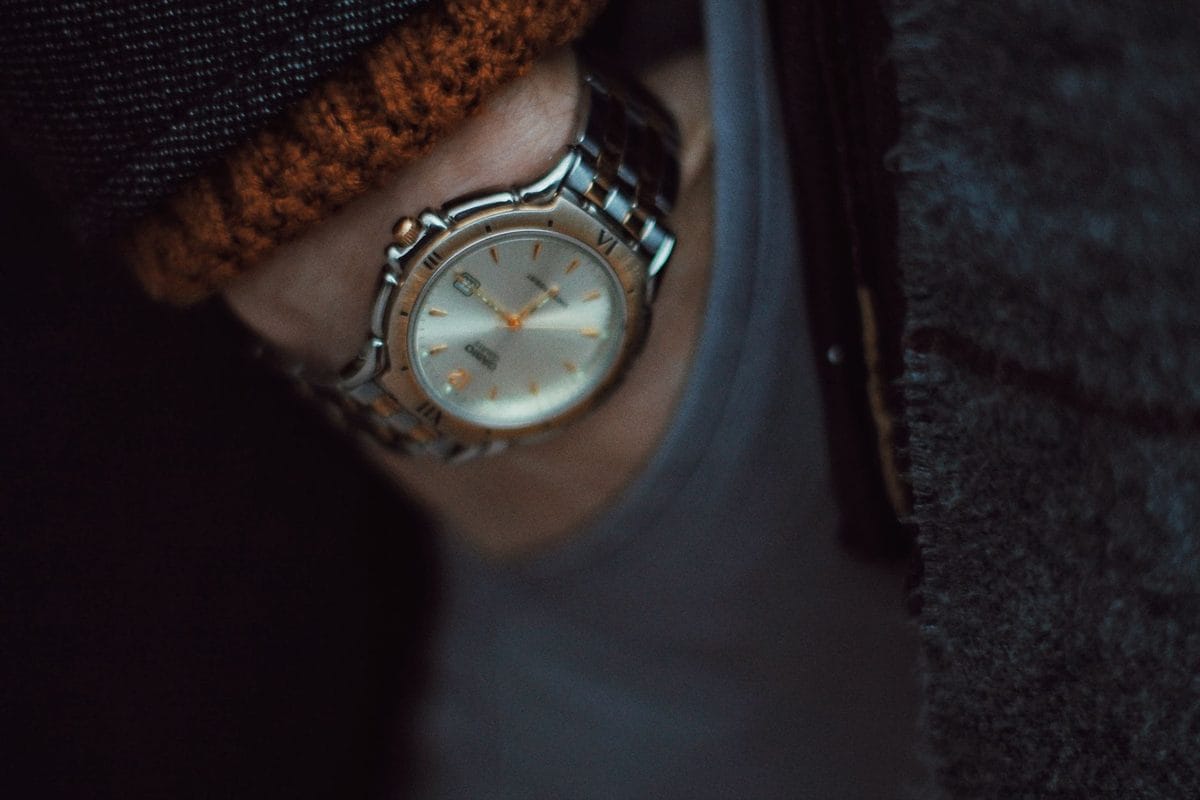
There's a particular kind of satisfaction in landing in a new time zone, glancing at your wrist, and instantly knowing both what time it is here and what time it is back home — without unlocking a phone, without doing the mental subtraction, without changing anything. That's the entire point of a GMT watch, and it's the one genuine complication that earns its place on the wrist of anyone who actually travels rather than just talks about it. With summer travel season arriving and the 2026 releases now landed, the GMT category is in one of its strongest and most interesting positions in years — and the smart money is no longer automatically going to the obvious Rolex.
First, the thing the brands won't say plainly: there are two kinds of GMT and they're not the same watch. A true GMT — what collectors call a "flyer" or true-GMT — lets you jump the local hour hand forward or back in one-hour steps independently, without stopping the watch, while the 24-hour hand keeps tracking home time. That's the one a traveler wants; you land, you pull the crown one click, you click the hour hand to local time, you push the crown in, done. The cheaper "caller" or office GMT does the opposite — it moves the 24-hour hand and leaves the main time fixed, which is fine for tracking a colleague's time zone from your desk but fiddly and slow every time you actually cross a border. Before you spend real money, know which one you're buying. Plenty of mid-priced watches market themselves as GMTs while quietly being the caller type.
Where the value actually sits in 2026
For years the conversation started and ended with the Rolex GMT-Master II, and on the merits it's still an exceptional watch — but you can't buy one at retail, the gray-market premium is real money, and the waitlist is a standing joke. The interesting story in 2026 is everything underneath it. Tudor's Black Bay GMT, around $4,400, gives you a true flyer GMT with an in-house movement and the Rolex design DNA from the same parent company, available to actually purchase, at roughly a third of what a gray-market GMT-Master commands. For a working traveler who wants the function and the look without the acquisition circus, it's the obvious pick and has been quietly outselling its more famous cousin to people who just want to wear the thing.
Go further down and the value gets genuinely surprising. The Christopher Ward C63 Sealander GMT, well under $1,500, delivers a true-GMT function that until recently you couldn't find anywhere near that price — the kind of independent-brand value play that's been reshaping the lower end of this category. Mido, Longines, and the Seiko 5 GMT line all field credible true-GMT pieces in the $400 to $1,200 band now, and the Seiko in particular put the function in reach of a first-time buyer in a way that simply didn't exist five years ago. The honest catch with the cheapest of these: the bezels and bracelets feel their price, and the movements, while accurate enough, won't hold a candle to the Swiss pieces in finishing. You're buying the function, not the heirloom.
The one at the top worth the stretch
If budget genuinely isn't the constraint, the Grand Seiko SBGE GMT line and the Omega Aqua Terra Worldtimer occupy a sweet spot above the sports-GMT crowd — dressier, beautifully finished, and built to travel without shouting about it. The Worldtimer in particular, showing all 24 zones on the dial, is the watch for the person who crosses oceans often enough that a single second time zone isn't enough. It's a serious sum, but it's the rare luxury purchase that earns its keep through sheer use rather than sitting in a box.
What to actually look for when buying
Beyond the flyer-versus-caller question, a few specifics separate a GMT you'll love from one you'll resent. The 24-hour bezel should ideally be bidirectional and clearly marked, because a rotating bezel lets you track a third time zone, not just the two the hands give you. Lume on the GMT hand matters more than people expect — the whole point is reading home time at a glance, including at night in a hotel room, and a GMT hand with weak lume defeats the purpose. And check the date function's behavior, because on a true flyer GMT a well-built movement will roll the date forward or back correctly when you jump the local hour across midnight, while a poorly executed one won't.
The case size deserves a hard look too. A lot of GMTs run 40 to 42 millimeters, which suits most wrists, but the category has a habit of wearing thick because of the extra movement components, and a 14-millimeter-plus case that looks fine in photos can sit awkwardly under a shirt cuff on a long-haul flight — exactly when you'll be wearing it most. Try it on, or buy from somewhere with a real return window.
The category has never offered more for the money than it does right now. A traveler who'd have been pushed toward an unobtainable Rolex three years ago can walk into 2026 with a true flyer GMT on the wrist for well under two grand, set home time once, and forget about it for the rest of the trip. That's the whole promise of the complication, finally available to the people who'll actually use it.