The First Luxury Watch: Why the Rolex Submariner 126610LN Still Makes Sense
The 126610LN appreciated 11% last year and still outperforms every alternative in the category. Here's why it belongs on your first-luxury-watch shortlist.
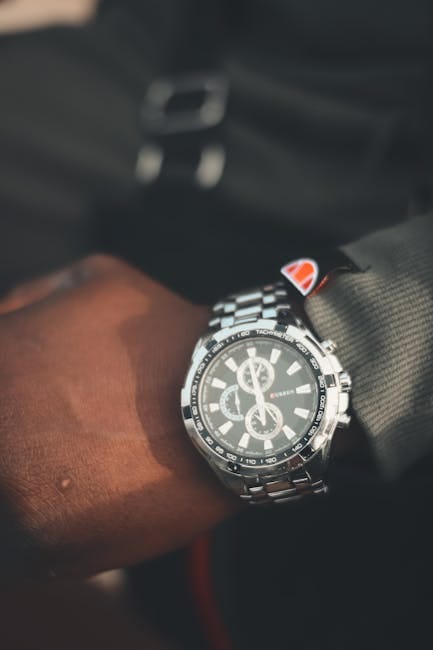
The 126610LN appreciated 11% last year. A new buyer walking into an authorized dealer still can't get one at retail — and there's only one path to ownership that doesn't involve paying a grey market premium. That path is cultivating a relationship with an AD over 18 to 24 months, buying two or three smaller pieces first, and waiting for a phone call that may never come. Most first-luxury buyers won't do this. That's why the 126610LN has become the defining frustration of the sub-$20k collector market and, paradoxically, the reason it remains the single best-value luxury watch you can buy.
Let me explain what I mean by that. The Submariner is not the most interesting watch in its price range. It's not the most beautifully finished. It doesn't have the complications of a Patek or the avant-garde design of an independent. What it has is 70 years of continuous production refinement, a movement (calibre 3235) with a 70-hour power reserve and Chronergy escapement, and the deepest secondary market in all of watchmaking. You can liquidate a Submariner anywhere in the world in under 48 hours. That's not a romantic reason to own one. It's a pragmatic one, and for a first luxury purchase, pragmatism wins.
What Changed With the 126610LN
The 126610LN replaced the 116610LN in 2020, and the changes matter more than Rolex marketing made them sound. The case grew slightly — not in stated diameter (still 41mm) but in lug-to-lug proportion and in how the bezel sits relative to the crystal. Wrist presence improved without the watch becoming larger on paper. The bracelet received thicker lugs and reworked end links that sit flush against the case more precisely. The new Oysterlock clasp has redesigned Glidelock tolerance that removes almost all play.
Inside, the calibre 3235 brought the Chronergy escapement and increased power reserve to 70 hours. That last number changes how you wear the watch. Take it off Friday evening, put on something else for the weekend, come back to the Submariner Monday morning — it's still running, still accurate, and you don't need to reset the time or date. For a single-watch owner this is negligible. For someone who owns three or four mechanicals and rotates them, 70 hours vs the old 48 is a meaningful quality-of-life upgrade.
- Calibre 3235 with Chronergy escapement and 70-hour reserve
- Updated case proportions — the watch wears larger without measuring larger
- Reworked bracelet end links and Glidelock clasp tolerance
- Superlative Chronometer certification (-2/+2 seconds per day)
Most reviews gloss over how much the new case geometry affects perception. I've seen the 126610LN on 6.5-inch wrists and on 8-inch wrists, and it works on both. That's an unusual property for a sports watch at this size. The design language has been refined to a level where the watch almost disappears into whatever context you put it in — which is, incidentally, why it became the defining luxury watch of the last 30 years in the first place.
The Retail vs Grey Market Calculus
Retail on the 126610LN currently sits at $10,250. Grey market prices in the US spring of 2026 are running between $14,000 and $15,500 for unworn, full-kit examples. That's a premium of roughly 35 to 50 percent over retail. Two years ago the premium peaked near 85 percent. Six months from now it could be either higher or lower depending on whether the broader watch market continues softening into 2026 or stabilizes. Nobody knows. Anyone who tells you they do is selling something.
Here's the math most first-time buyers miss. If you buy grey at $14,500, you're paying $4,250 above retail. If you wait 18 months cultivating an AD relationship, you buy at $10,250 and the grey market price at that point is probably somewhere between $12,000 and $16,000. So your expected "savings" ranges from $1,750 to $5,750 — but you've also given up 18 months of wearing the watch. Whether that trade is worth it depends on how much you value the watch on your wrist today vs the money in your account. For most buyers under 35 with a career trajectory, grey market is rational. For a buyer over 50 who sees this as a legacy piece, the AD path makes more sense.
The often-unspoken alternative is buying pre-owned from a reputable dealer like Bob's Watches, Crown & Caliber, or a grey market specialist with strong reviews. A 2021 or 2022 example in excellent condition with box, papers, and a partial warranty can be had for $12,500 to $13,500 — which splits the difference between retail and new grey. I've recommended this path to three friends in the last year. Two took it. Both still wear the watches and both report zero regrets.
What the Submariner Does That Competitors Don't
I own an Omega Seamaster Professional 300M. It's a better watch on paper at half the price — wave-pattern dial, helium escape valve, Master Chronometer movement with 15,000 gauss resistance, ceramic bezel. It's more interesting to look at. It's more technically impressive. And when I sell it, I will lose 30 percent of what I paid. When the Submariner owner sells his 126610LN, he'll lose somewhere between zero and 10 percent, possibly make money, depending on when he bought.
This is the unspoken reality of the luxury watch market. You're not just buying a timepiece — you're buying a position in an asset class. The Submariner has become, functionally, liquid wealth storage that happens to also be a watch. That's a cynical way to think about a beautiful object, and I don't actually recommend buying any watch purely as an investment. But if you're going to spend $10k-$15k on your first nice watch, the fact that you can almost always get your money back removes a meaningful amount of the psychological friction around the purchase.
The alternatives worth considering: Tudor Black Bay 58 at $4,000 retail (covered in detail in another post), Omega Seamaster 300M at $5,400 retail, Grand Seiko SBGA413 at around $8,500. Each of these is, in some specific sense, a better watch than the Submariner. None of them will hold value the same way. That's the tradeoff you're evaluating.
Who This Watch Is Actually For
I get this question constantly, and the honest answer isn't what watch forums usually say. It's not for the "person who wants the best dive watch" — if that were the goal, you'd buy a Seiko Marinemaster for $3,000 and have a genuinely better tool watch. The 126610LN is for the person buying their first piece in the $10k+ range who wants a watch that will be appropriate in every context they're likely to wear it — boardroom, beach, black tie, airplane, wedding — and who wants optionality on the back end. You can sell it in five years. You can pass it to a child. You can trade it toward a more ambitious purchase.
What it's not for: someone who already owns two or three mechanical watches and wants something that feels special. The Submariner is, intentionally, not special. It's a reference point. The whole industry calibrates around it. That's a feature for a first luxury watch and a bug for your third or fourth.
One last observation from the last six months of watching this market: the buyers who end up happiest with the 126610LN are the ones who wear it. The buyers who end up reselling within 18 months are the ones who bought it because a forum told them to and then didn't actually connect with how it wears on their wrist. Before you drop $14k on the grey market, spend an afternoon in an AD trying on the current Submariner alongside a Black Bay 58 and an Aqua Terra. If the Rolex still feels right after that, buy it. If one of the others felt better — buy that instead. The 11% appreciation is real, but it's not worth owning a watch you don't actually love.